
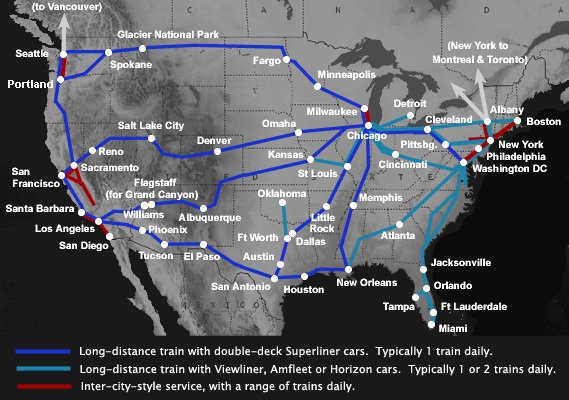
I love wild – non commercial – hot springs. And good wine. And untouched nature. And the sun with blue skies. Idaho is one of the U.S. states which offers all of these and also much more. At the end of June, I had some free time and decided to visit a few friends who are live “dispersed” between Salt Lake City in Utah and Spokane in Washington. Look at the map below, and you will understand why going through and exploring “en route” Idaho was a logical decision.
The first destination was a ranch of my friends near Salt Lake City. Instead of flying from San Francisco to Salt Lake City, I uses a slower but more scenic way of transportation – the AMTRAK train. Compared to Europe, for long-distance traveling, trains are much less used in the U.S. mostly because of the limited number of destinations which are covered by the railroads.
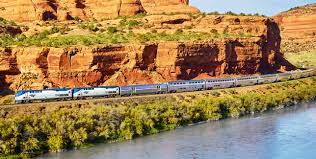
Most Americans never traveled by train and do not realize that the AMTRAK trains are very comfortable. They have big seats (much wider than on a plane) reclining into almost horizontal position in economy class, sleeping compartments, dining cars, and – most importantly – observation cars which have windows stretching along the entire car offering truly panoramic view.


Some Amtrak routes are incredibly scenic. You can read about them and also find a lot of practical information on traveling by train in America HERE. My trip between Emeryville in California (my nearest station) and Salt Lake city was 17 hours journey on a train #6 named California Zephyr which travels between San Francisco and Chicago (the entire duration is about 52 hours). California Zephyr is one of world’s greatest train rides: you will pass through the snow-capped Sierra Nevada mountains, snake along Colorado canyons, climb the heart of Rocky Mountains, cross the Mississippi river, and roll over vast farmlands of Nebraska. The other highlights include: Moffat Tunnel, Winter Park, Truckee River, Donner Lake, San Pablo Bay and the Carquinez Strait.
Besides “visual joy” of this train ride to Salt Lake city, there was one more “cherry on top of the cake:” the ticket was ridiculously cheap – only $59. And so I settled comfortably in the observation car and was soon lost in the passing by scenery.

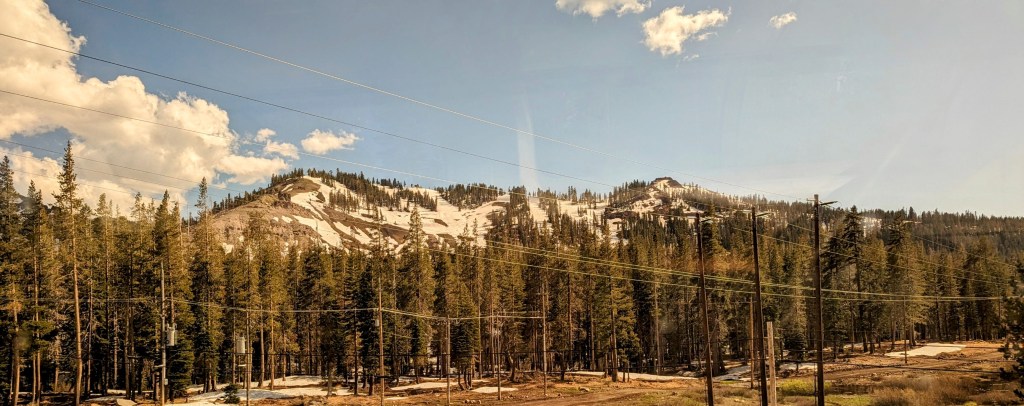
The highest elevation on California Zephyr route is about 7,000 feet / 2,200 meters when the train passes Donner Lake. This is the area of tranquil nature which is excellent for fishing, hiking and skiing, but it is also an important place in the history of discovering American West: here, the ill-fated Donner Party stayed through the brutal winter of 1846.

My train ride was in the late June, and, yet, when we climbed to Donner Lake, there was still plenty of snow: both in the mountains and on the ground.
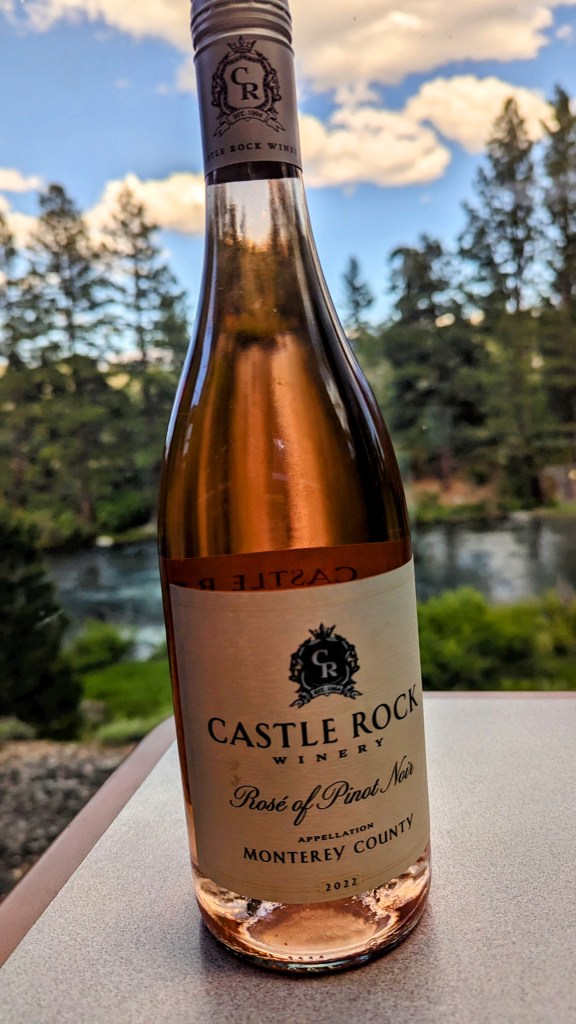
When the dusk came, it was time for a light, simple and, yet delicious dinner: a tray of freshly caught uni (sea urchin) from Fort Bragg, a Californian town on Pacific coast accompanied by rose wine of Pinot Noir from Central California.

There was one “logistical challenge” in getting from Salt Lake City train stationto my friends’ ranch: the train arrives in the midst of the night – at 3.10 am. The solution was to find a place to “crush” for a few hours before continuing the trip. My choice was a place called Salt Lake City Hostel and I did not regret it. Yes, it was a “hostel,” but very clean, with plenty of showers, huge communal kitchen and possibility to book (on Booking.com) a private room. Needless to say that the price was a fraction of what would be for a regular hotel.
In the morning, my friend Bill came and took me to his ranch which was about one hour away from Salt Lake City. Bill is a native of Salt Lake City while his cheerful wife Kim is a “transplant” from the North-East who, nevertheless, lived here for most of her life. Unlike many American families, all their grown-up children did not move out, but stayed in the area, established their own families, and started new generation – the grand-children of Bill and Kim. Hence, it was natural for them to think about a place where the entire extended family can gather and spend time together in privacy and comfort. The 250 acres / 100 hectares ranch was a solution. When we arrived to Bill’s place, the feeling of natural beauty, solitude and also vastness of this area was overwhelming.

When Bill and Kim bought the ranch and moved in, being simply “retired, sitting around and doing nothing” was out of question. They have many hobbies and social engagements (church participation is very important to them), but one of them stands out: they decided to raise and breed the “beefaloes.” Yes, I did not make a mistake: not “buffaloes” (sometimes also referred to as American Bison), but “bEEfaloes” who are essentially the hybrids of “usual” cattle and American Bison and whose meat is high in proteins and low in cholesterol and fat compared to beef . Their current herd of 30+ “beefaloes” keeps Bill and Kim fairly busy.

“Touring” Bill’s ranch, getting familiar with beefaloes and other realities of life on the countryside consumed most of the day. But there was still some time before the dusk, and we spent an hour exercising in “sharp-shooting” (having various guns and riffles is fully legal in the state of Utah and fairly common among its residents).

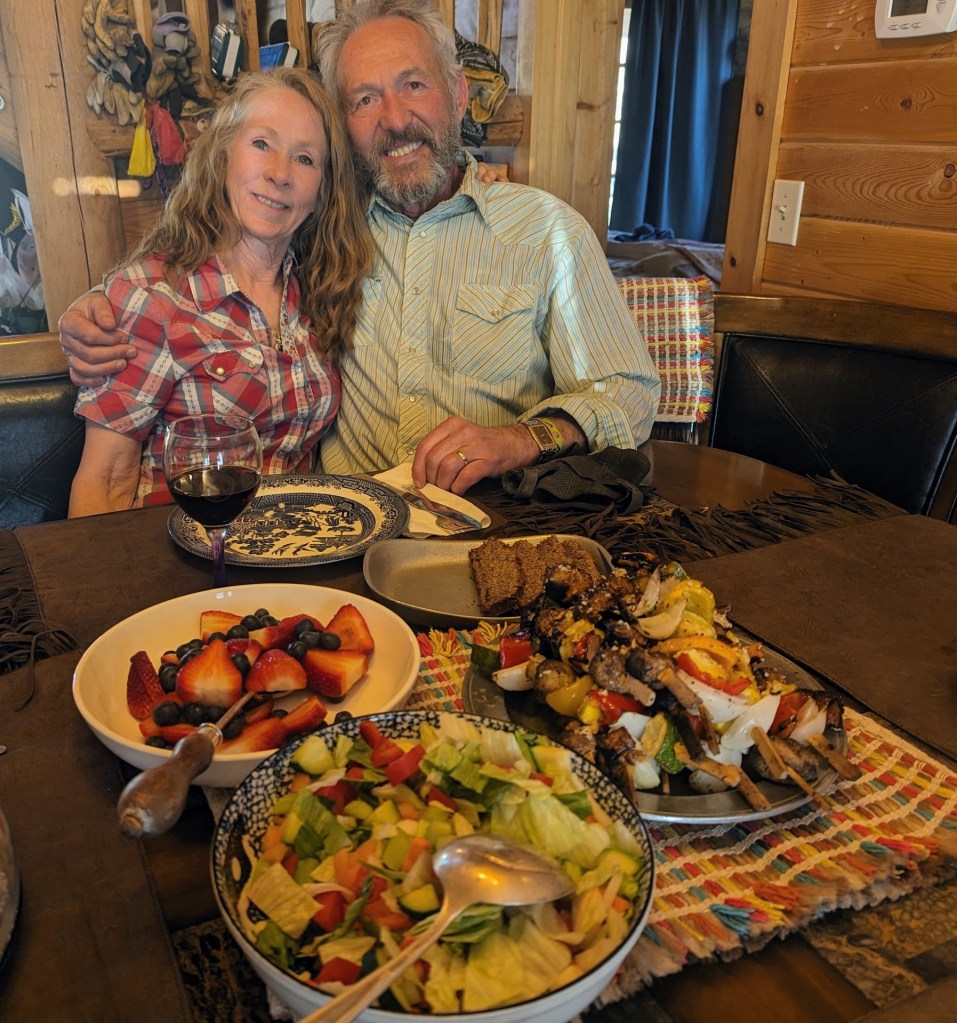
The “crown” of the day was delicious dinner prepared by Kim. The original plan to serve exquisite beefalo steaks was amended upon my request (I do not eat meat) and excellent vegetable-and-mushrooms skewers were served.
The next day, my destination was Pocatello, a town and county seat in the southeastern part of Idaho. Instead of renting a car from Salt Lake City, I opted for an easier and cheaper option: a comfortable shuttle ride offered by Salt Lake Express, a bus company with the services in many towns and cities in the American North-West: the states of Utah, Idaho, Nevada, Montana, Washington and Wyoming (I used Salt Lake Express a few more times on this trip and was fully satisfied). In about three hours, I was in Pocatello.

Is there anything special about Pocatello? Not exactly “special,” but first of all it is a fairly “livable” and pleasant town.
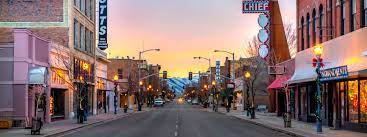
Pocatello is home to one of the campuses of the University of Idaho (which is the largest employer of the city’s residents) and to some high-tech industry (the manufacturing facility of ON-Semiconductors). What is also interesting about Pocatello is that the Federal Bureau of Investigations (FBI) has chosen it as a place to build one of FBI’s national data centers. But the main reason why I came here was to visit the family of good friends: Inness, a native of Switzerland, and MIchael, a transplant from Wisconsin of Chech heritage.

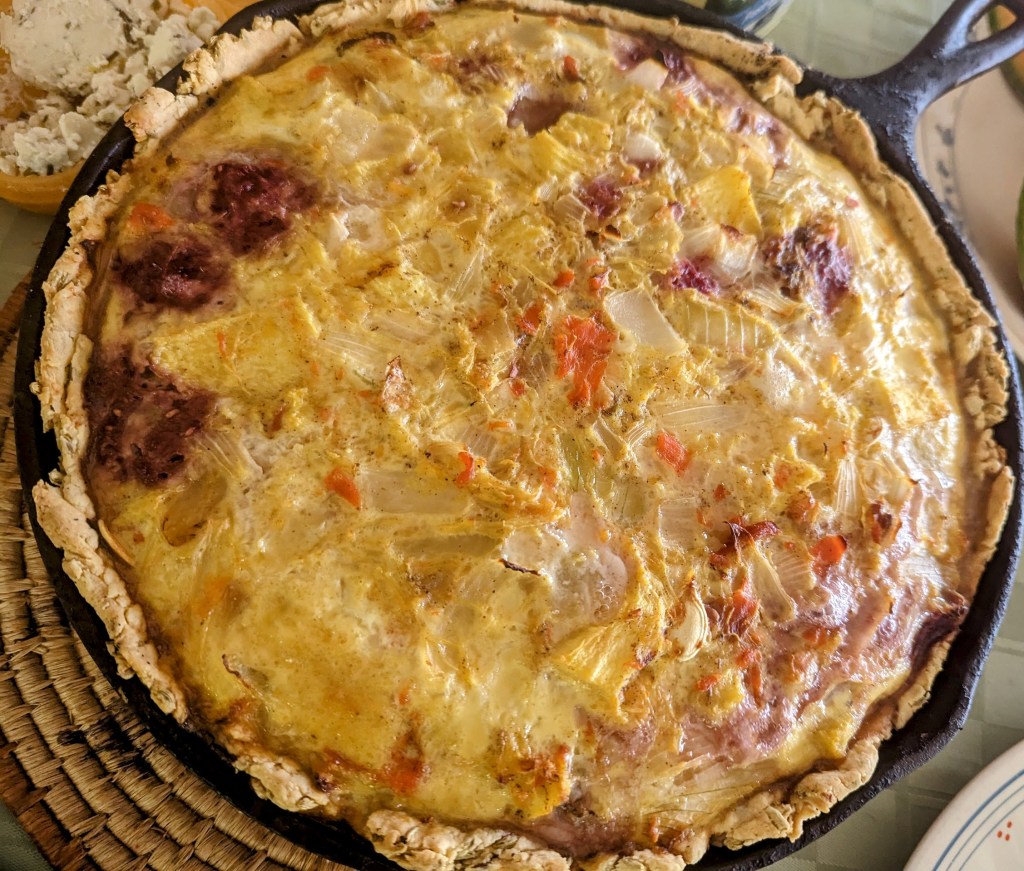
On the first night in Pocatello, I volunteered to make dinner and thought about some recipe which would “bridge” American and European food traditions. The ultimate choice was Pumpkin Quiche with smoked salmon and fresh (yes!) raspberries. A very “decadent” and tasty dish which I learned from my friends in Germany but “amended” with some more American ingredients. If you would like to learn how to make it, send me a message (via contact form on this blog) and I will share the recipe.
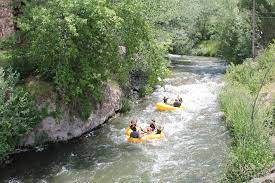
The Pocatello itself can hardly be seen as an exciting destination, but its surroundings have plenty to offer for those who like hot springs, hiking, lakes and nature in general. The nearby town Lava Hot Springs (30 min by car) is known for hot springs and soaking pools, and it has evolved in a popular resort. Bubbling out of natural underground sources, the hot springs are laden with minerals and offer a relaxing, healthy soak. If wild is more your style, you can take a thrilling – white-water style – inner tube run on the Portneuf River. Naturally, the next day, my hosts decided to take me to Lava Hot Springs.

But a word of cautioning should be added for those desiring to visit Lava Hot Springs. The town is small and can easily get overcrowded with tourists during weekends. This was, unfortunately, our experience, and, after couple of hours there, we continued our trip. The next stop was Oregon Trail Park at Alexander Reservoir, about 20 miles east of Lava Hot Springs. It is a man-made lake, but its natural setting is very appealing, the shallow waters are warm, and – unlike nearby Lava Hot Springs – very few people were there when we arrived for our picnic-style lunch.

In the afternoon, we continued to the town of Soda Springs. It was named for the hundreds of natural springs of carbonated water that are located in and around the city, but the major attraction is powerful and impressive Soda Springs geyser. It is a natural geyser which is yet “eruption controlled.” What it means is that the geyser erupts precisely every hour.

The next day, Inness and I went on a hike to Kinport Peak, a mountain near Pocatello. It is a relatively long (couple hours) hike and its last portion is fairly steep and strenuous, but the trail was beautiful with many bright wild flowers.

Unfortunately, when we reached the top, the weather turned bad: the clouds arrived and the rain started. Nevertheless, the view – with Pocatello in distance – was still quite impressive.

Next morning, I left Pocatello, rented a car, and headed towards Boise, the capital of Idaho. The main reason for this drive was not Boise itself, but two wild hot springs which I wanted to check out. The first one was Sunbeam Hot Springs. It is situated right next to Hwy 75, on the bank of Salmon River and about 15 miles east of the town of Stanley.
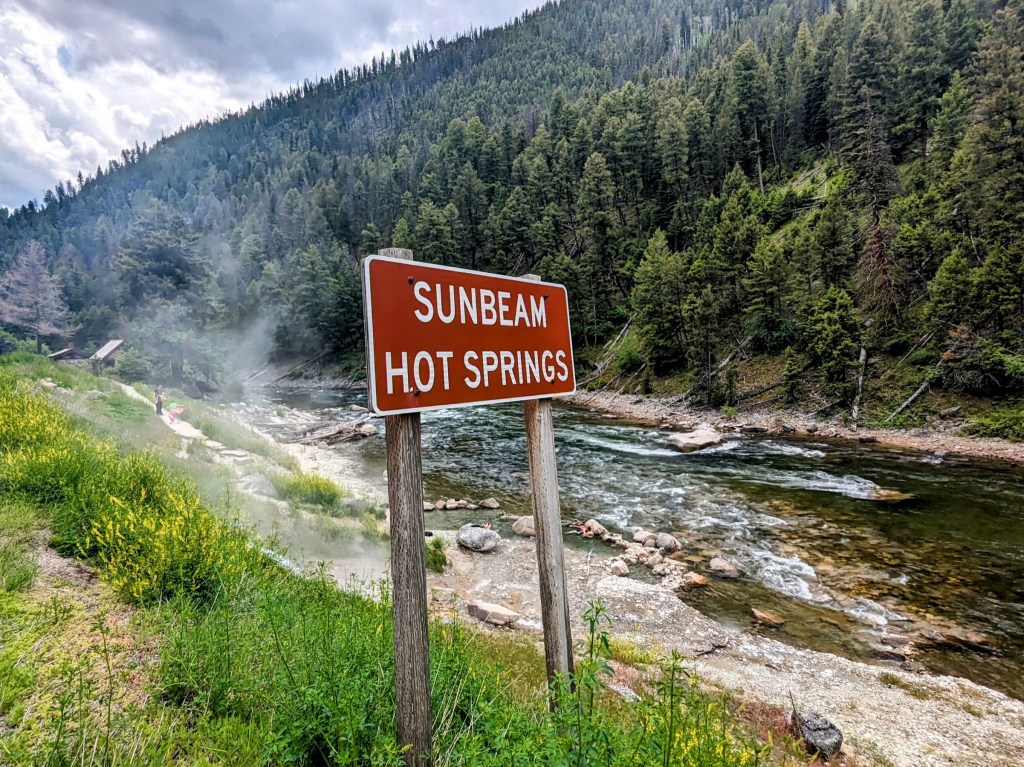
Thermal spring cascades from the hillside adjacent to the highway, then it is directed through a culvert under the highway and finally runs straight into the river. A few pipes placed along the shore redirect hot water into the small pools along the river’s edge which were built by volunteers. Sitting in this perfect natural Jacuzzi was very comfortable.

If, after staying in a hot pool, you feel somewhat “overheated,” simply step out and dunk for a few seconds into the cold Salmon river. Then return and repeat the process. Apparently, back in the 1920-30s, the Sunbeam Hot Springs were used to create a small commercial resort. Today, only small but solid stone cabin is all what is left. But it is a nice addition to Sunbeam: a place, where people can comfortably change clothes or, perhaps, wait out if the weather turns bad.

For me, the soak at Sunbeam Springs was a truly epic experience: a full immersion not only into the soothing hot waters, but also into the stunning scenery of the Salmon-Challis National Forest and the sounds of the rushing by Salmon river.

I left Sunbeam Hot Springs in the early afternoon and continued west on Hwy 75 to the town of Stanley (about 15 minutes). It is a fairly touristic spot with many businesses offering fishing, kayaking, rafting and other activities. There is also a decent choice of places to eat, but I had in mind one particular place: the Sawtooth Hotel and restaurant which is known for its home-made pies. And I was not disappointed: the blackberry pie was excellent!
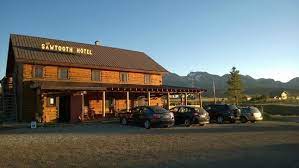

After Stanley, I continued on Hwy 21, and in about one hour arrived to Kirkham Hot Springs.
Unlike Sunbeam (which are pretty much in the “middle of nowhere”), Kirkham Hot Springs are more “touristy” and receive more visitors. That is, for two reasons. First, they are right next to the campground (which was luckily closed by the time of my visit). Second, they are only two hours away from Boise which makes them a popular destination for a day trip from Idaho’s capital. But then Kirkham Hot Springs cover greater area than Sun Beam being “stretched” along the left bank of Payette river: hence, they can absorb more visitors without feeling of being “overcrowded.”

What is also different about Kirkham Hot Springs is that the hot water comes out of steep rocky bank of the river and drops like natural hot showers (or waterfalls) in the pools by the edge of the river.

I have taken a few natural hot showers, sat in several hot pools, and intermittently cooled off in the Payette river.

Two hours more on Hwy 21 and I was in Boise. I returned rental car, spent the night in a motel at the airport, and boarded next morning another bus which was run by the Salt Lake Express – the company which I mentioned already at the beginning of this story. By the way, conveniently, in most of the cities served by Salt Lake Express, they typically offer two pick up locations: one in the downtown and another at the airport. My last destination on this trip was Lewiston, a town at the cofluence of the Clearwater and Snake rivers: the latter also serving as a border between Idaho and Washington states.

Across the Snake river (and connected by the bridge), the town of Clarkston is a “twin brother” of Lewiston, but already in Washington state. Those familiar with U.S. history would guess – and absolutely correctly – that Lewiston and Clarkston are named after Meriwether Lewis and William Clark, the leaders of the famous 1804-1806 Lewis and Clark expedition which crossed the country from Camp Dubois in Illinois to Fort Clatsop on Pacific coast in Oregon. Their goal was to explore the vast territory acquired by the United States from France in 1803 Louisiana purchase. With 828,000 sq miles (2,140,000 sq km) added to U.S. territory, this acquisition was much larger than the later purchase of Alaska from Russia (586,000 sq miles / 1,518,000 sq km).
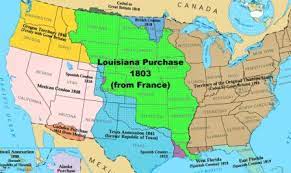
The main reason why people visit Lewiston is the nearby Hells Canyon – the North America’s deepest river gorge carved by the waters of Snake River. At 7,993 feet (2,436 m), it runs deeper than the Grand Canyon in Arizona. The only way to see Hells Canyon is to take a speed-boat tour along the Snake river and inside the canyon. Sorry to disappoint, but I did NOT go on this tour: it seemed too expensive ($200-$300) and not very rewarding.
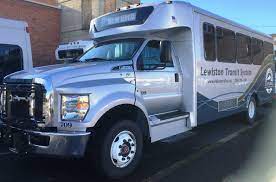
Instead, I spent in Lewiston couple days with my local friend, Sherri, doing various fun things which the locals do. For people who like bike riding, Lewiston and its surroundings is a good area to go on various bike tours: ranging from couple of hours to full day. Unlike most towns in western U.S. – Lewiston has a decent public transportation with buses capable to transport not only passengers but also bicycles. Hence, when planning a bike trip in and around Lewiston, you can also include some segments on a bus.
Together with Sherri, we went on a half-day bike tour. Its last segment, on a designated bike path and along Snake river, was the easiest but also most scenic.
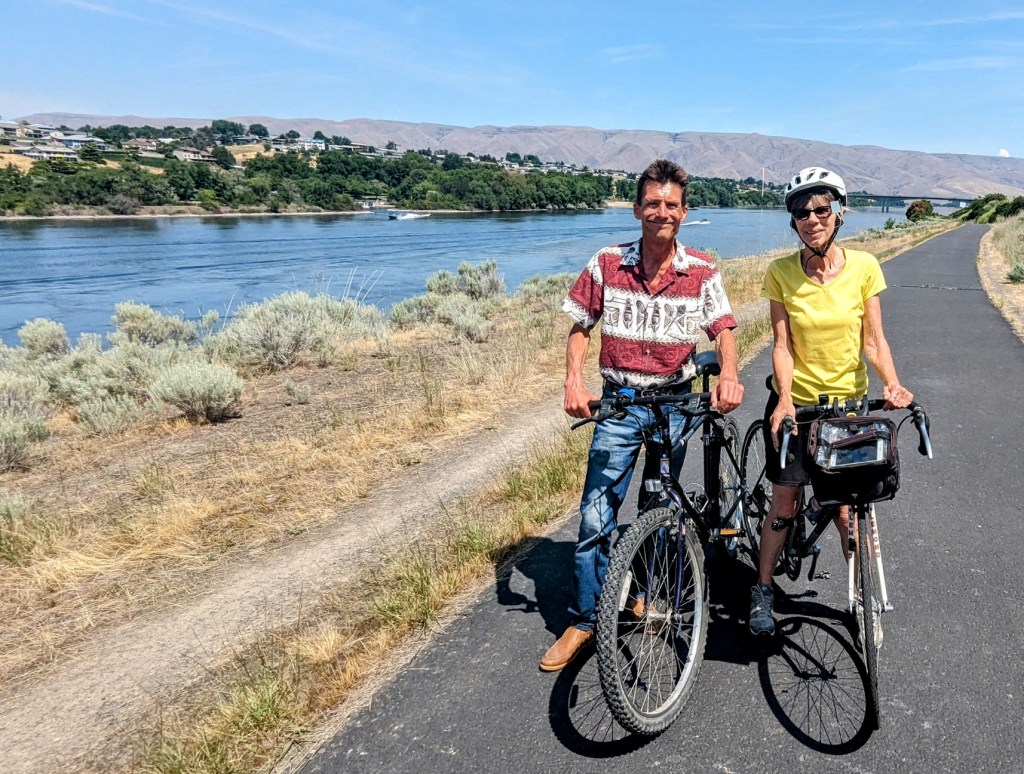
The end point of our bike tour was the cofluence of Snake and Clearwater rivers.
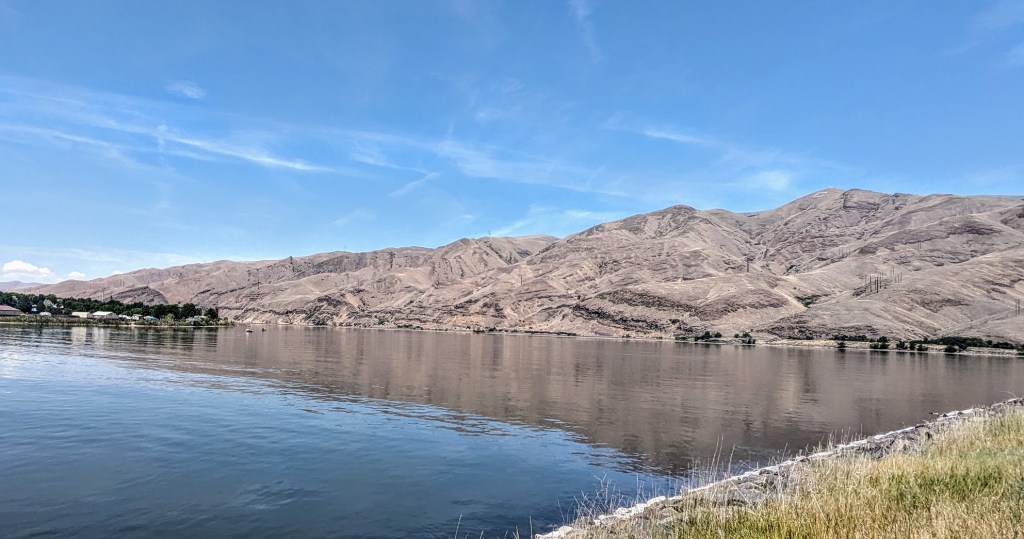
Very close to this cofluence and right next to the bike path, there is Lewis and Clark Memorial Center.
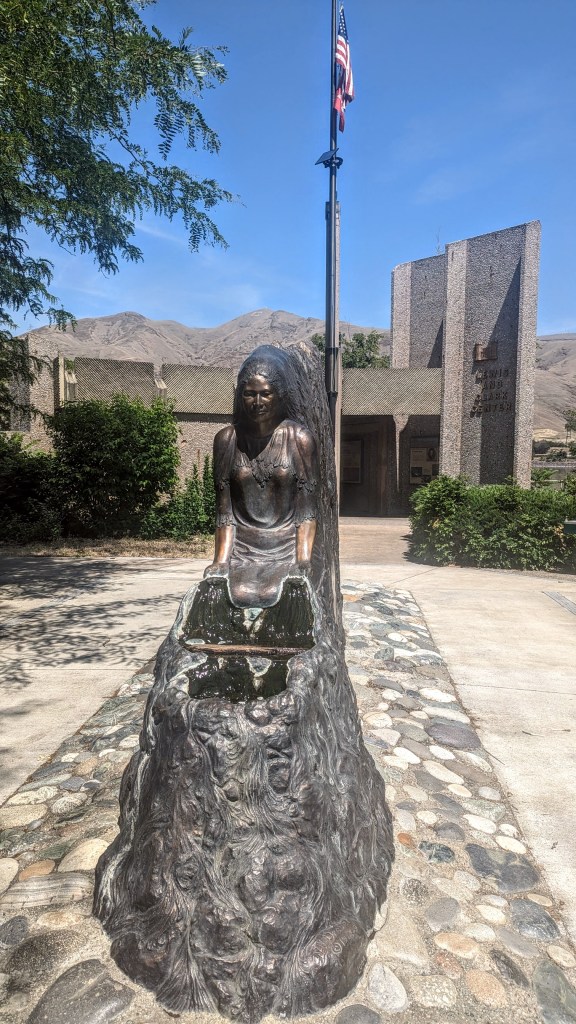
Besides this cool statue, the Center (which is open 24/7) has a small but well organized exhibit area. It depicts the full story of Lewis and Clark expedition, and, also, the role of the local Nez Perce Indian Tribe who essentially saved expedition from starvation in winter of 1805 and helped to get over continental divide the following spring. Nez Perce people are especially credited with the fact that they taught Lewis and Clark to build Indian-style canoes which were much more efficient and sturdy than the boats used by expedition.

After bike riding, we were fairly tired and, in the afternoon, wanted to have some more relaxing adventures. Our choice was to have a picnic and wine tasting at the Rivaura winery which is about 15 miles east of Lewiston. In the distant past, Lewiston was known for apple orchards, but, somehow, they did not survive various economic changes. More recently, however, the fertile soils around Lewiston and plenty of sunshine attracted attention of winemakers, and a few wineries were established within the last two decades. Of those, Rivaura definitely stands out by the quality of wines, breathtaking location and its history.

The land presently used by Rivaura vineyards belonged for several generations to the family of Reece Hewett, a successful local contractor. He told me the stories about him growing up and playing “Indians and Cowboys” on these steep hills. Somehow, in early 2000s, he realized that the fertile soils combined with ideal sun exposure have good chance to produce high quality grapes.
First grapes were planted in 2015, and – incredibly fast – the first wines were bottled already in 2018. Today, Rivaura produces several red grape varietals (Syrah, Cabernet Sauvignon, Merlot, Malbec, Grenache, Petite Verdot) and one white (Viognier). My favorite, however, was their Bordeaux style blend which included five varietals: Cabernet Sauvignon, Merlot, Cabernet Franc, Malbec, and Petite Verdot.
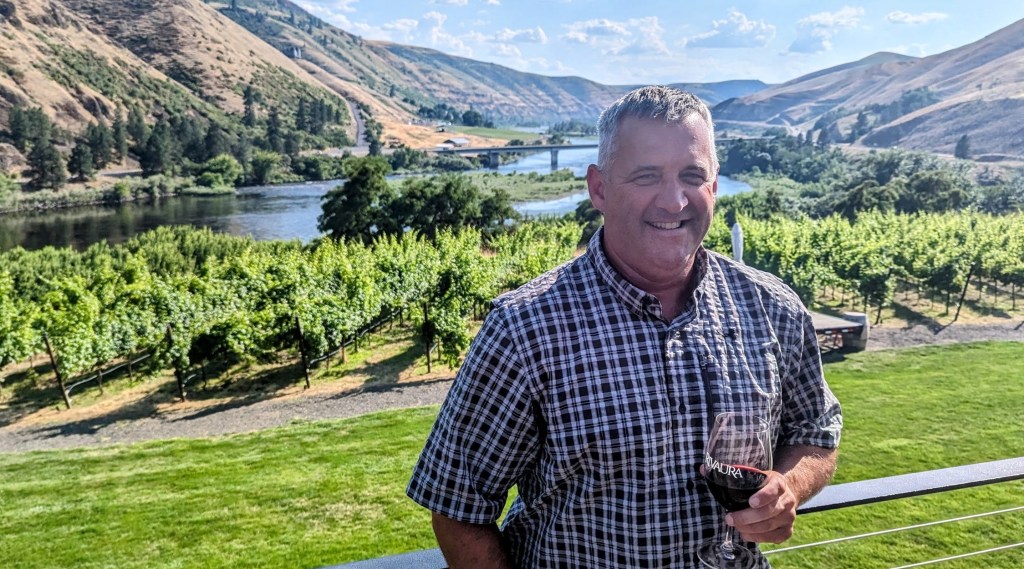
Usually, tasting room at Rivaura winery is open until 5 pm, but on weekends it welcomes visitors until 9 pm.
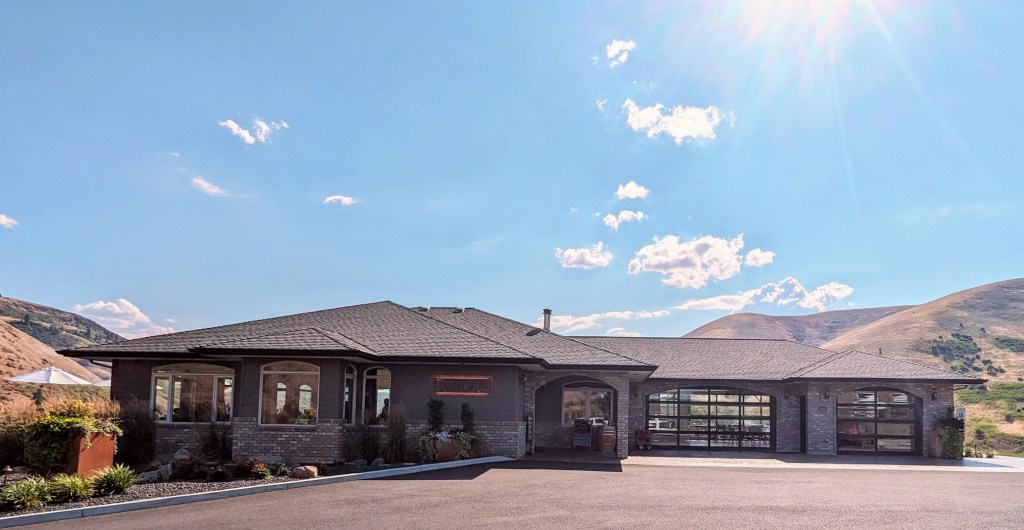
My recommendation is simple: pack some good picnic food, come to Rivaura, taste all their wines, choose your favorites, buy a bottle, sit at the table on their outside terrace, and spend a few hours here eating, drinking, socializing and simply enjoying this incredible view. And it would be even better if you can make it for the sunset time!

My second day in Lewiston turned into what can be described as a “culinary-religious” experience. Knowing my love for cheese, Sherri, my local friend, mentioned a local creamery producing artisan cheeses which also doubles as an elaborate bakery and gourmet coffee-shop: The Pie Safe Bakery and Kitchen. Its location was somewhat unusual: in a tiny unassuming town of Deary, about one hour drive to the north of Lewiston. “Unusual” because it would take an effort to get there from any more or less populous center (like Lewiston, Moscow, Pullman).
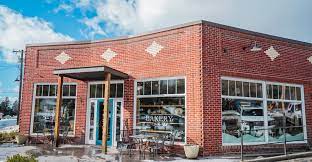
Hence, I was curious: what type of place it was and why is it so popular that people drive significant distances to visit? The first sight, when we arrived, was pleasant: a nicely refurbished brick building with floor-to-ceiling windows. It clearly stood out in appearance from all other homes on Main Street of Deary.
Inside, the overall design and ambiance were also quite impressive.

The coffee- shop was by no means full, but then it was an early afternoon on a week-day, and still a few patrons were enjoying their – appealingly looking – dishes.
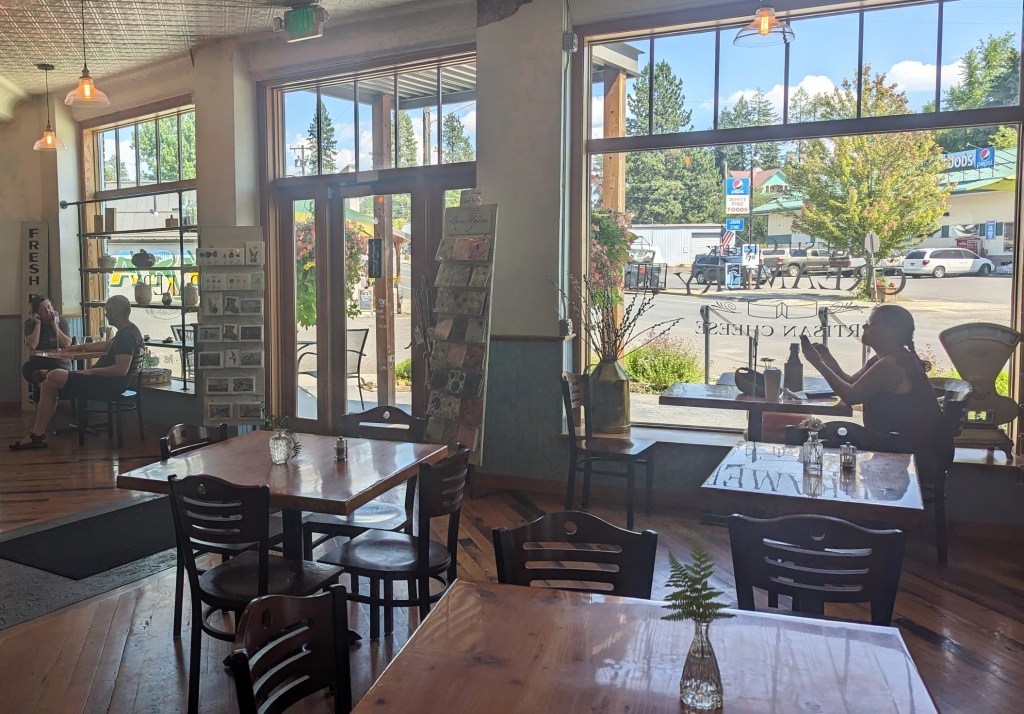
On one side, the dining area had a huge window which allowed to look into the room where their cheeses were made.

Several “self-serve” refrigerators inside the bakery displayed an impressive variety of cheeses (fresh, aged, blue, camembert, mozzarella, cheese curds) produced and offered here. The award-winning ribbons attached to several of them suggested that the creamery’s claim for fame had – at least – some grounds.

I went to the counter to try some of their goodies and looked at the menu: a variety of interesting soups and salads, brick-oven pizza, grilled paninis, various milkshakes. But, at this time of the day, I was craving something sweet: unfortunately many of their pastries and pies were sold out already, but still there were some good choices.

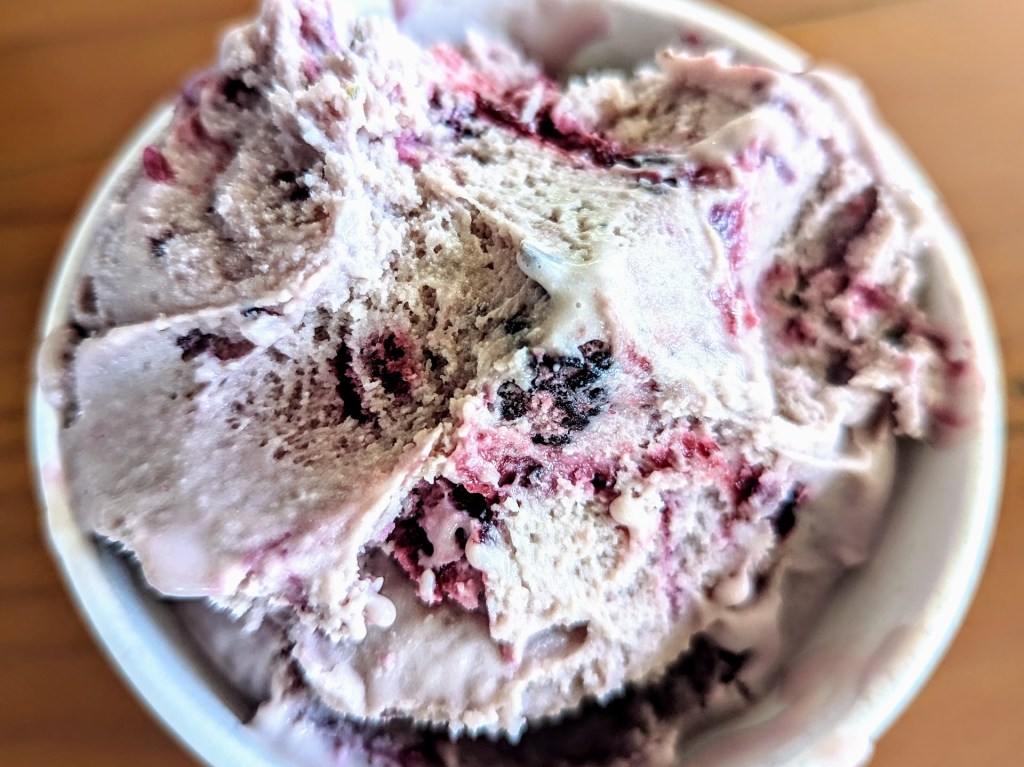
I ordered “blackberry and lime” ice-cream and this combination of flavors was excellent.
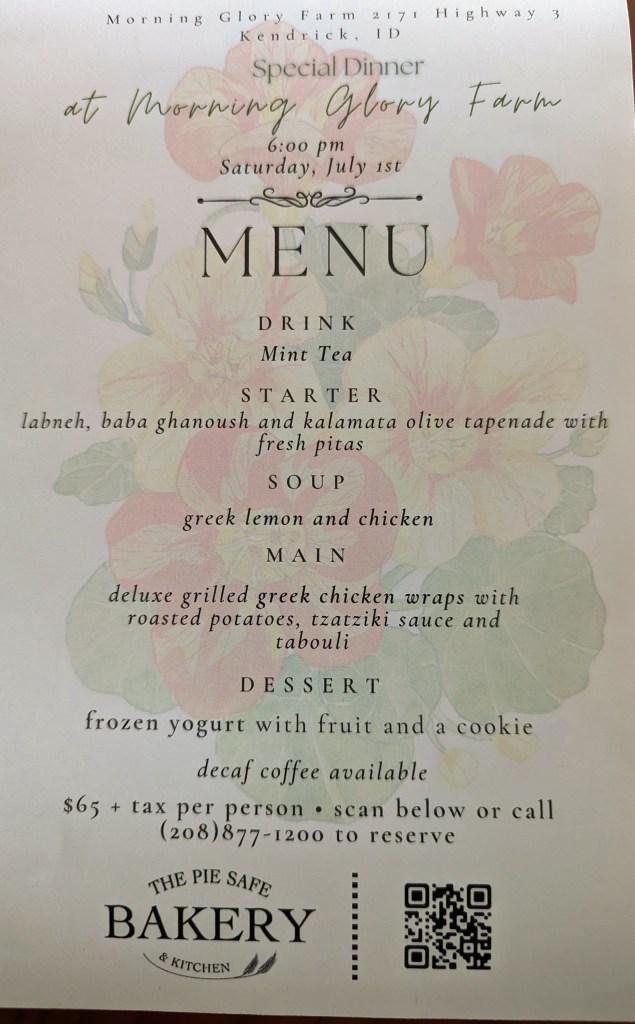
Then I noted a gourmet menu for a dinner which was organized by the bakery, but in a different setting: the meal will be served on what was called “Morning Glory Farm” in a nearby town of Kendrick.
Right next to the gourmet dinner menu, I found another flyer inviting people to come to the farm for the horse-back riding.

All in all, the The Pie Safe Bakery seemed to be a place which is much more than simply “bakery.” Sherri told me that both bakery and Morning Glory Farm were founded and owned by a couple who moved here from Texas. I noted also that all employees in the coffee-shop were young ladies who were extremely polite and sort of conservatively dressed (long skirts and sleeves, etc.). Being by trade the scholar of religion, I asked if they belong to a particular religious community. Their answer was: yes. Both the owners of the farm and bakery and their employees were friends and members of religious group called “Heritage Idaho.”
I easily found their website: the Heritage Idaho described itself as “An agrarian and craft-based intentional Christian community. We aim for simplicity, sustainability, self-sufficiency, cooperation, service and quality craftmanship.” It seemed to be also an inviting community reaching out to wide audiences: their website offered several workshops and crafts festival. Unfortunately, my time was limited, but I thought: It would be interesting to find out more about this group, if I am back.
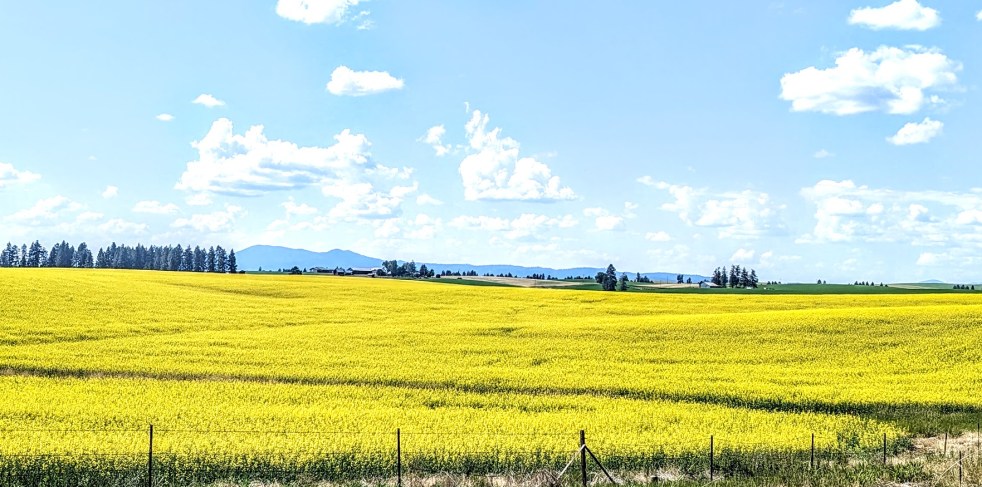
We left The Pie Safe Bakery and headed back home. But we drove very slowly absorbing gorgeous scenery: wide valleys with distant mountains, blue skies, and the fields covered with bright yellow alfalfa flowers.
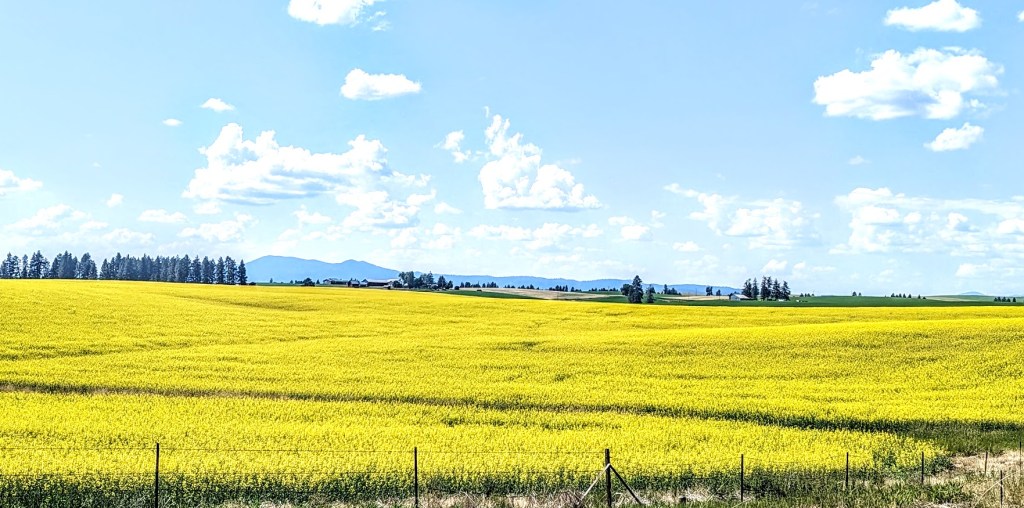
Because of this unhurried cruising, we noted a historical marker indicating the turn-off towards “Bethany Memorial Chapel” and with the narrow road going through these yellow flower fields. The temptation to drive through the “color paradise” was irresistible, and we followed directions. In less than a mile we arrived to a snow-white church which was surrounded by a small cemetery.
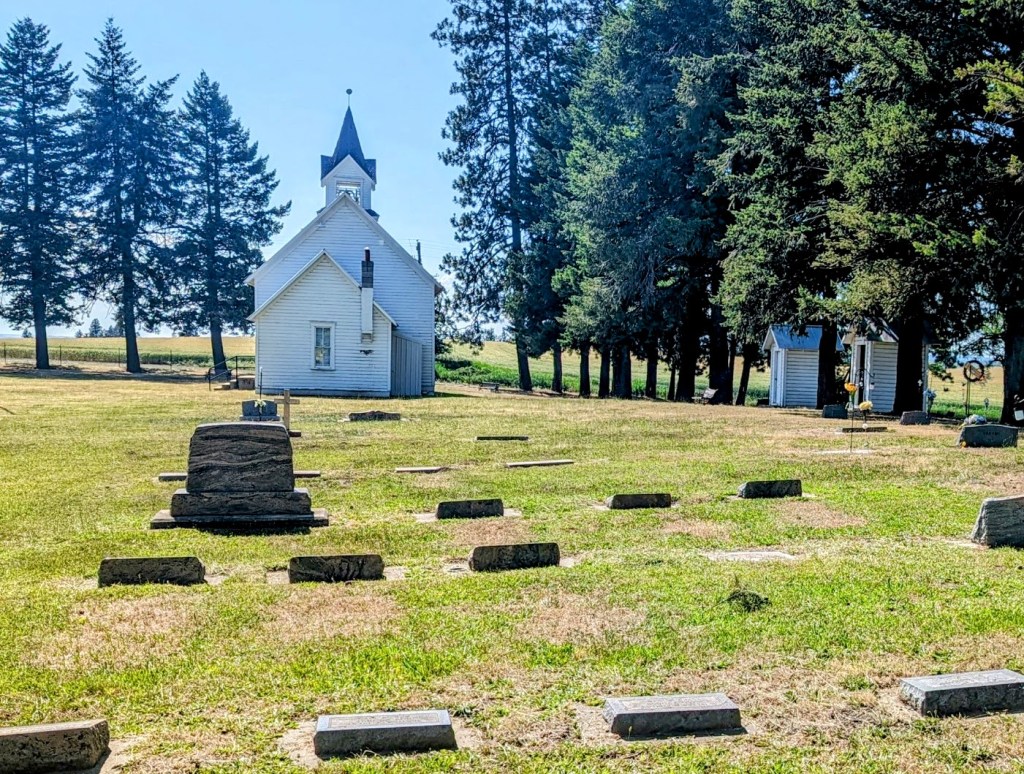
The church was locked, but information stand in front of it offered phone number and the name of a person to call, if we would want to visit inside. Most importantly, the short history of this place was also laid out there. Built in the Carpenter Gothic style, the church was founded in 1908 by 12 families of Norwegian homesteaders who settled here at the beginning of the last century. Its interior was described as finely carved out woodwork. When the active congregation slowly “died out” in 1960s, a group of local community enthusiasts formed the foundation to maintain this fine example of church architecture and historic cemetery.
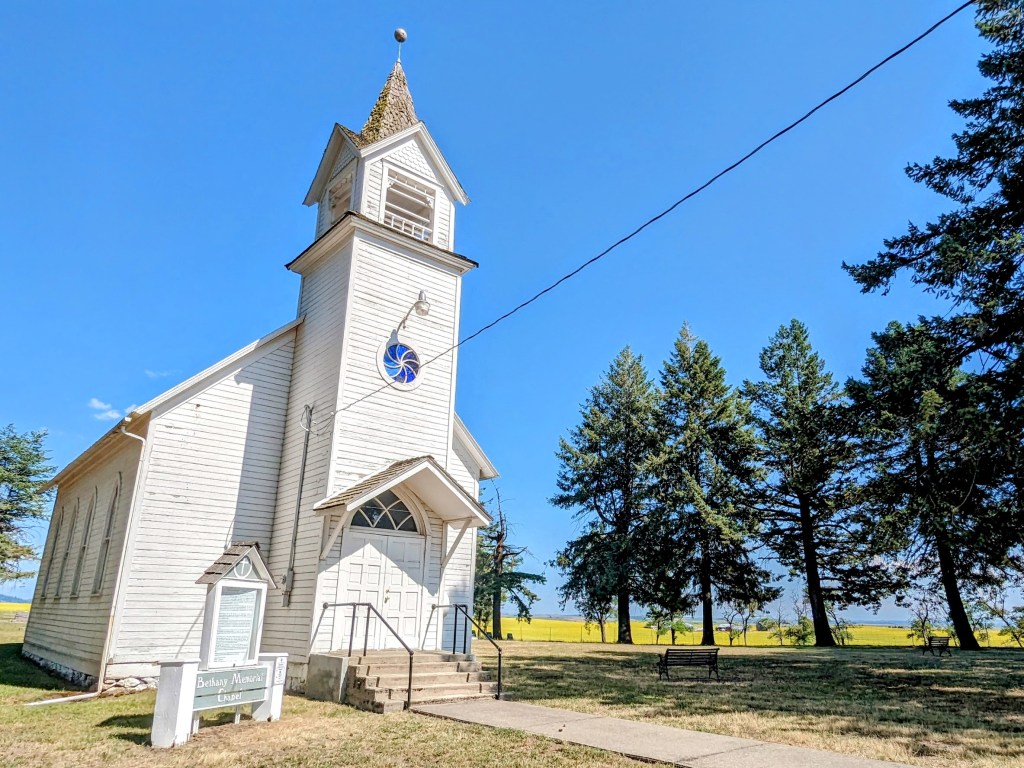
I and Sherri sat on a bench in front of the church and stayed silent for a while. While absorbing peaceful calm of this place, I thought that the massive marble and granite gravestones look as solid and resilient as these Norwegians were who settled here and developed lands over a century ago.
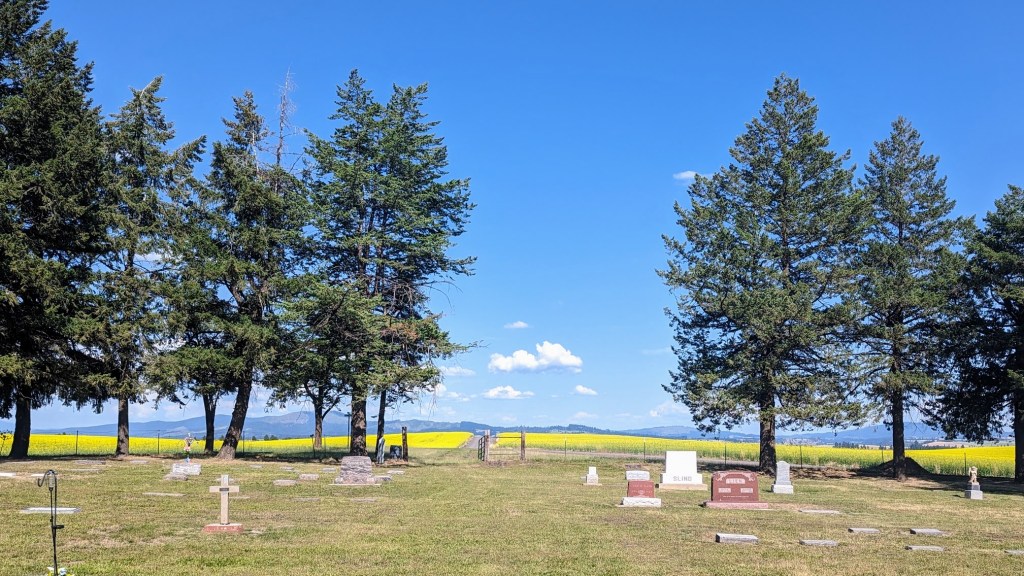
And then I walked to the yellow fields and simply felt happy that I went on this trip through the Idaho’s backroads and also very grateful to all people whom I met on this journey.


 Alexei on the Road
Your photos of the “west” in your travelogue seem compelling. It appears you had an amazing trip.
On a side note Alexei, in your recent research you seem to indicate that in actuality there are less than one million practicing Orthodox in the U.S. not counting the Oriental churches which seem to be growing. Is my memory sound? Do you recall how many practicing Orthodox there are in the Antiochian Church/Jurisdiction in the U.S.?
Thanks for your time,
Joel Williams
P.S. on a tangential note since the retirement of Bishop Basil Essey, the Diocese of Wichita and Mid-America has been without a Bishop for many months which seems abnormal to me. That retirement came about the same time as the hush-hush defrocking of then Metropolitan Joseph.
>
LikeLike
Hello Joel,
<
div>Thank you for your comments and questions. Indeed, your recollecti
LikeLike
WOW, what a trip! Nice ABS at Sunbeam Hot Springs! God bless, love, Fr. Joe
LikeLike
Please remove me from your email distribution list. JOHN
LikeLike
Please delete my address from this mailing list.
LikeLike
<
div dir=”ltr”>Thanks Alexei! Wh
LikeLike