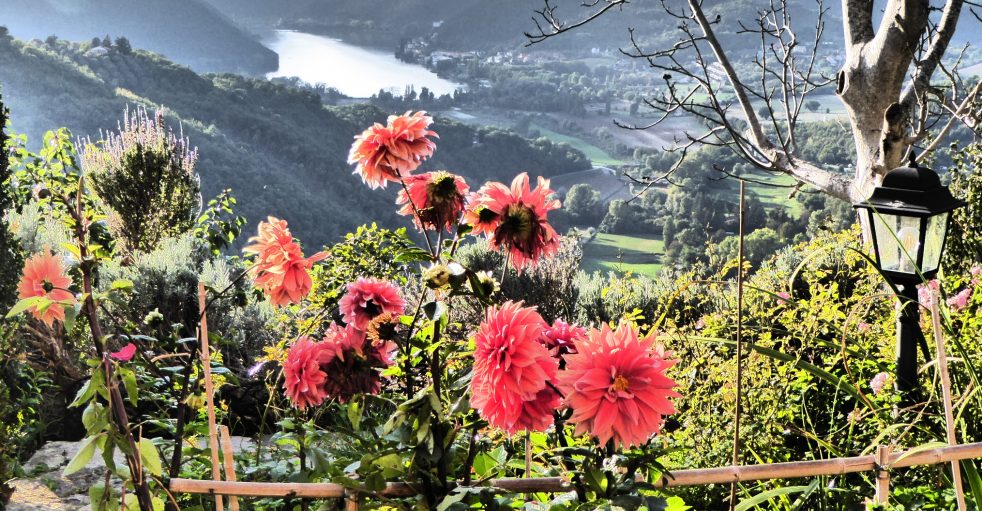
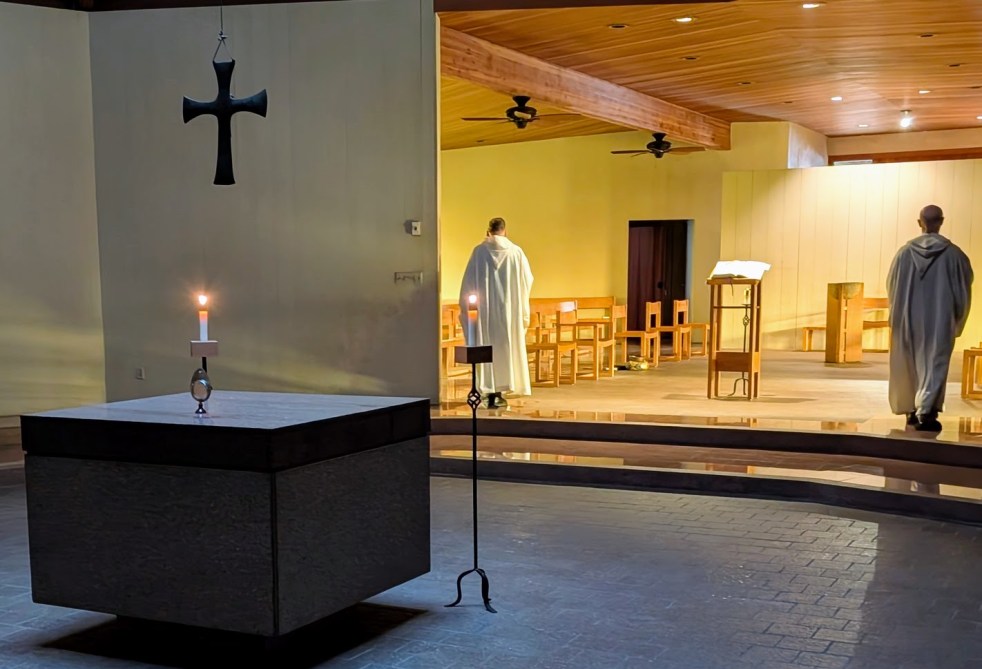
Big Sur is one of California’s most iconic areas. Here, in the rugged and undeveloped section of Central Californian coast, Santa Lucia mountains rise abruptly from the Pacific Ocean. There is only one road to come here and explore: the narrow and winding Highway 1. It takes visitors into mesmerizing blend of dramatic cliffs, bizarre geological formations, crushing waves, pristine beaches, and ancient Redwood groves.


Big Sur’s enduring power of nature attracts not only casual tourists, but also many of those on some sort of spiritual quest. Jack Kerouac, the “father” of hippie movement, lived here in a primitive cabin while working on novel “Big Sur” (1962) which delves into themes of isolation, nature, and personal struggles. Henry Miller, American novelist and essayist, wrote: “It was here, in Big Sur, that I first learned to say ‘Amen’.”
And predictably, a number of intentional spiritual communities also call Big Sure their home. Think, for example, of Tassajara Hot Springs, a Zen Buddhist monastery and retreat. Or, Esalen Institute which grew out of New Age movement and presents itself as a holistic healing and educational center.
Yet, it is still somewhat a miracle that a New Camaldoli Hermitage, a branch of one of the oldest and most traditional Roman Catholic monastic orders, was founded here in 1958. “Hermitage” is a word referring to a habitation of someone who lives in solitude for some spiritual or religious reasons. Located on 900 acres / 360 hectares at an elevation of 1300 feet, New Camaldoli is surrounded by untouched chaparral, redwood, and oak forests. The wide ranging views of ocean and woods creates a setting profoundly inviting to the contemplative way of life – the key feature of Camaldolese monks.
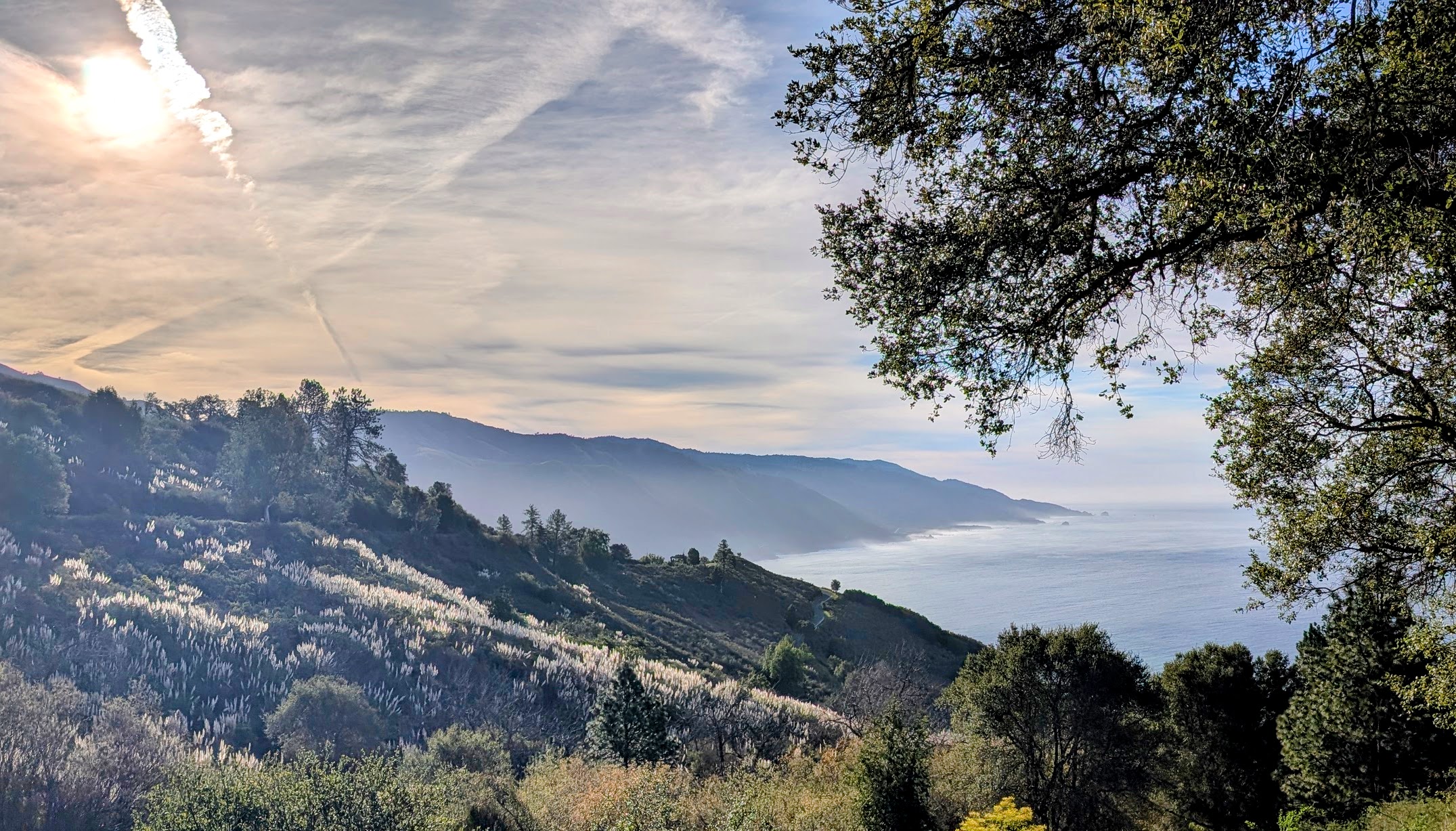
A few words need to be said about history and traditions of Camaldolese monastic order also known formally as “Congregation of Monk Hermits of Camaldoli.” Its headquarters are in Italy, in the mountains of Eastern Tuscany, in the hamlet of Camaldoli.
There, on the mountainside stands the original 11th-century Holy Hermitage, while a larger 16th-century monastery is located a few kilometers apart.

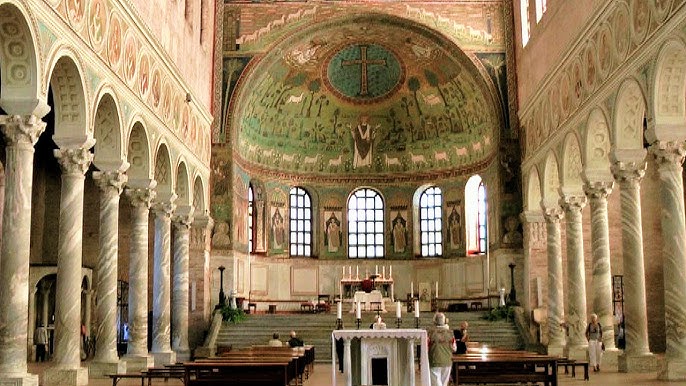
The founder of the Camaldese order was Italian monk, Romuald (ca 950-1025/27), later recognized as a Saint. Born into aristocratic family, at the age of 20, Romuald had a dramatic personal experience: he served as a second to his father in a duel, in which a relative was killed. Devasted, Romuald went to Basilica of Sant’Apollinare in Ravenna and stayed there for 40 days of penance.
And this was where and when he decided to become a monk. It is also believed that Basilica’s magnificent Byzantine mosaics initiated Romuald’s appreciation for Eastern Christian (currently many would say “Orthodox Christian”) spirituality.
In St. Romuald’s times, monastic life in Italy was shaped by St. Benedict of Nursia (c. 480 – 547) who is regarded as “Father of Western Monasticism.” According to the Rule of St. Benedict, monks should live communally under the authority of the abbot and lead the life which balances prayer, work and study. This style of monasticism is known as “cenobitic monasticism.” Through his spiritual teachers, however, St. Romuald has become familiar with another school of monasticism: the eremitical tradition which is more typical for Christian East (think of Middle East, Egypt). This tradition emphasizes solitary, secluded and prayer-focused life of a monk.
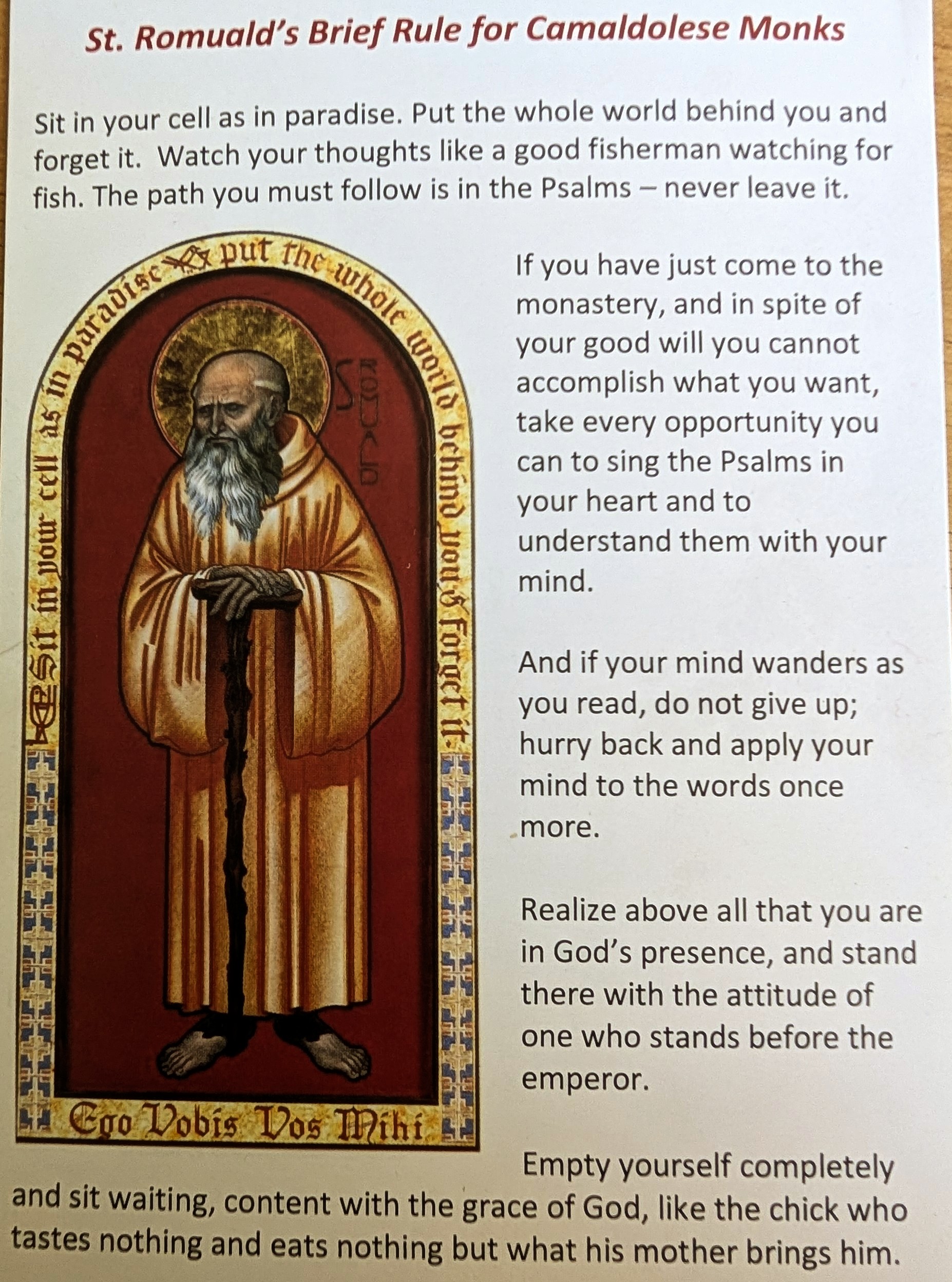
St. Romuald felt a need to renew monasticism by merging the eremitical tradition with that of cenobium. He thought about integrating Eastern Christian solitary heritage in Western Benedictine communal living. And this is how Camaldolese order was born. In essence, Camaldolian monks typically live in a commune, but also spend sufficient time in solitude with focus on prayer and self-reflection. St. Romuald’s way of thinking is expressed in his “Brief Rule.” See below.
In 1012, St. Romuald met a certain Maldolius who had a vision of monks in white garments and ascending into Heaven. Maldolius gave St. Romuald a piece of land which would become “Campus Maldoli” or “Camaldoli,” the headquarters of Camaldolese order. There the monks lived in individual cells, but prayed together in the community church and shared meals in the refectory. It was also time, when Camaldolesians adopted their distinct white habits.
Fast forward, 945 years later, in 1957, two Camaldolese monks arrived from Italy to California looking for opportunity to establish the first Camaldolese community on American soil. It is hard to tell what brought them to Big Sur, but – as mentioned previously – this place always attracted “spiritual seekers” of various extractions.
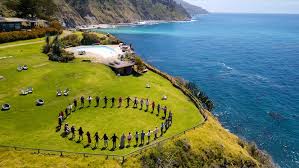
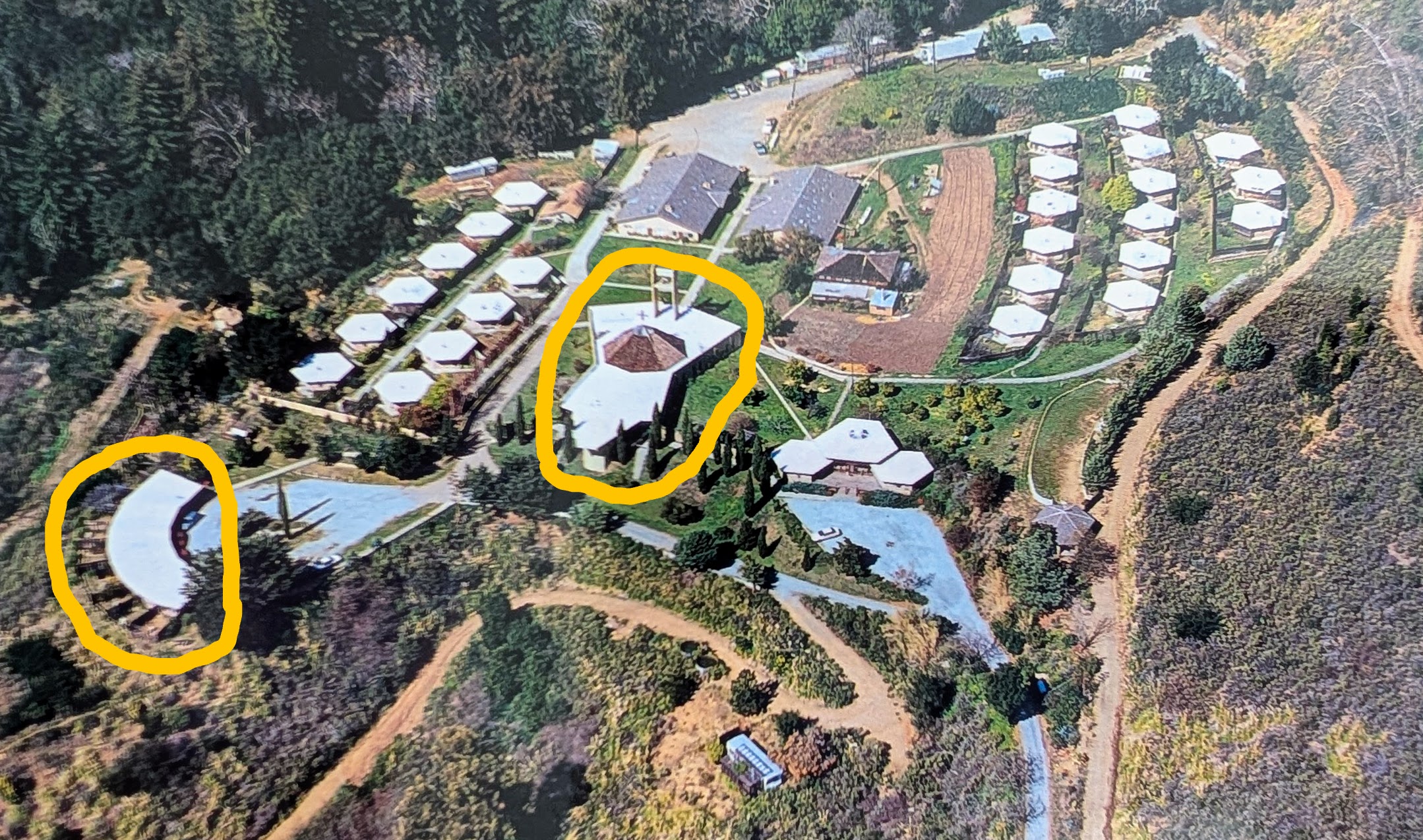
And similarly to 1012, a nearly miracle happened. Myrtle “Tillie” McKalson Glauert, a prominent woman, landowner and rancher, donated a sprawling 880 acres ranch to the monks. Its remote yet stunning location was a perfect fit to the contemplative ideals of the Camaldesians. Myrtle “Tillie” passed in 1958 not witnessing the Hermitage being built, but this is what she would see today.
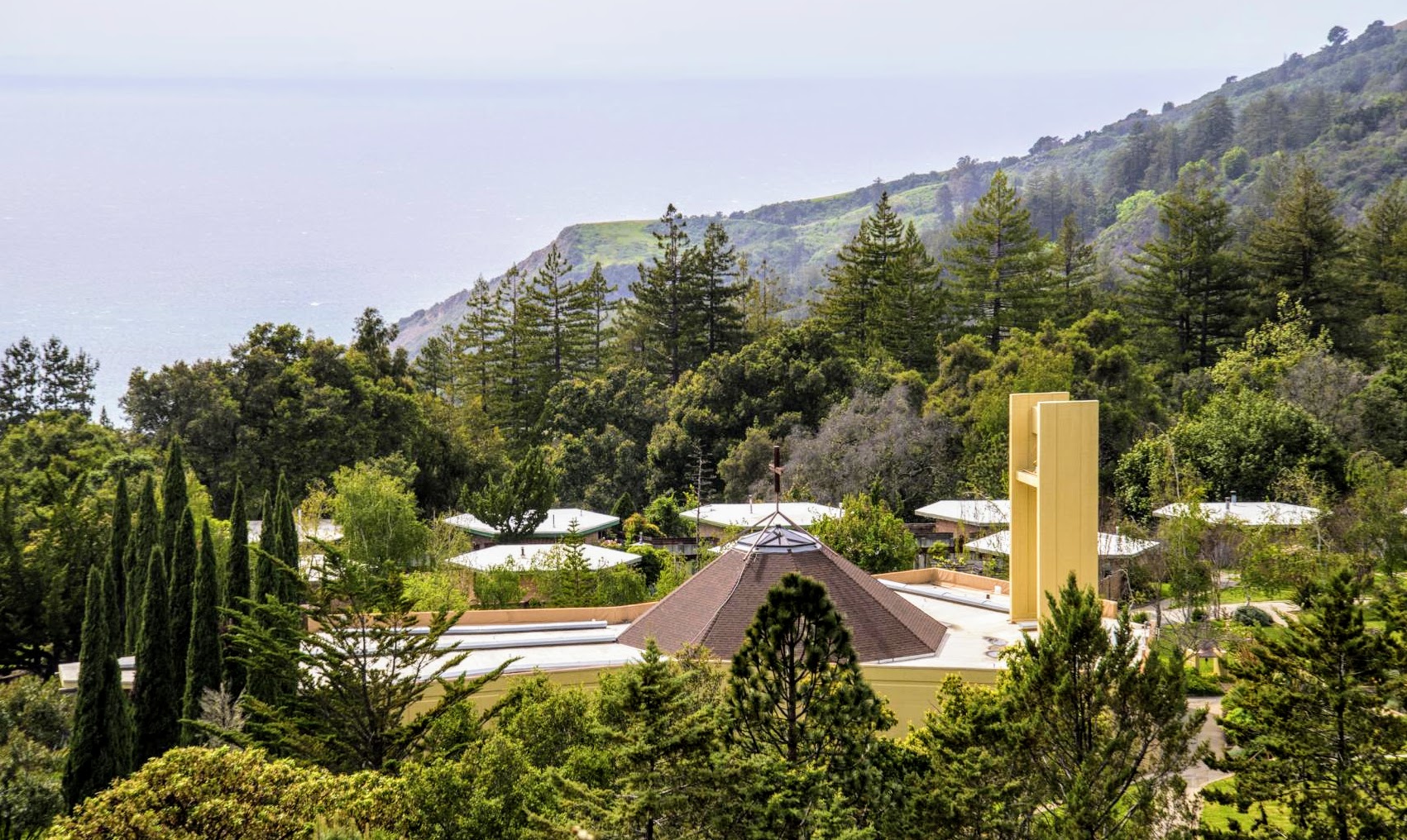
And here is New Camaldoli from the air. I circled with yellow paint retreat house for visitors and main church.
I like visiting monasteries (read my stories about New Skete in Upstate New York or Vezelay in France), and New Camaldoli has long been on the list of “to go” places. To make it clear, anyone can come to Hermitage on a day visit: there is no need for advance arrangements. But if you wish to stay a few days in Monastery’s retreat house, then look first at Hermitage’s website , learn a few simple rules for overnight visitors and select type of accommodations. Afterwards, write to Katee Armstrong, the Monastery’s contact person (katee@contemplation.com) and make a reservation.
Everyone is welcome to stay at New Camaldoli: both men and women, and persons of any religious background (or not religious at all). But two kinds of people should probably NOT come here. First, those addicted to Internet, because there is no Internet access for the guests and no cellular signal within 40 minutes of driving. Second, those who like to talk, because this is a silent retreat with idle chatter being strongly discouraged except prearranged conversations on spiritual matters with one of the monks.
How to get to Hermitage? The only option is by car and via scenic coastal Californian Highway 1.
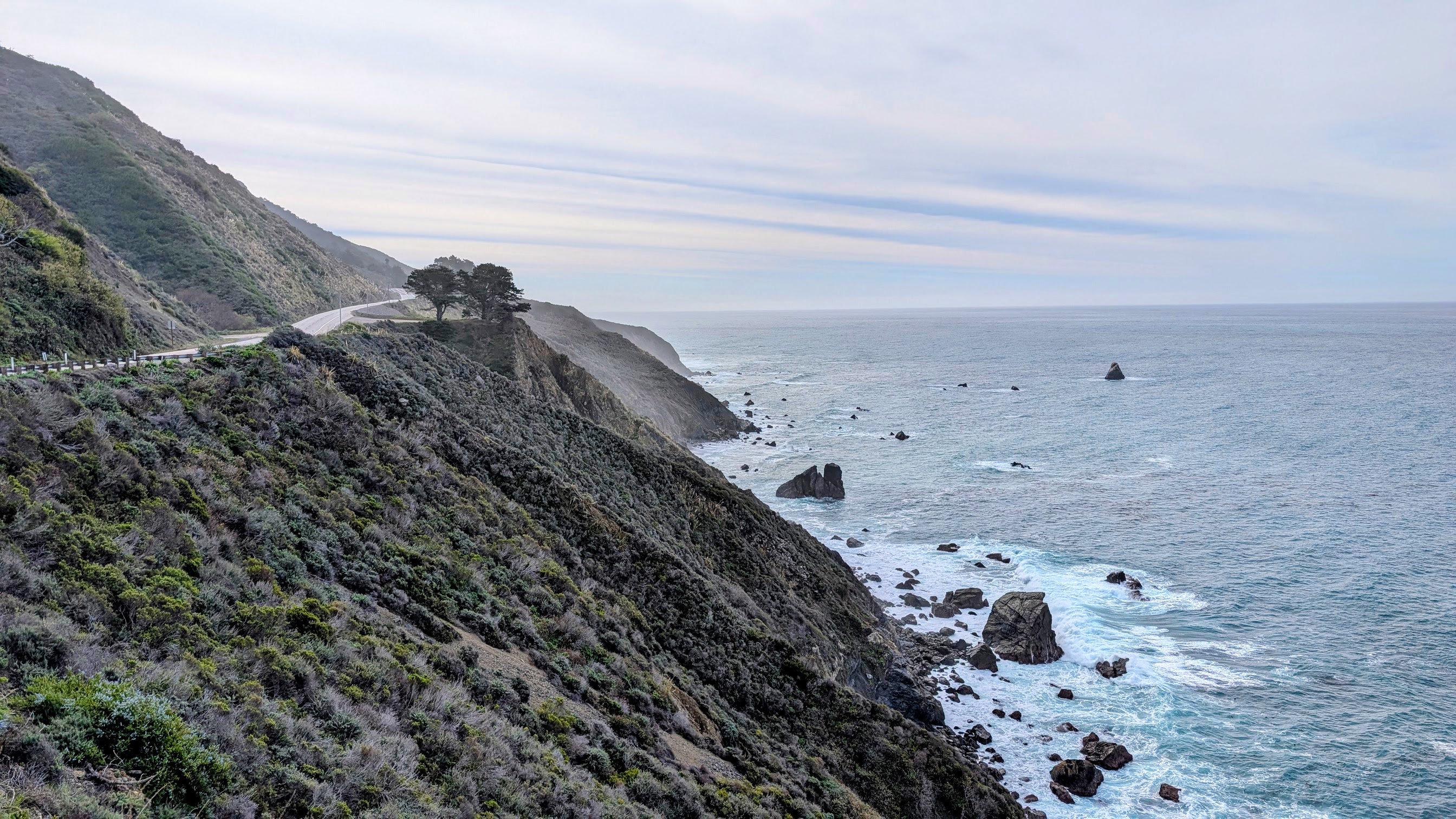
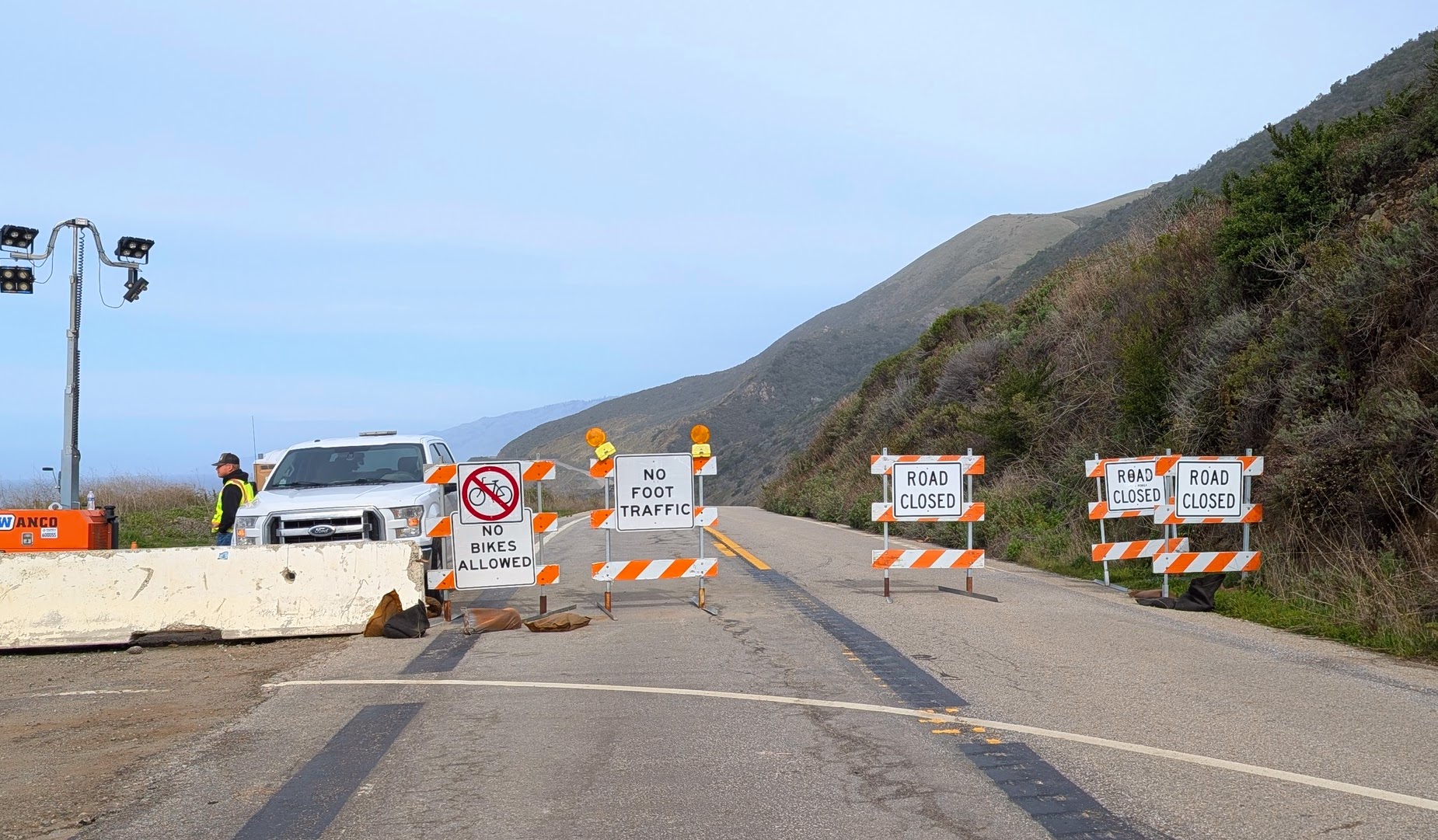
Problem is that right now (February 2025), the road is closed a few miles to the North of the Hermitage due to the landslide. Hence, it is easy to access Monastery from the South (say, Los Angeles), but traveling from North (say, San Francisco) is somewhat more difficult.
The best way to travel from the North is to take Highway 101, exit at King City, and turn into Nacimiento-Fergusson Road which will take you to the coast. Nacimiento road is in a good condition, but it is very narrow and winding: not for faint hearted. Drive carefully and after about one hour you will arrive to vista point which feels like “welcome to the Pacific.”
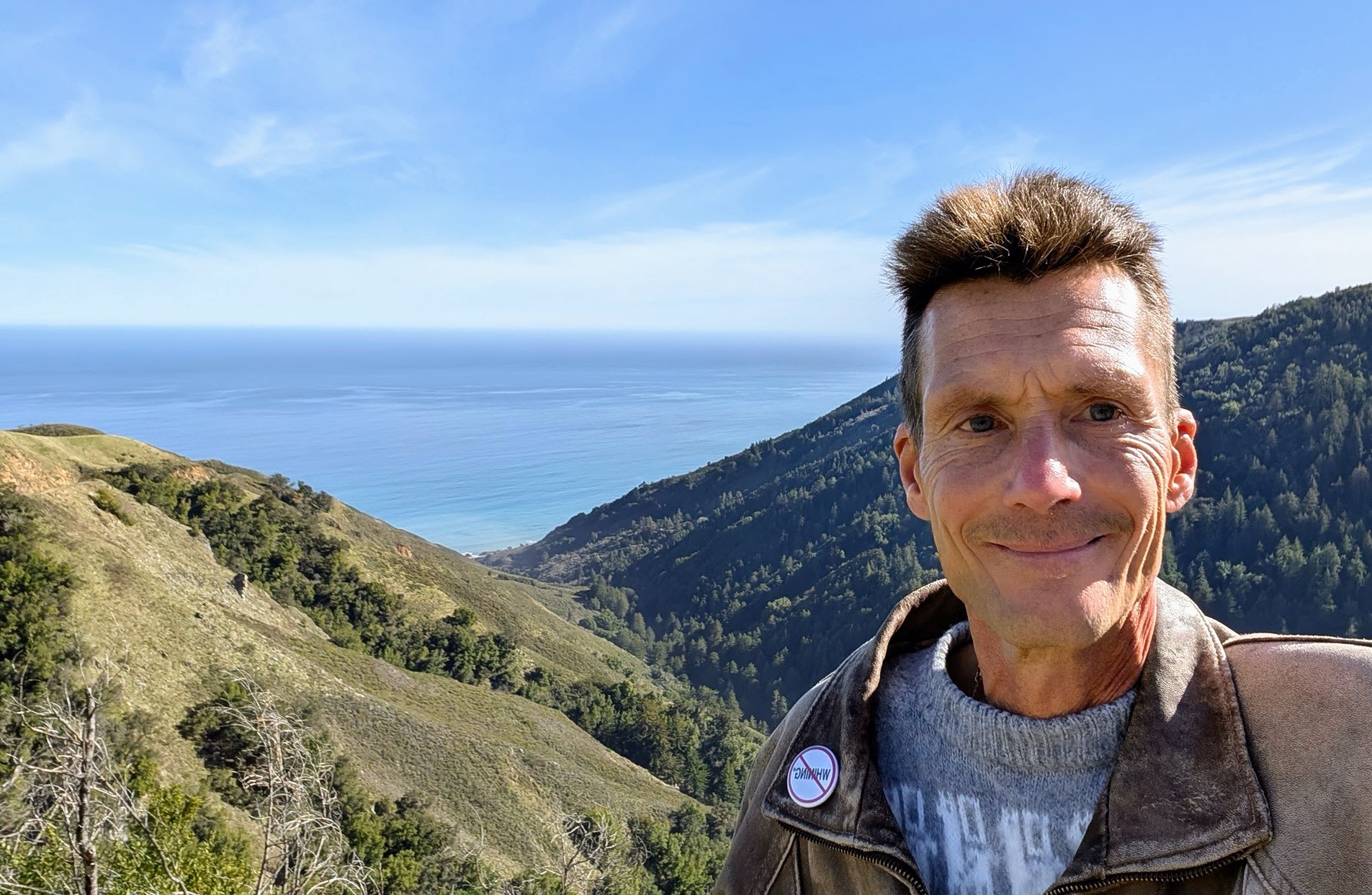
And don’t forget to turn around and look at the gorge from which you just arrived here.
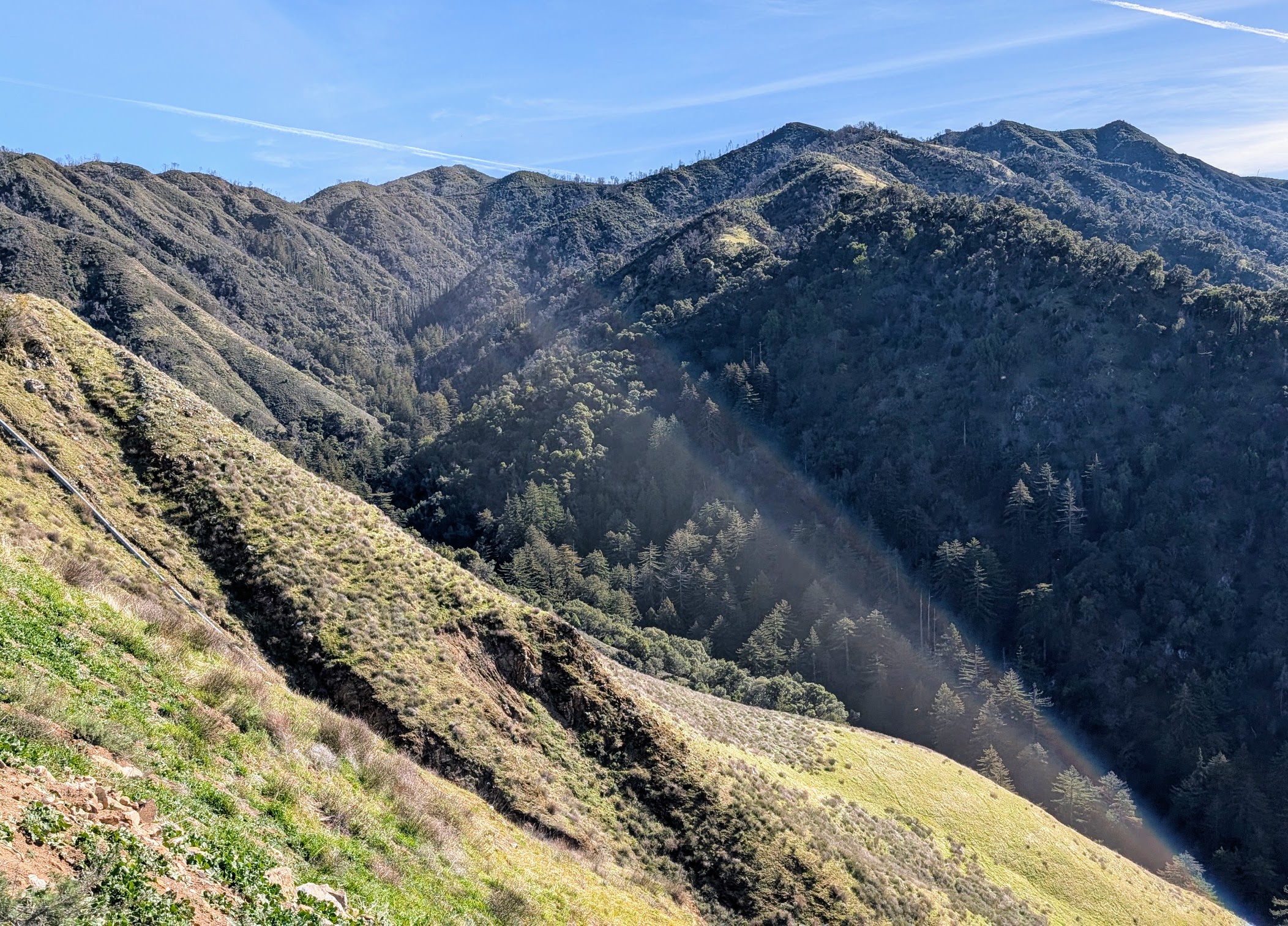
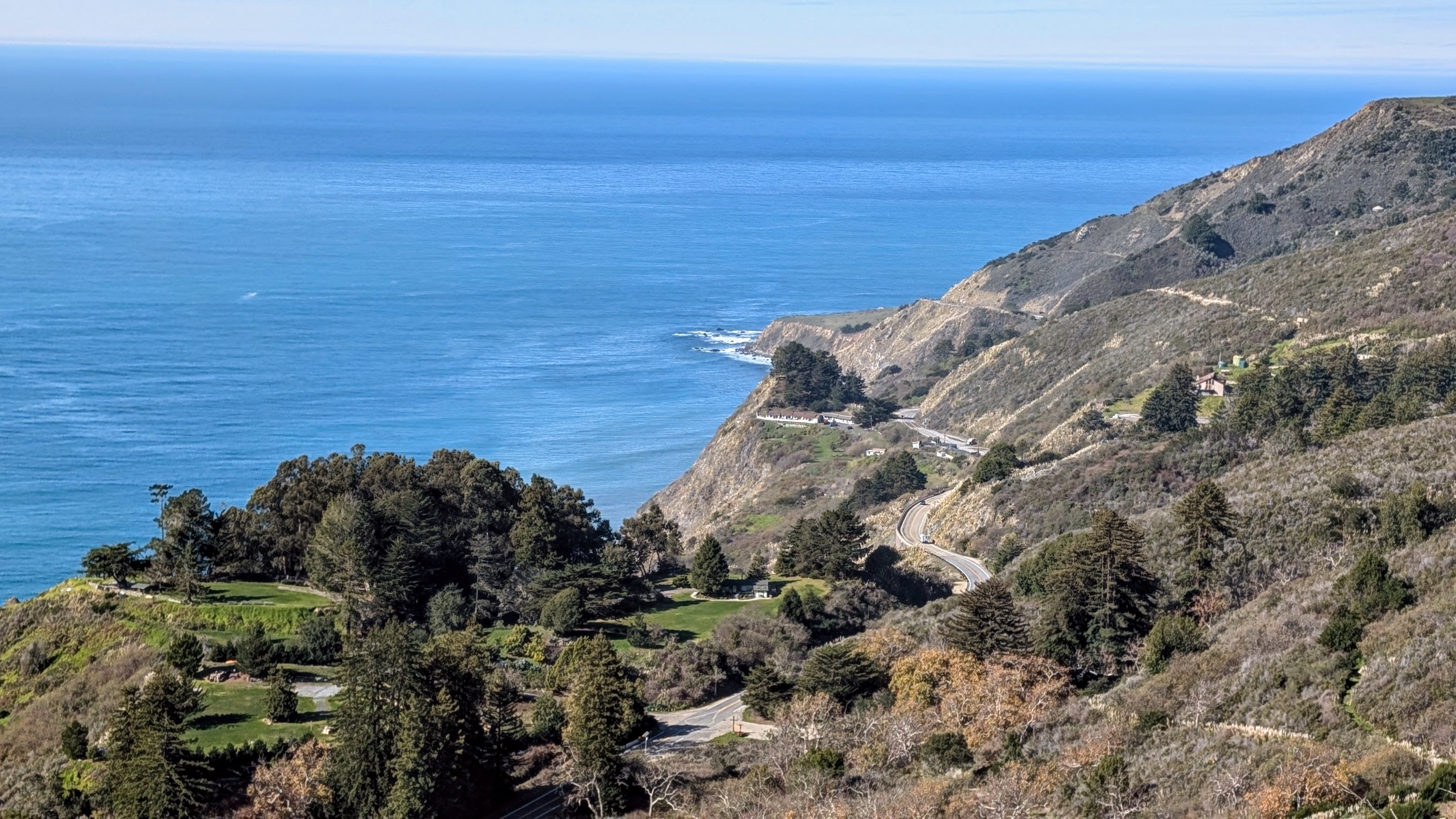
From this vista-point, Nacimiento Road goes down to the coast and intersects with Highway 1. Turn North and in about 3 miles / 5 kilometers you will arrive to a private road leading to the New Camaldoli.

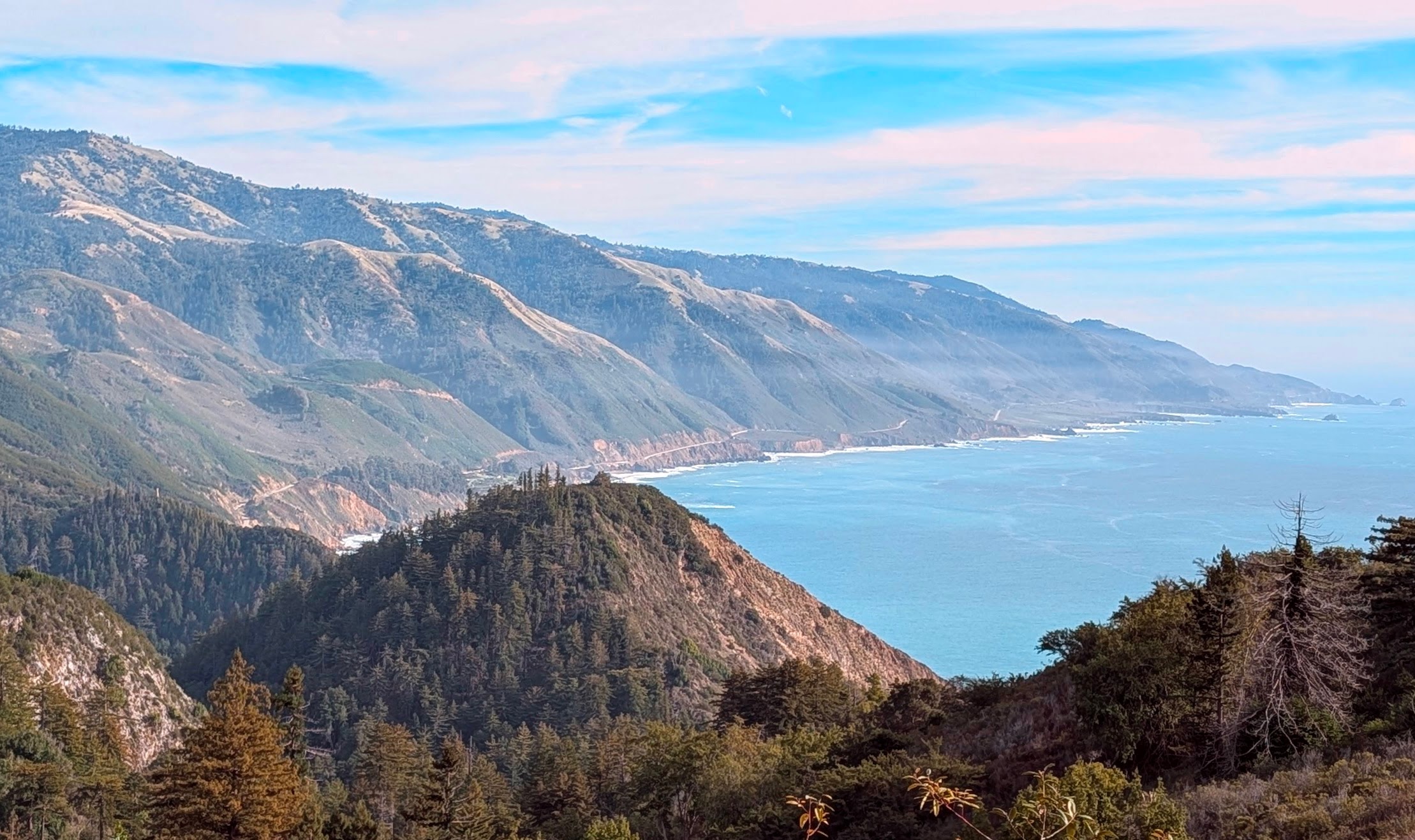
The sign at the road to Hermitage says: 2 SCENIC miles. And indeed, it is very scenic with vistas like this one coming constantly into the view.
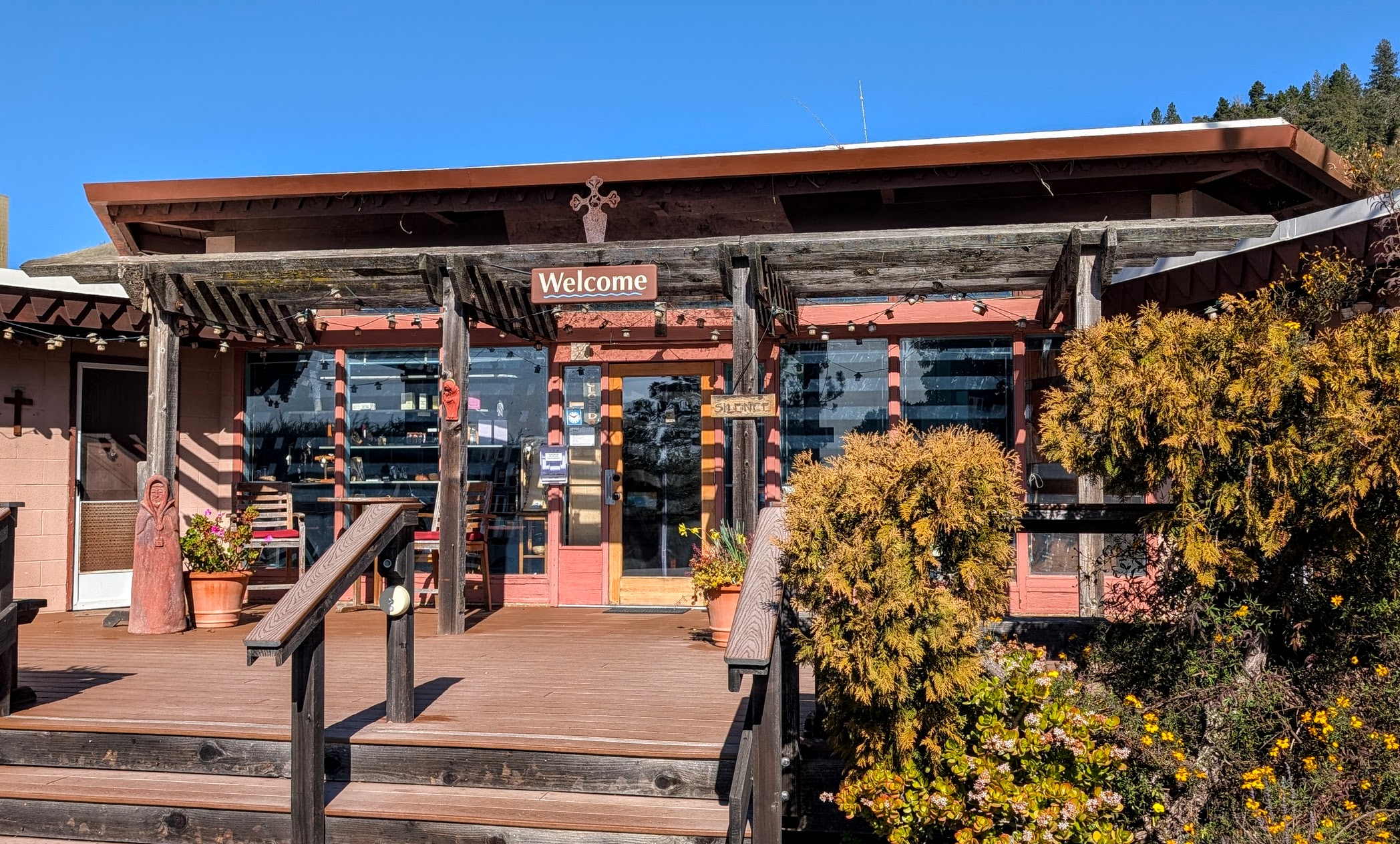
Right after entering Monastery’s grounds, you will see a bookstore. It also serves as a reception and orientation center for overnight guests.
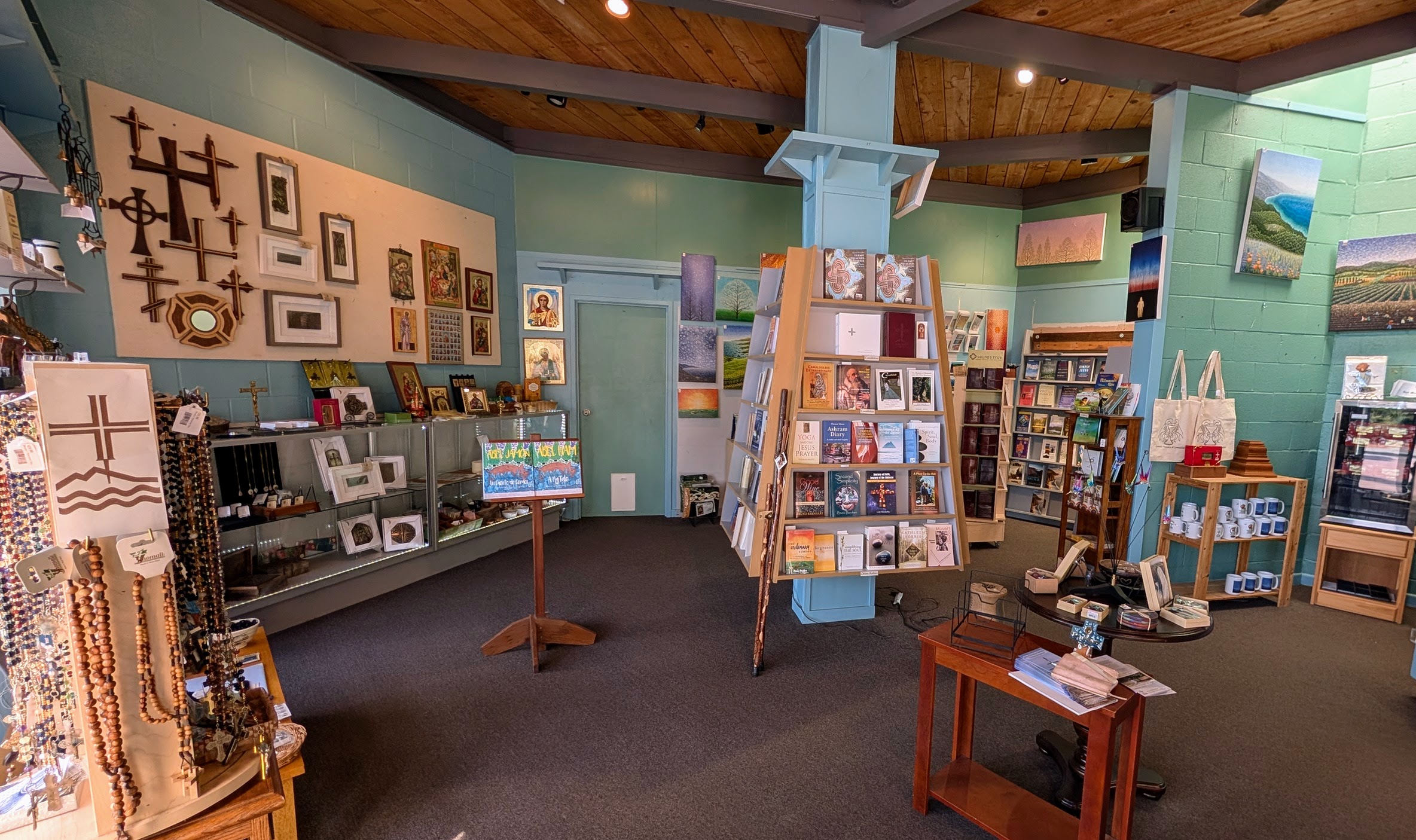
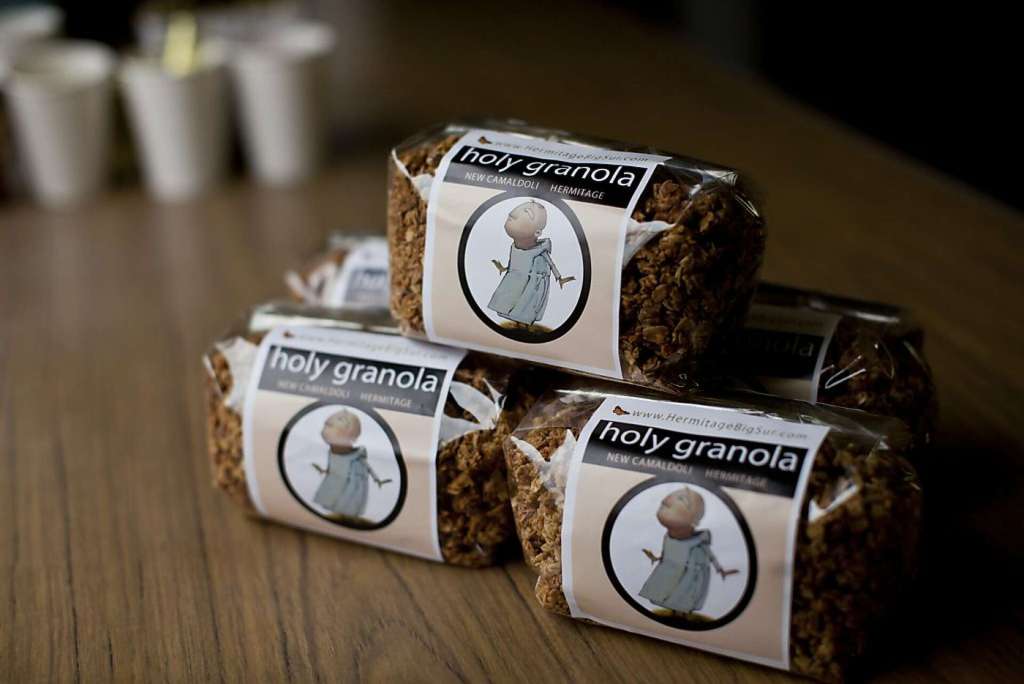
Inside, you will find a good selection of not only books, but also various souvenirs and gifts. Among them, “Holy Granola” made by the monks is the most “bestselling item.”
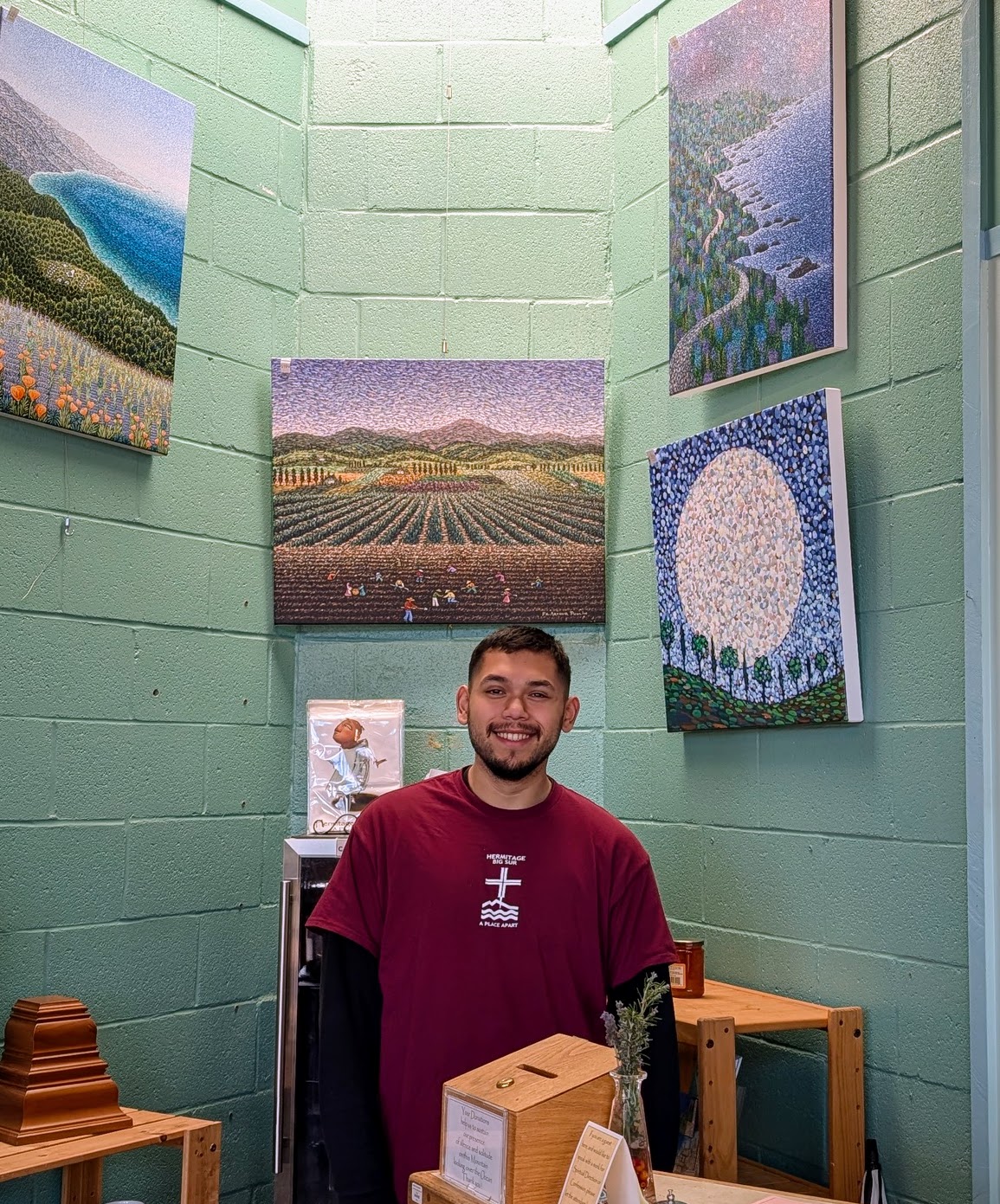
The store is run by a very friendly fellow named Saith. He also welcomes people to the Hermitage, checks-in overnight visitors, and patiently answers their endless questions. By the way, unlike other parts of the Monastery, it is Okay to chat at the bookstore.
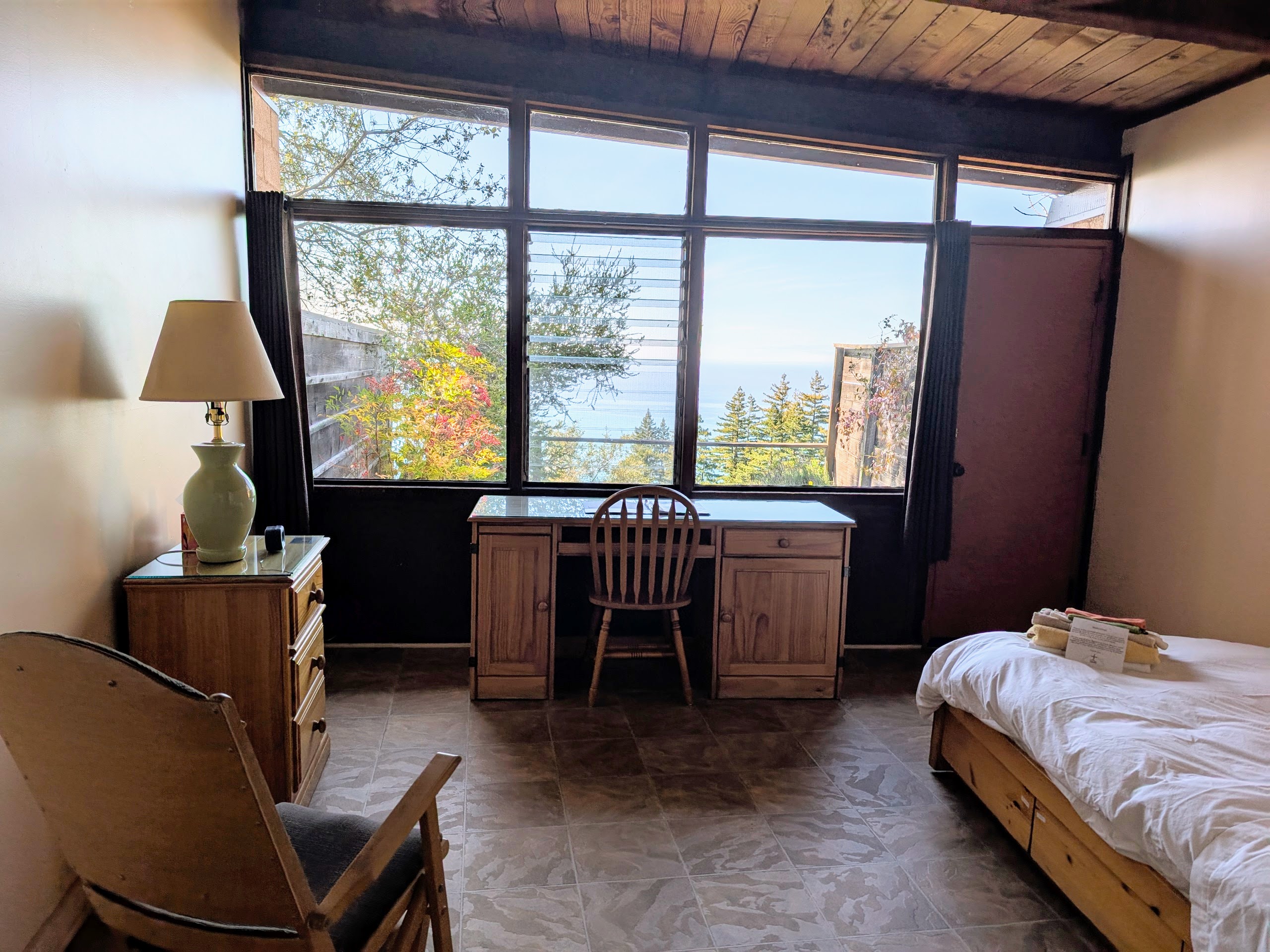
New Camaldoli has different types of accommodations: mine were in a major retreat house. It has 8 rooms (each with half-bath) and also communal kitchen and showers. The room looked nice and cozy.
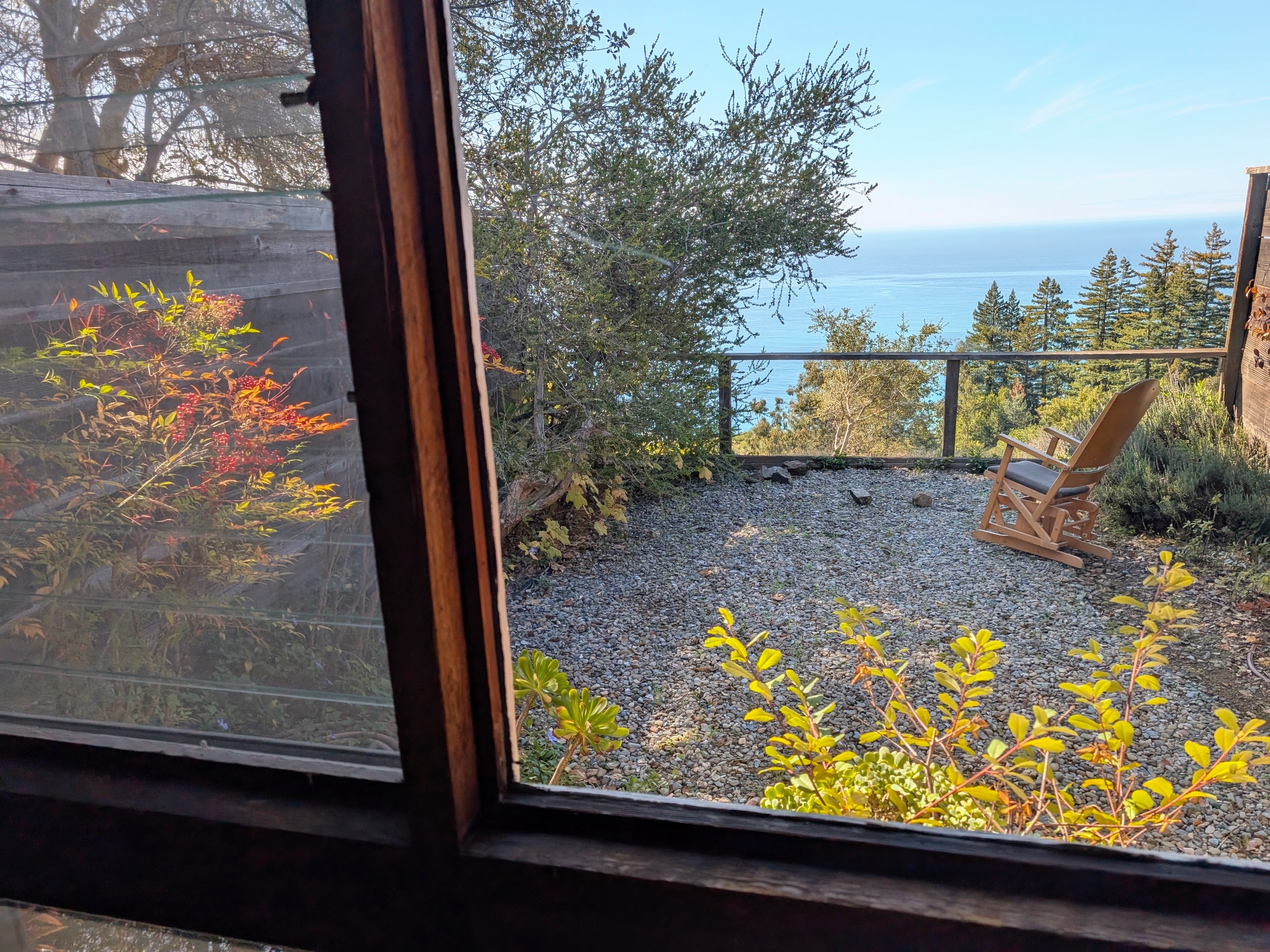
And, as a really nice “cherry on top of the cake,” each room has a spacious outside porch with great view of the ocean.
After check-in, I walked to the church. It was early Sunday afternoon and the main worship service – the “Mass” – was over (on Sundays, it begins at 11 am). The church was very brightly lit: mostly with the natural sunlight coming from wide windows. It was a good time to be there: to calm down, say quiet prayers, and prepare mentally for the different pace of life during the next days.
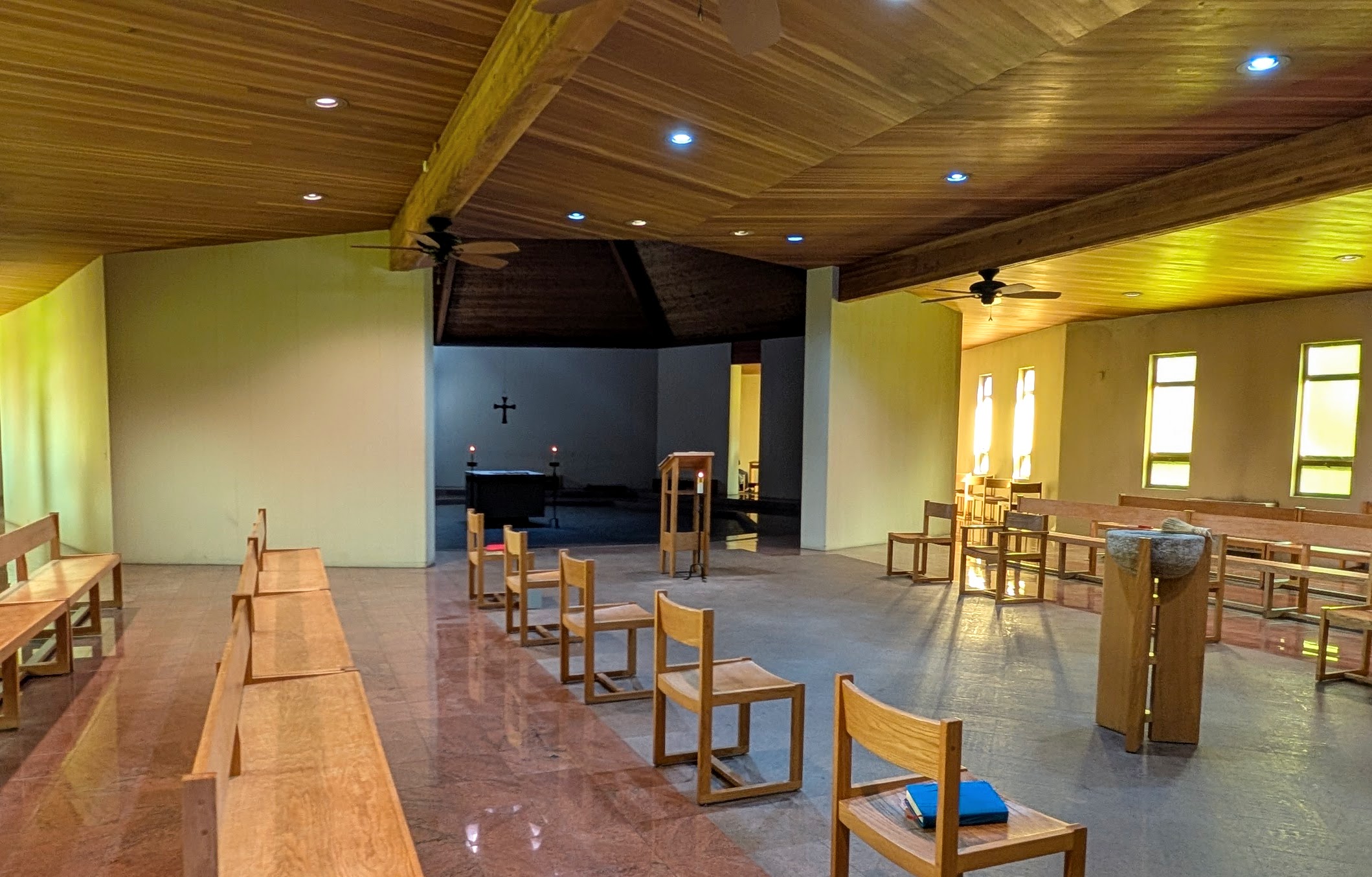
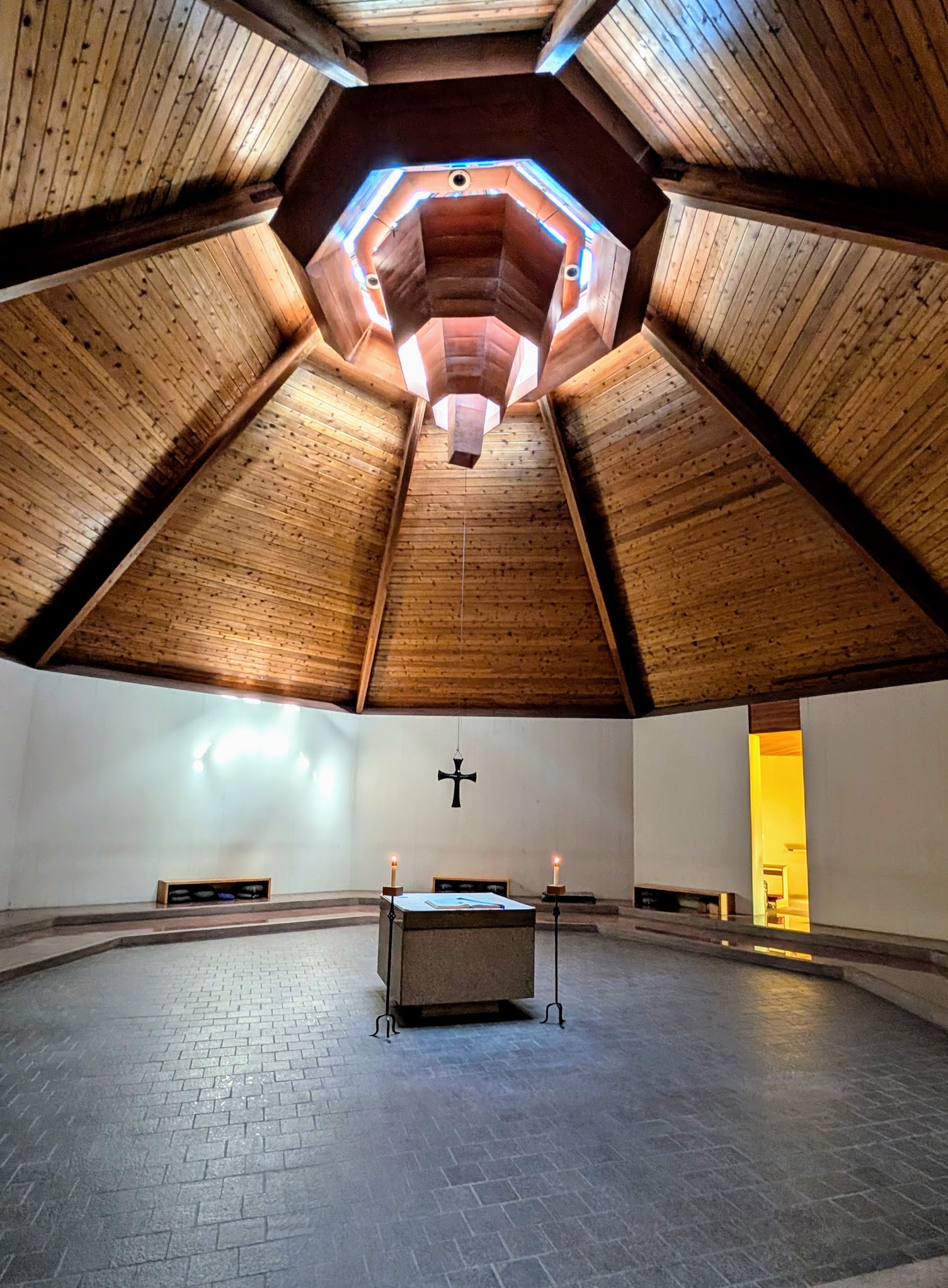
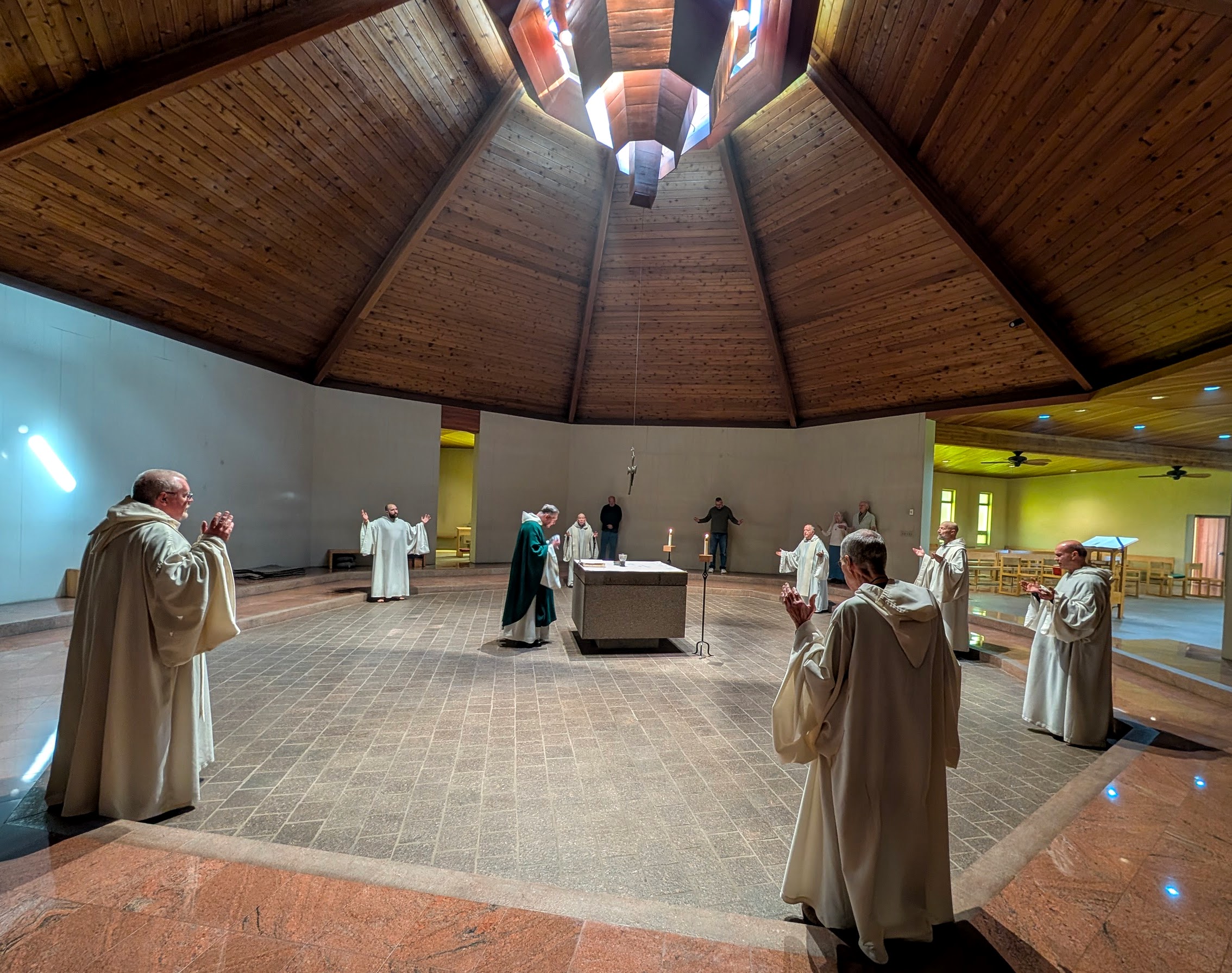
The Altar in the church looked somewhat unusual: it was wide open and shaped like an octagon.
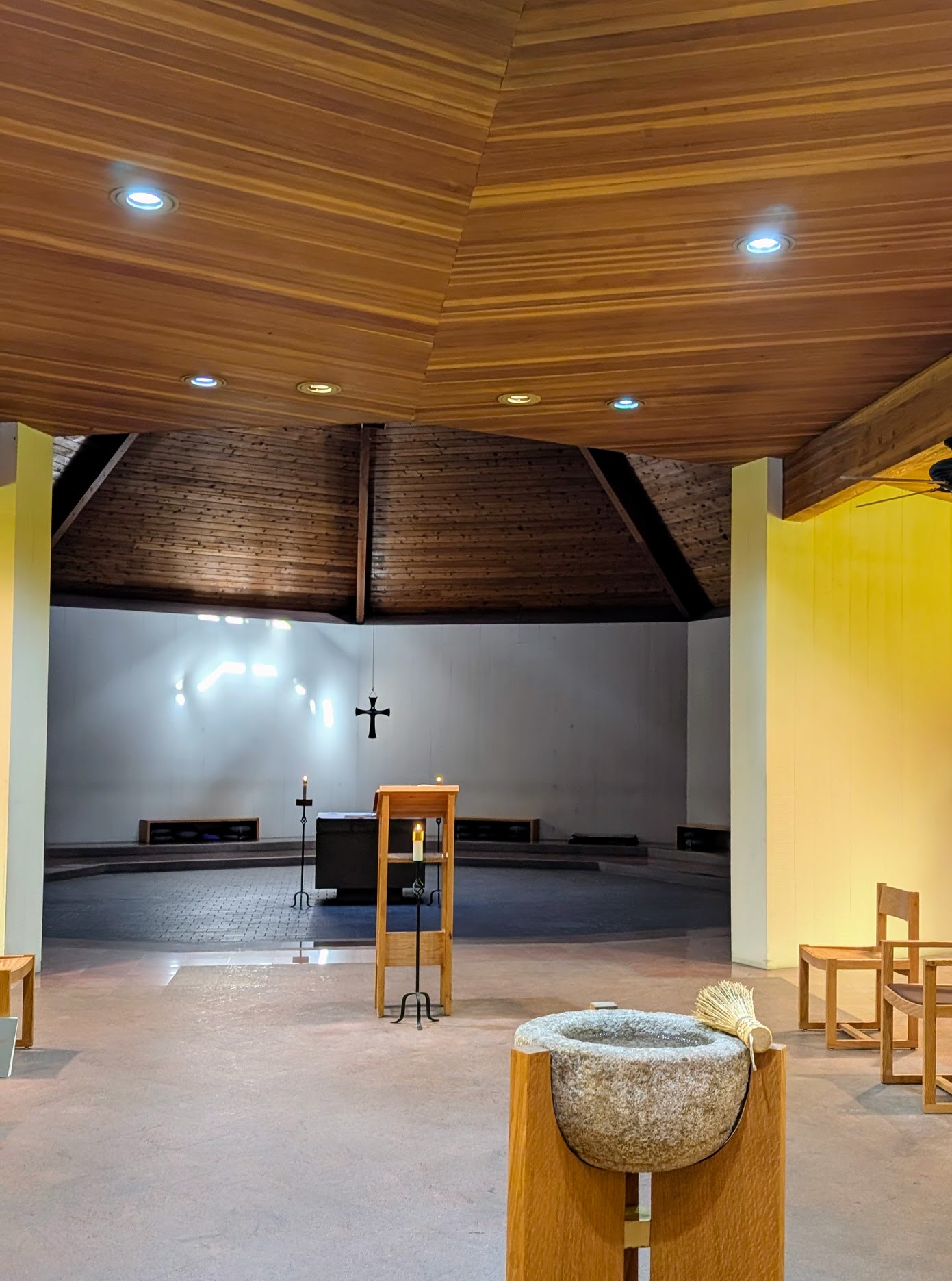
Inside, the design of Altar was truly impressive. Its cone-shaped high ceilings combined with opening to the skies created a feeling of ascending to heaven.
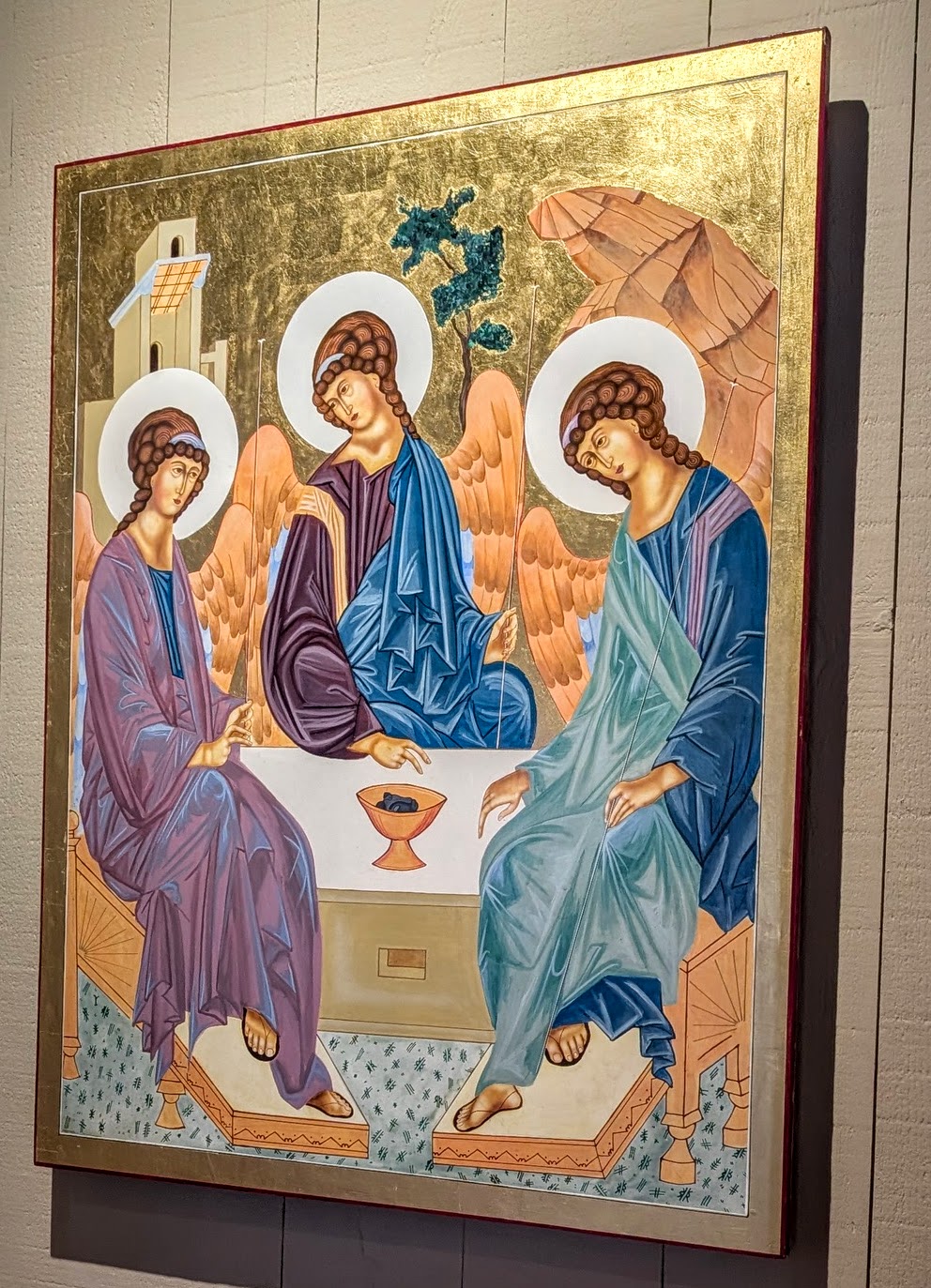
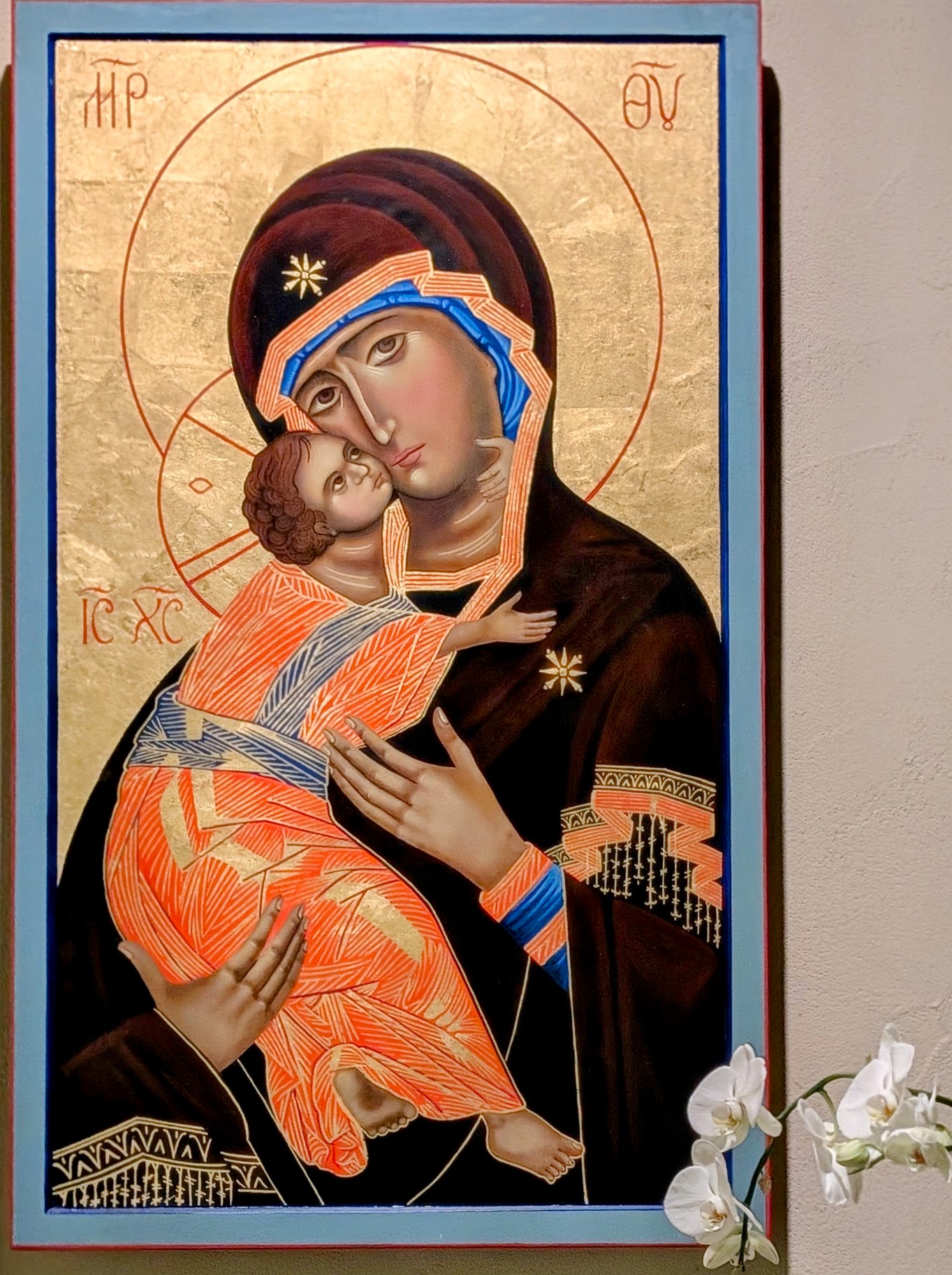
Walking around the church, I also discovered two well known icons. One was the copy of the famous “Holy Trinity” by the Russian medieval painter Andrey Rublev. The second – a replica of the 12th century’s image of the “Virgin of Vladimir.”
It appeared that the New Camaldolese monks stayed true to the heritage of their founder, Saint Romuald, with his appreciation for Eastern Christian traditions. Indeed, today, icons are much more common in the Eastern (i.e., “Orthodox”) rather than Western (i.e. “Roman Catholic”) Christian Churches.
I had a few hours until evening worship service (“Vespers”), and it was a good time to walk around and explore. The first order of business, however, was having some lunch. Hermitage provides excellent meals for all overnight visitors, but the weather and setting were so gorgeous that picnicking “al fresco” was by far best option. I walked back along the road from Hermitage to Highway 1. Only a hundred yards / meters down the road, there was a tree and a bench overlooking the ocean.
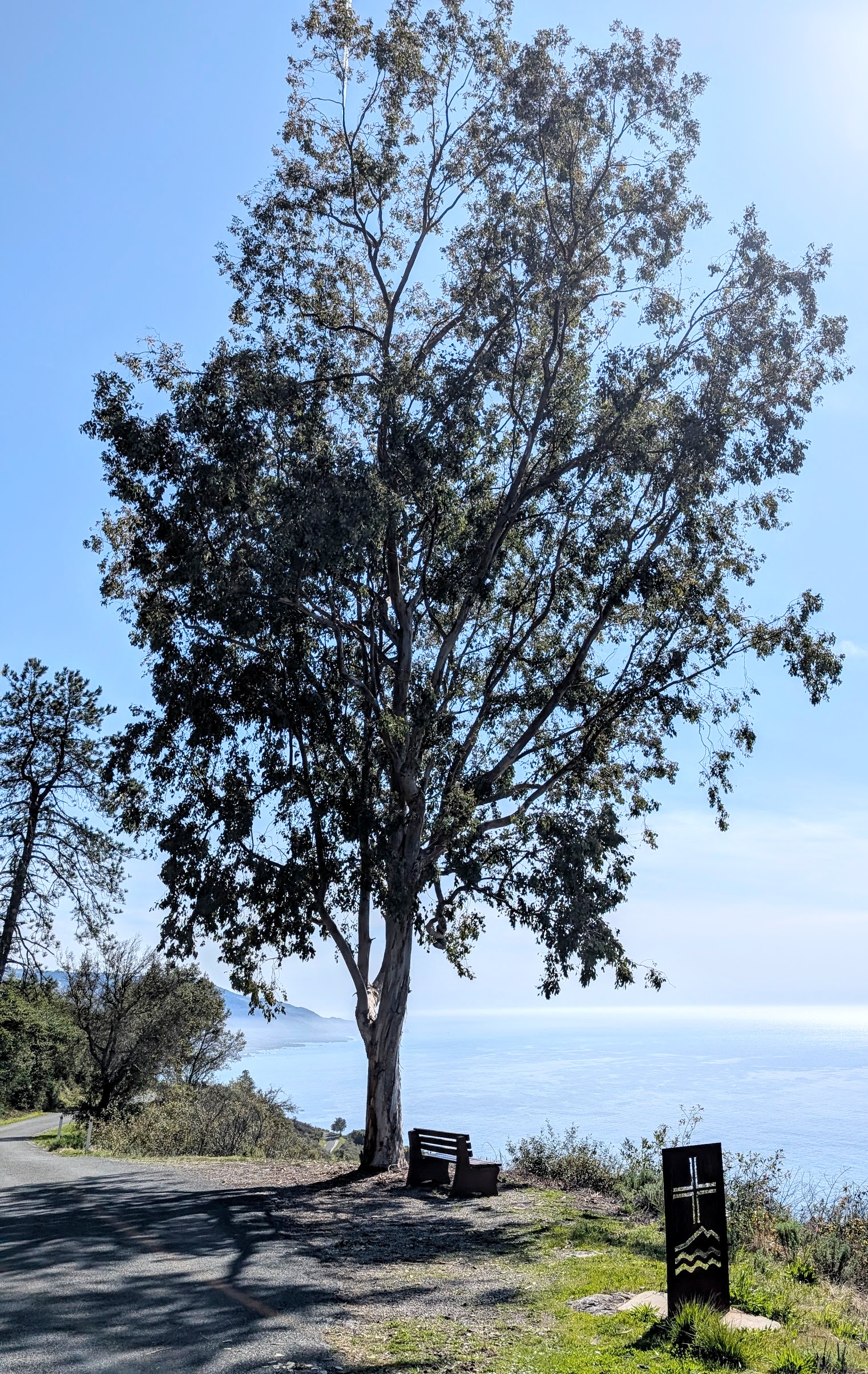
But just a few hundreds yards/meters further, an even better option awaited: another shadowy tree and a comfortable table.

Fruits, spinach tortilla, blue cheese, and 2017 red Italian (“Supertuscan”) wine in combination with salty breeze and panoramic view of the ocean equaled to the feeling of “dining in paradise.”

After meal and some siesta time, I went on what is called “fence loop trail” which goes around Monastery’s grounds. The trailhead, by the way, was right next to the picnic table.
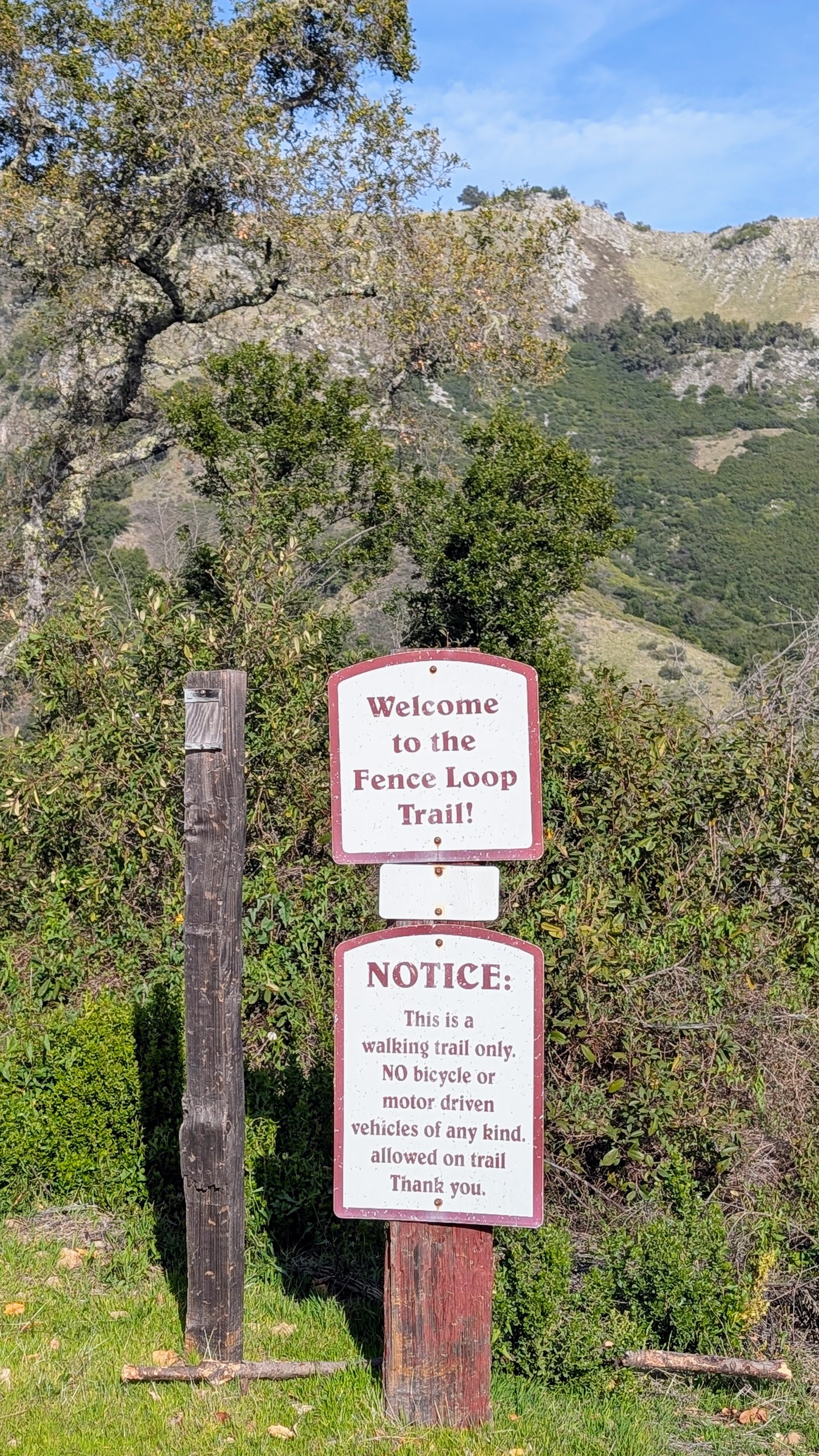
The trail is easy, well maintained and has a “Mediterranean” feel.
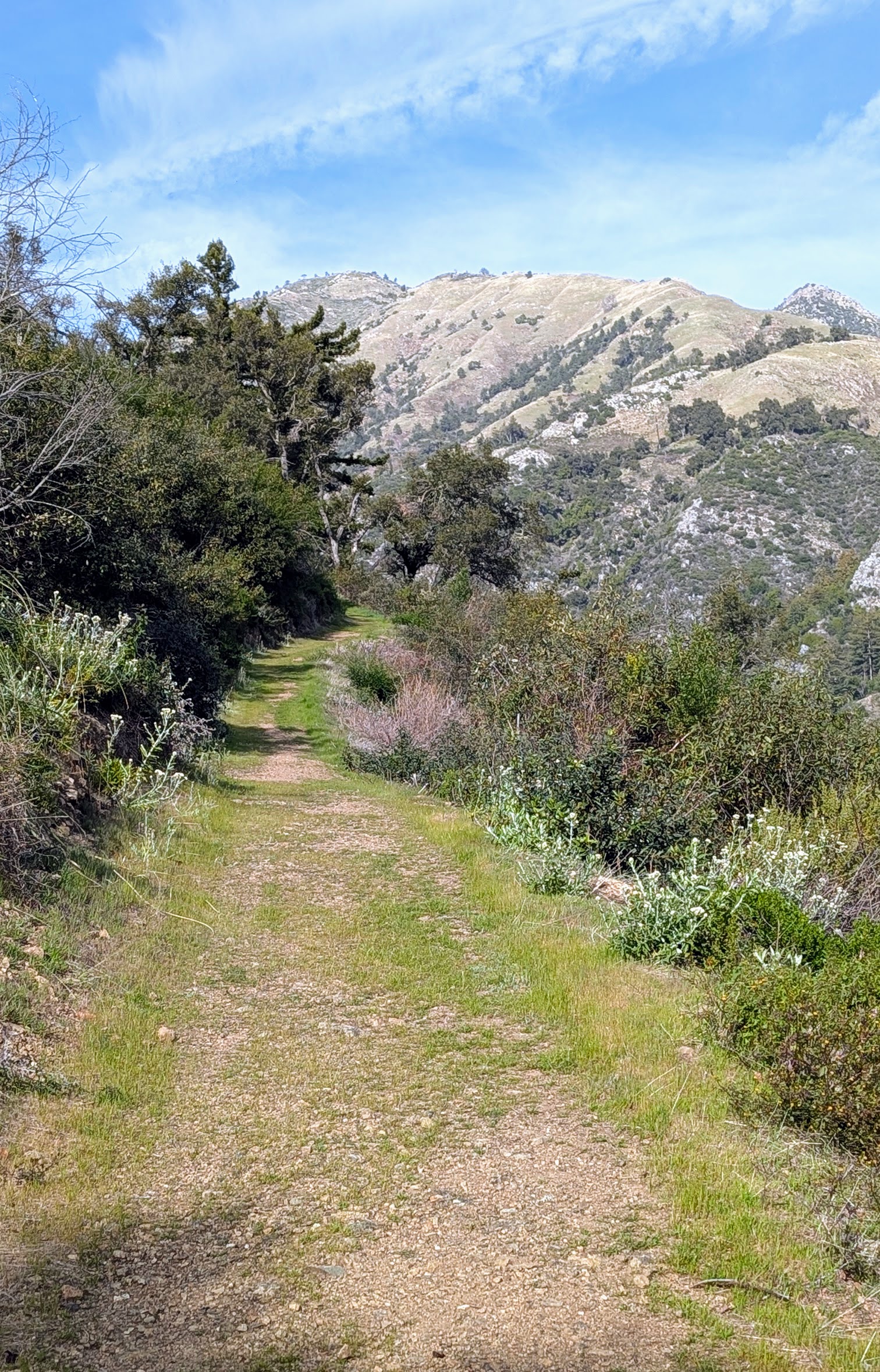
And at every “turn and corner” of the trail you will get the views like this.
I returned to the church well in advance for Vespers. One of the monks was already there, sitting quietly in silent prayer or meditation.

Evening (“Vespers”) services are short: only about 20-30 minutes. Prior (Abbot) of the Hermitage, Father Ignatius read some quotes from the New Testament.

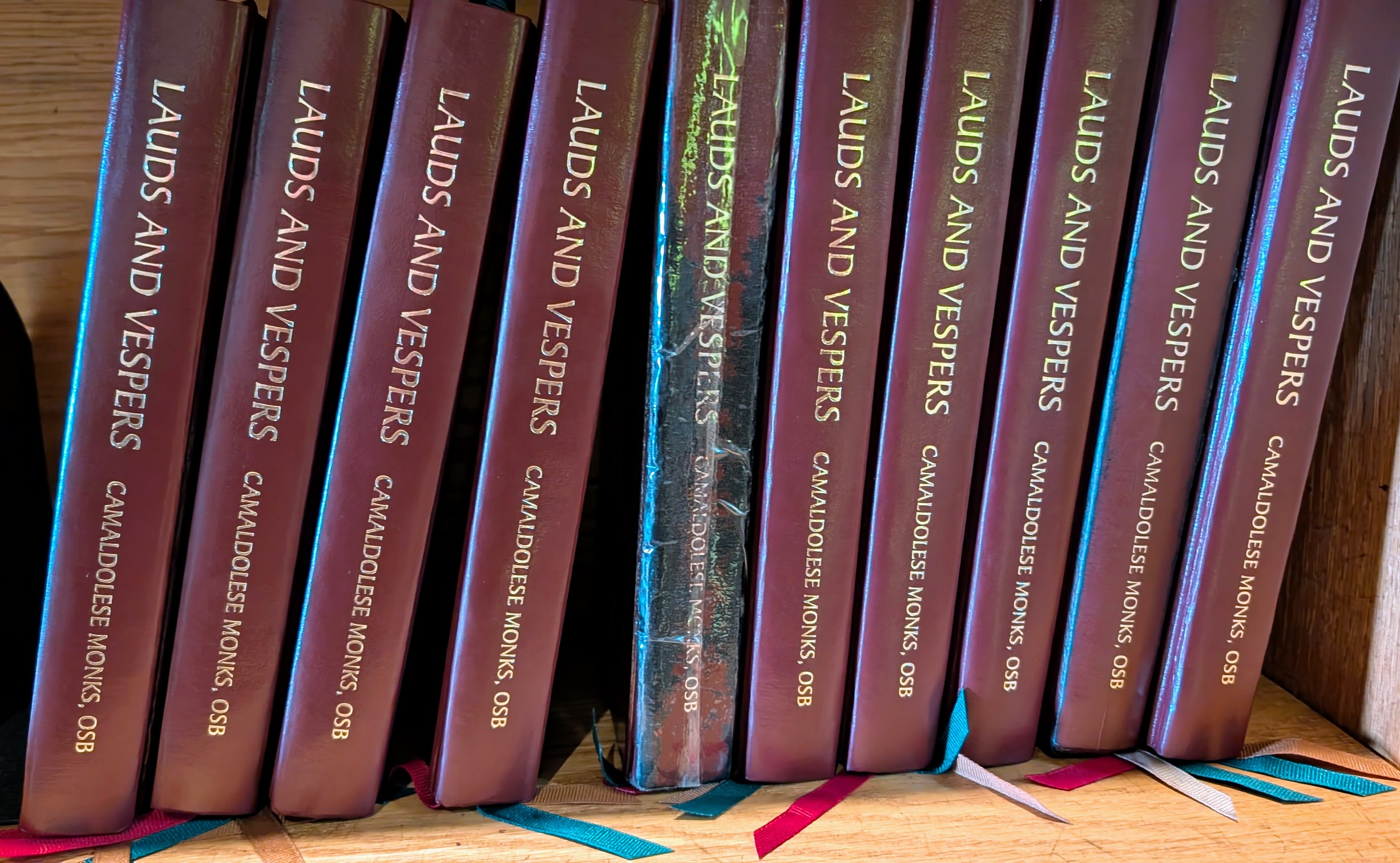
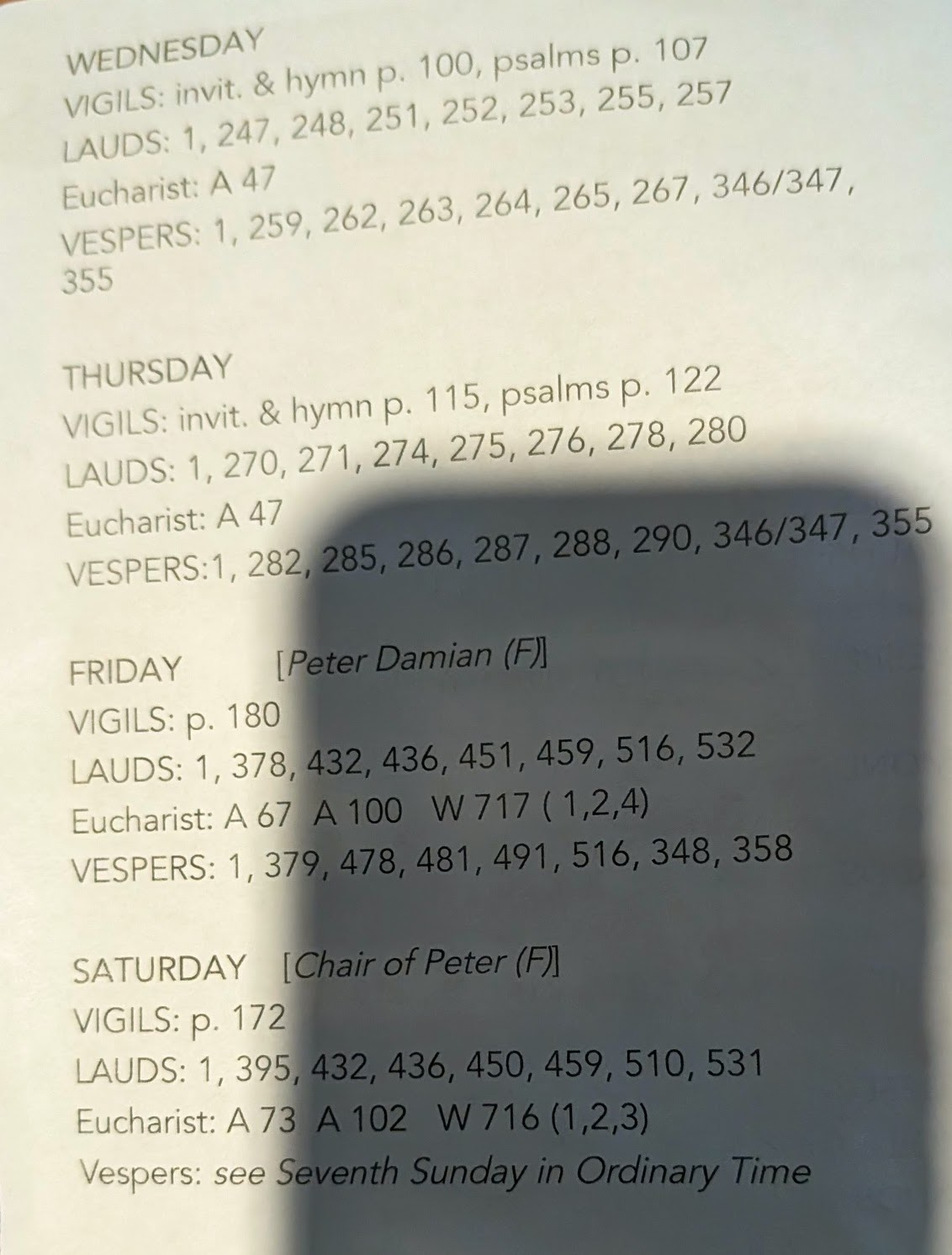
Then, there was some singing of the Psalms – a practice which is at the heart of worship practices of Camaldolese order. All visitors can also easily follow and participate, because everyone is given books of Psalms and leaflets explaining the selection of Psalms for each service.
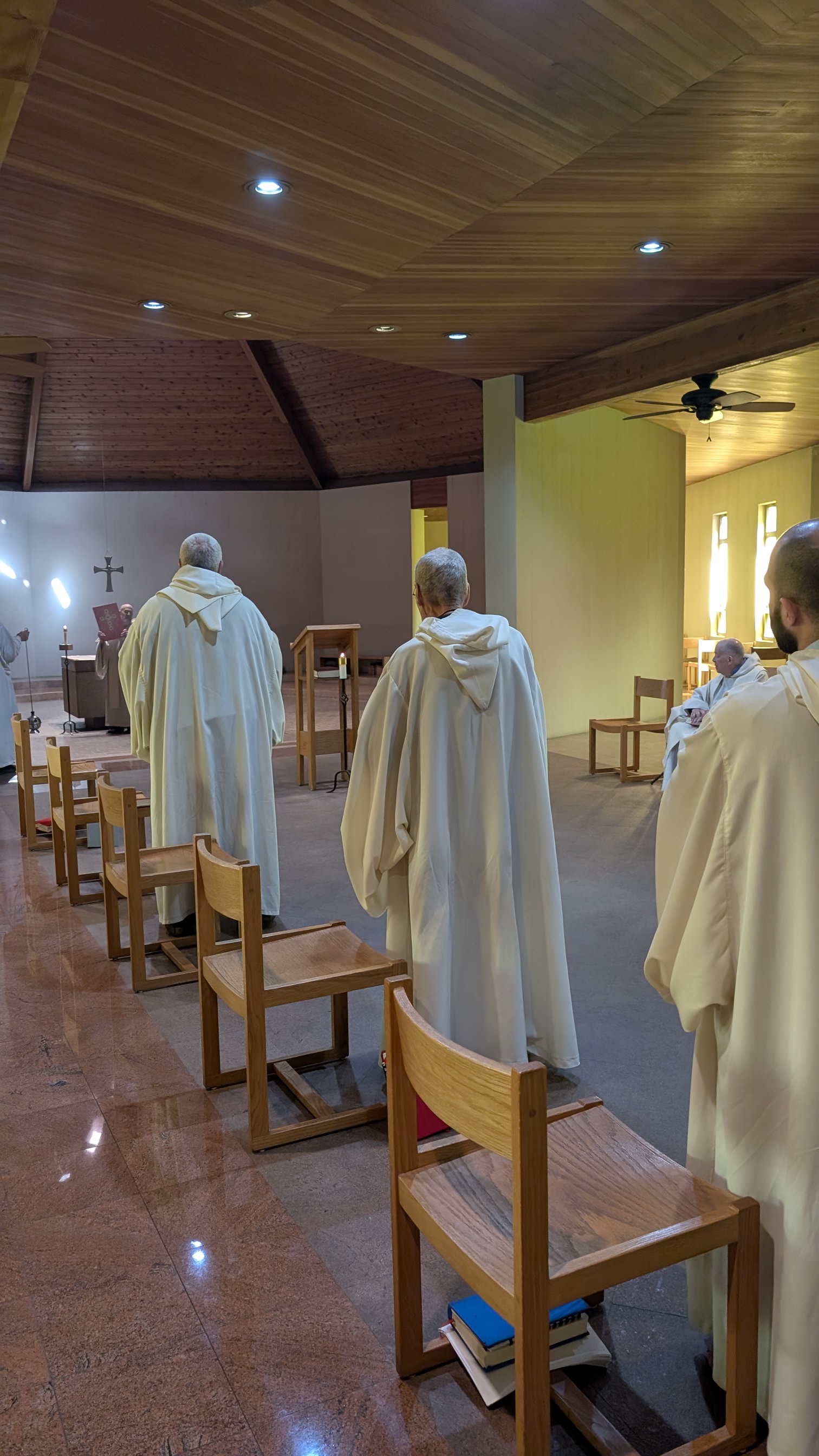
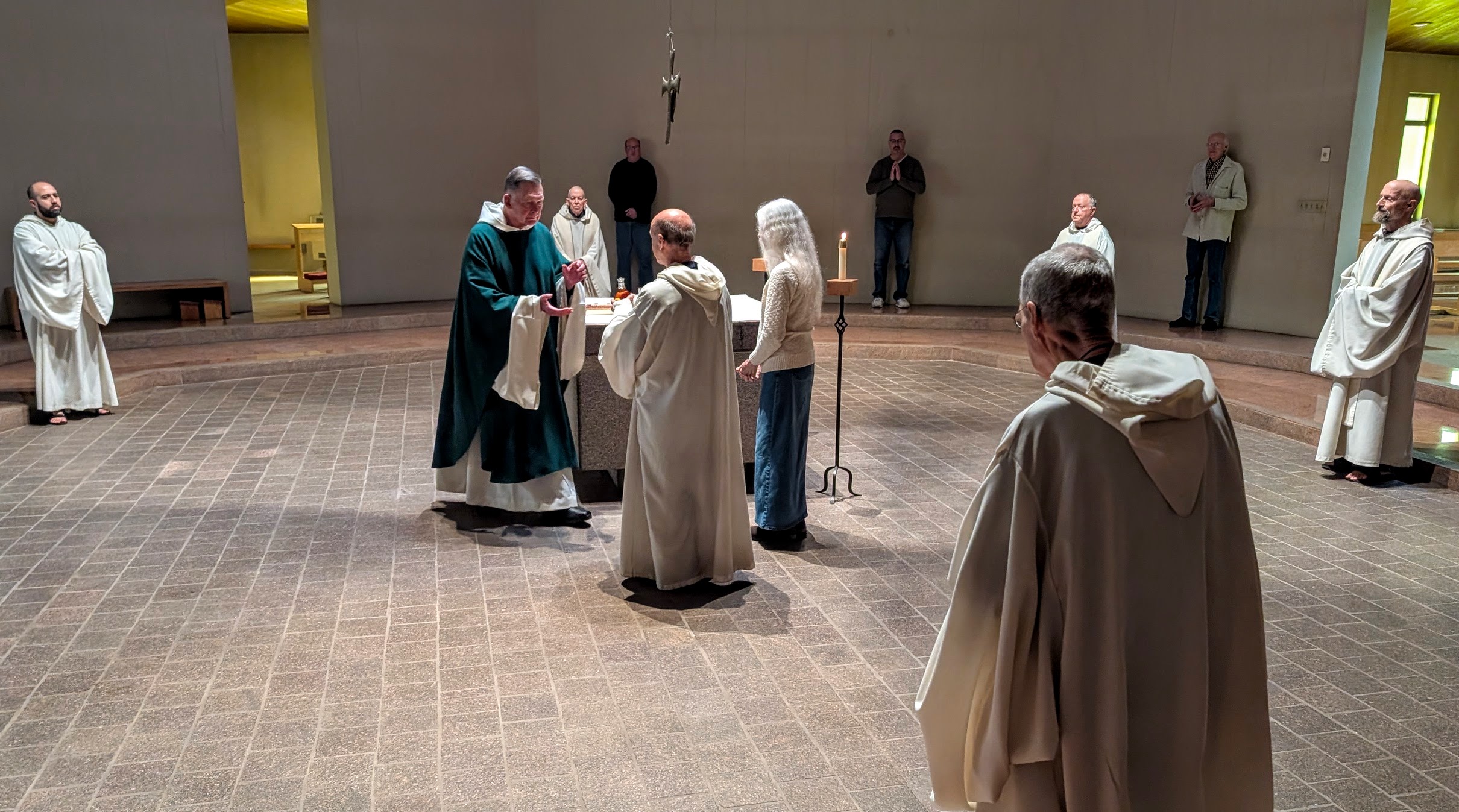
At the end of Vespers, there was a surprise. The monks stood up, walked into Altar, and invited all visitors to follow.
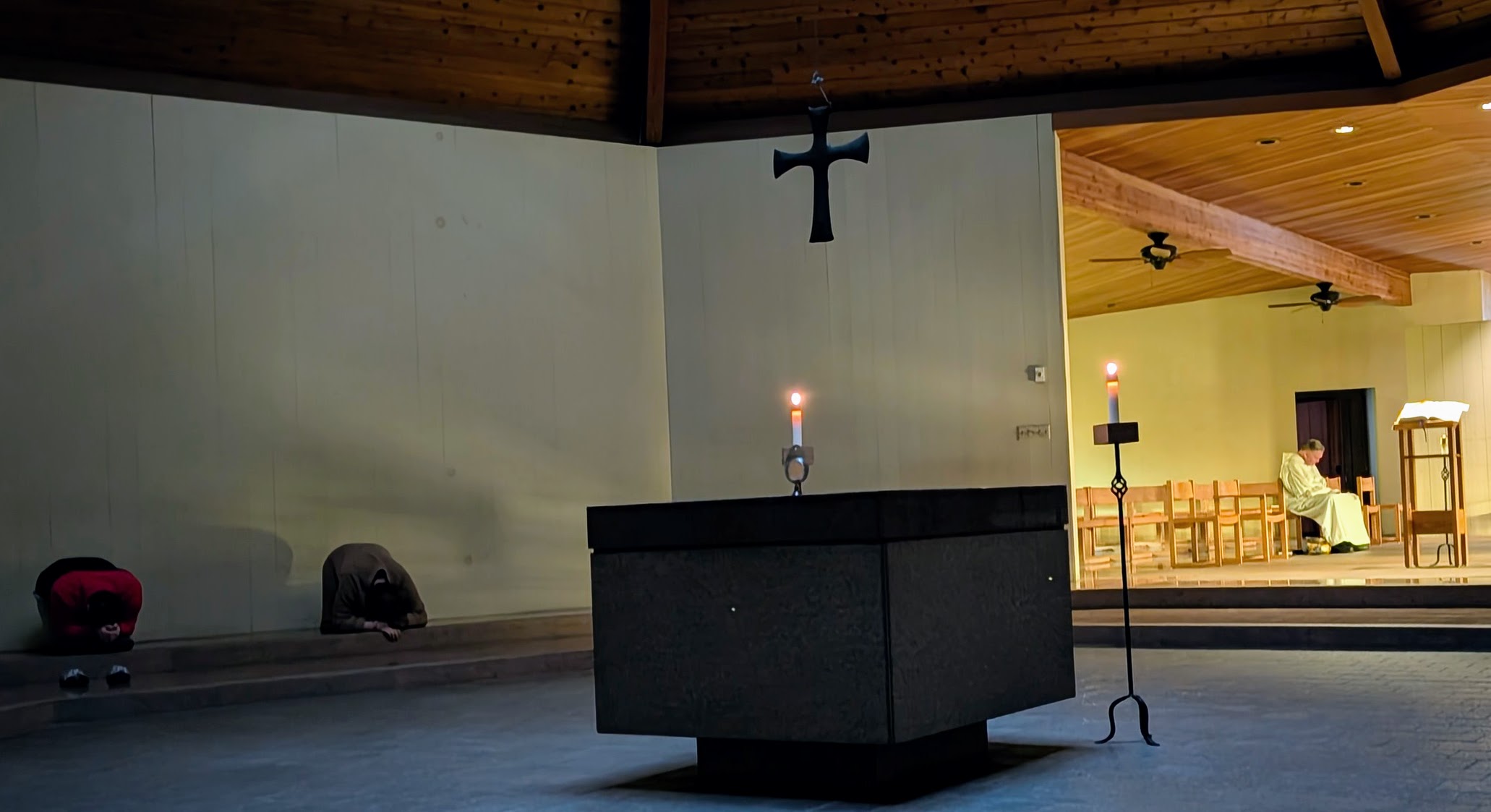
It turned out that all Vespers are followed by silent meditation inside the Altar. Those who want to participate sit on the floor (some cushions are provided) around the Altar’s walls and have 30 minutes for self-reflection and contemplation. The monks walked back to the church, while I stayed with a few other visitors inside the Altar.
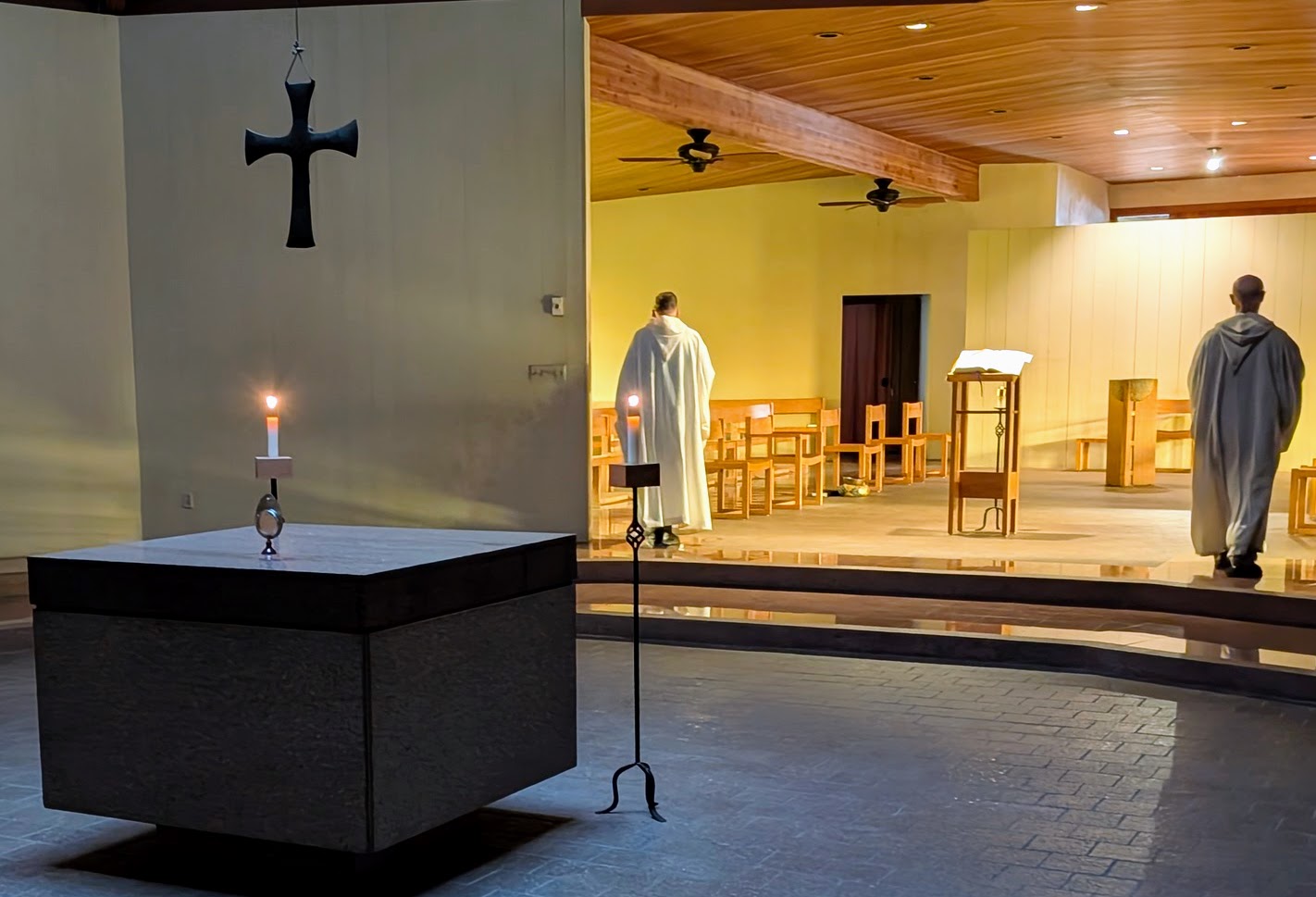
For me, these 30 minutes were perfect time to look back at the entire day thinking about all what I learned, saw and experienced today.
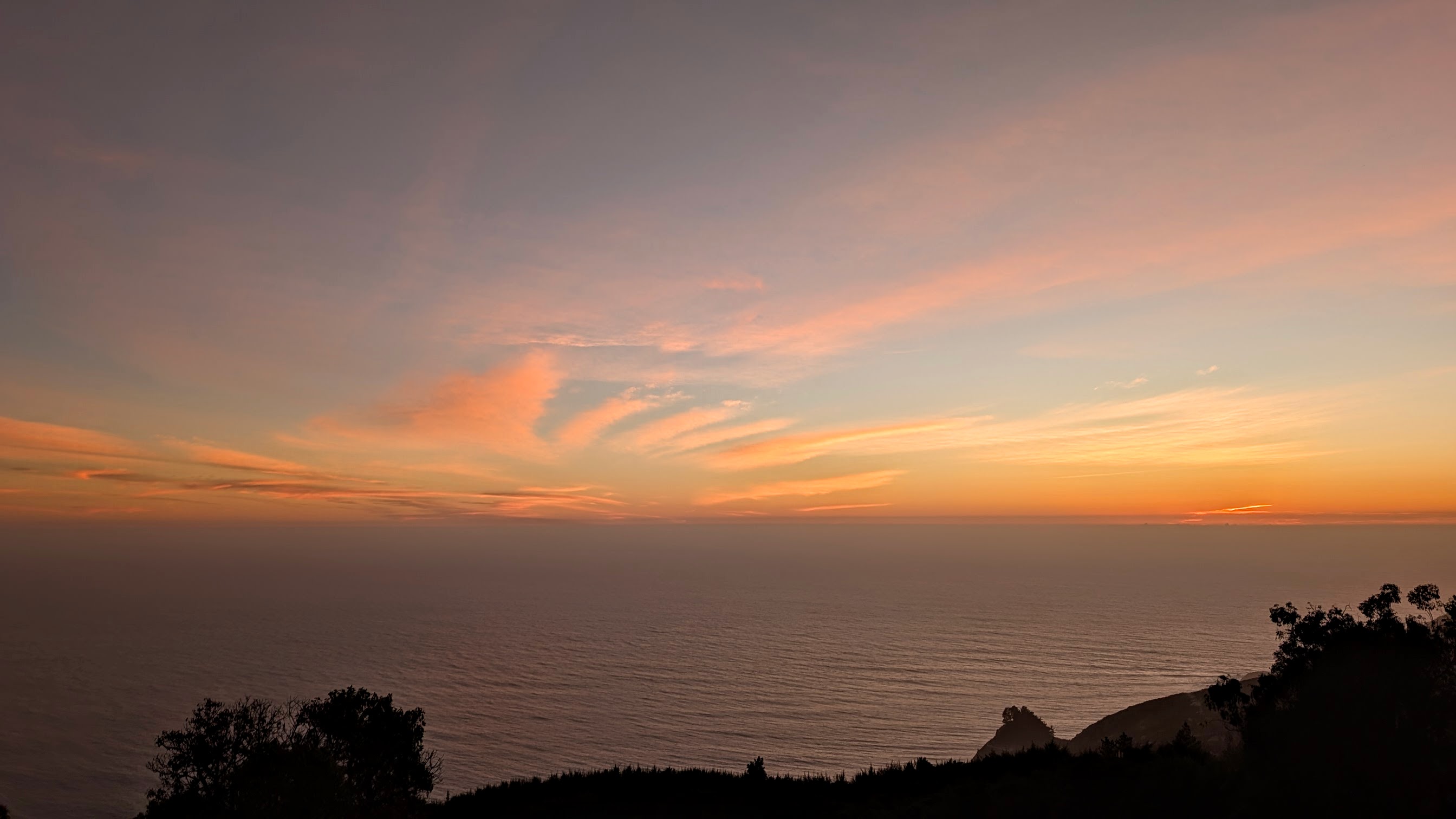
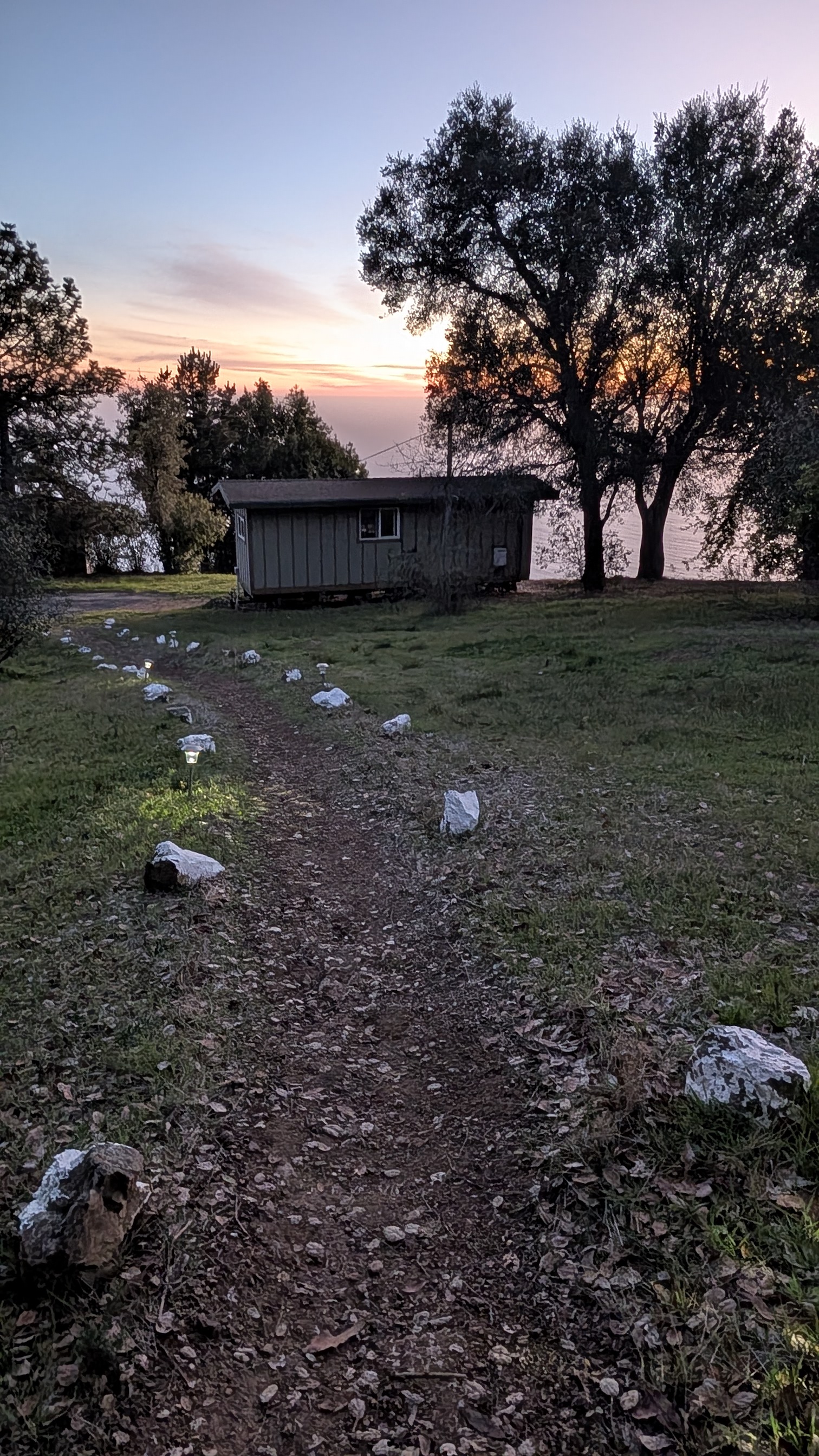
It was dusk when Vespers and meditation were over. Yet, there was still time to enjoy the sunset over Pacific. I walked a narrow path from the main retreat house and down the slope to one of the “hermitages.” These are private and somewhat more secluded houses which is another option to stay at New Camaldoli.
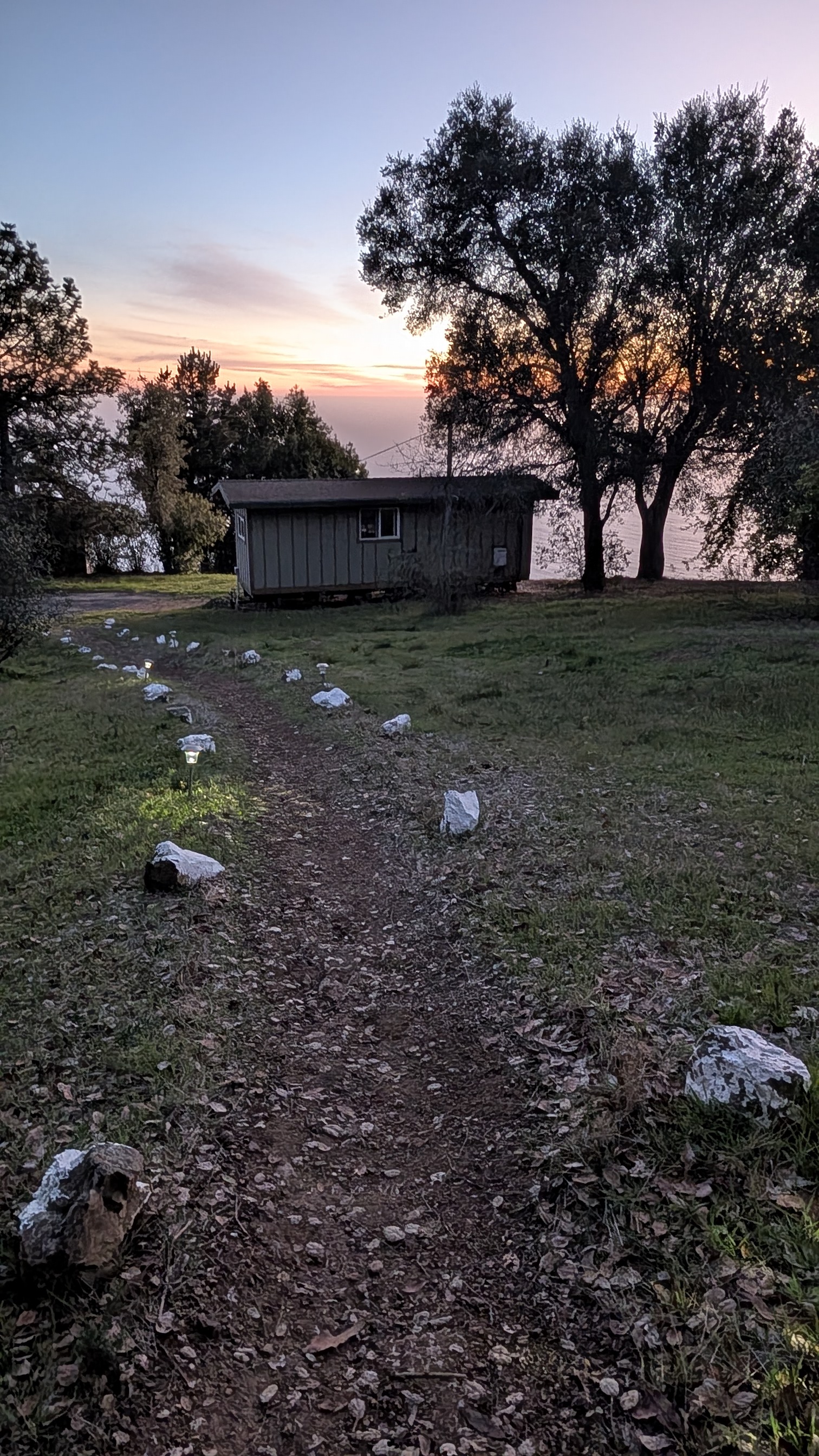
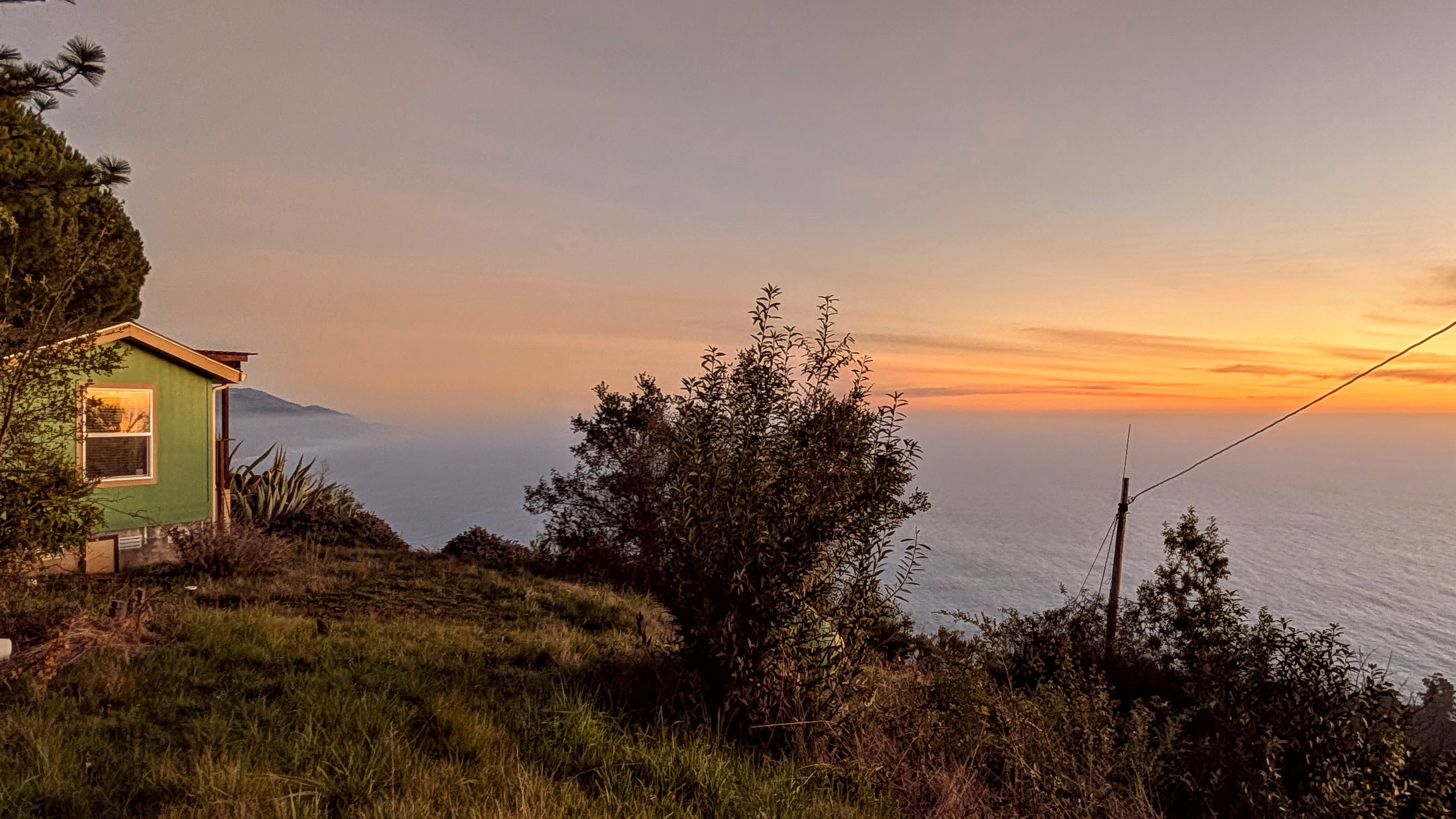
This night, nobody stayed here, and this perfect vantage point for me only. The sunset was as impressive as the entire previous day.
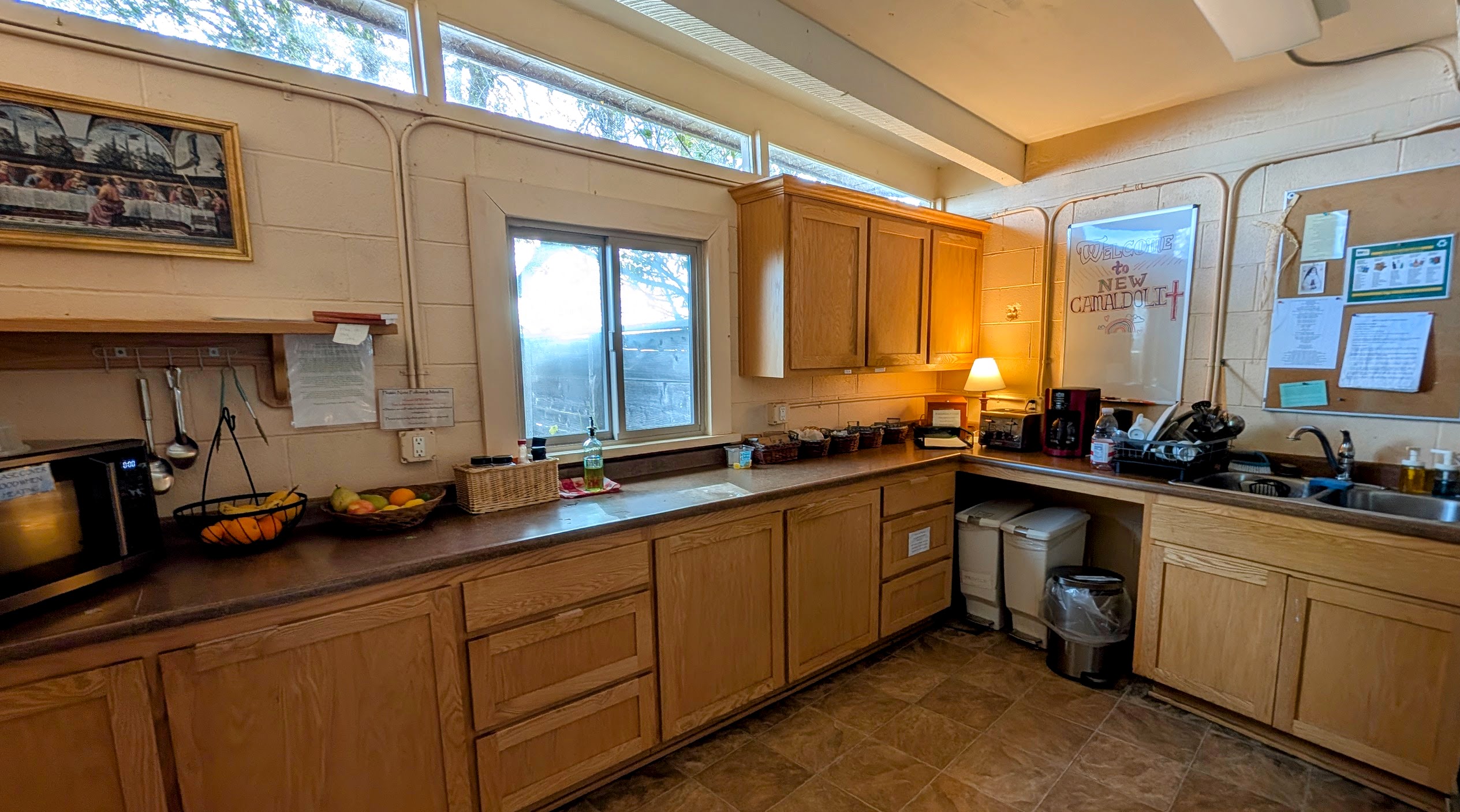
I returned to retreat house, walked to communal kitchen and fixed simple but tasty supper: tomato soup, salad, bread and steamed cauliflowers. A few words about meals for the guests. Communal kitchen is open 24/7. In refrigerator, you will always find fruits, yogurt, soup, salad, some side dishes, etc. Breads, jams, coffee, tea are also available around the clock.
The main hot meal of the day is served (also in the kitchen) at 12.30 pm in buffet style: help yourself to as much as you wish and/or save something for the supper. During my stay, lunch food selection was excellent: soup, 2-3 main dishes (both vegetarian and not), salad, some side dishes.
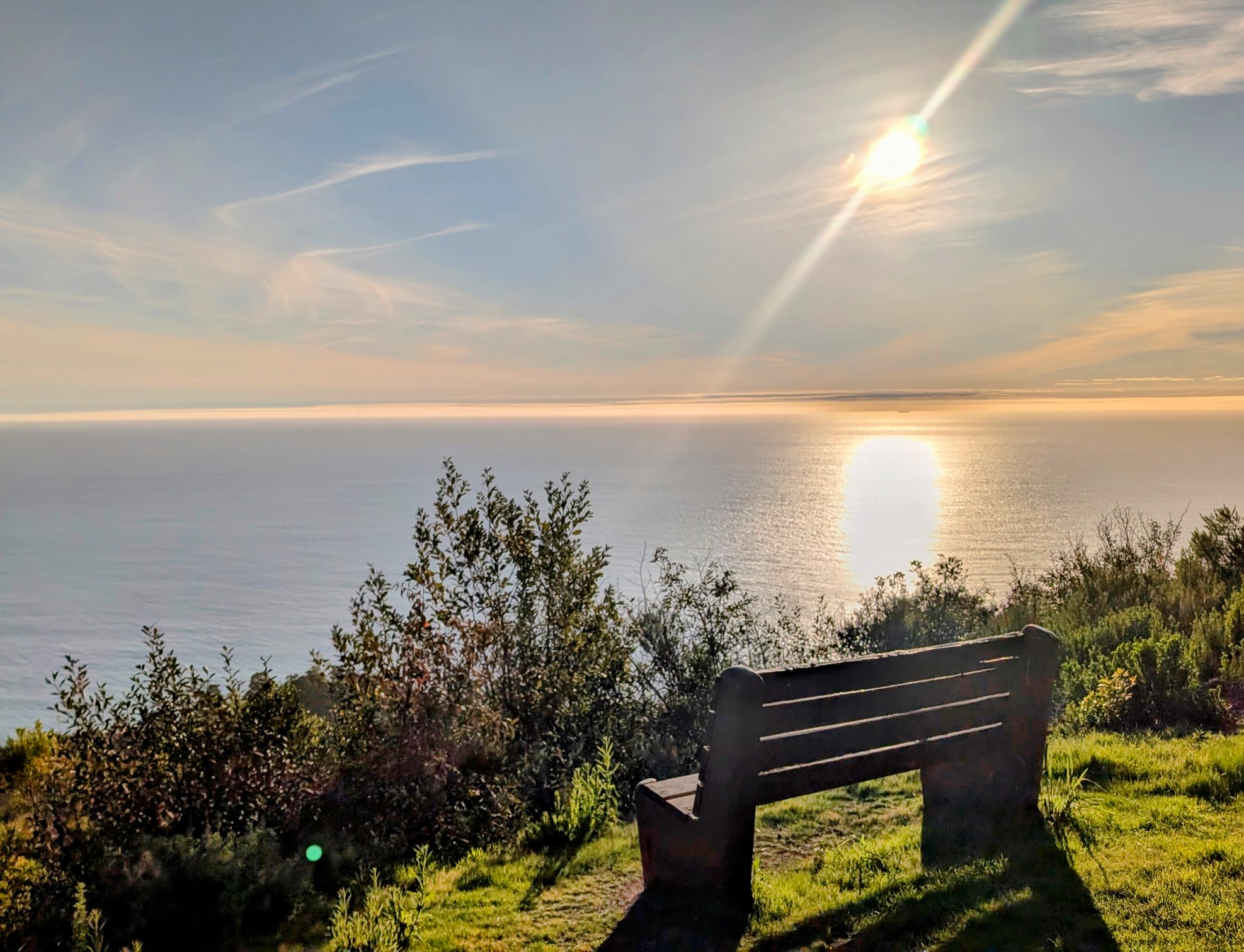
Next morning, I poured some coffee and walked to the bench which was right next to the retreat house. It was Monday, the day without communal services, when the monks have their private “down” time.
My destination for this day was the Lime Kiln State Park. It is just a few miles South of the Hermitage and right on Highway 1. Most visitors to California focus on a few well-known National Parks (like Yosemite or Sequoia). This is a great mistake, because California has an excellent system of state parks. Most of them are much less crowded with visitors than the National parks while offering some unique experiences and attractions. Lime Kiln Park is definitely one of these hidden gems.
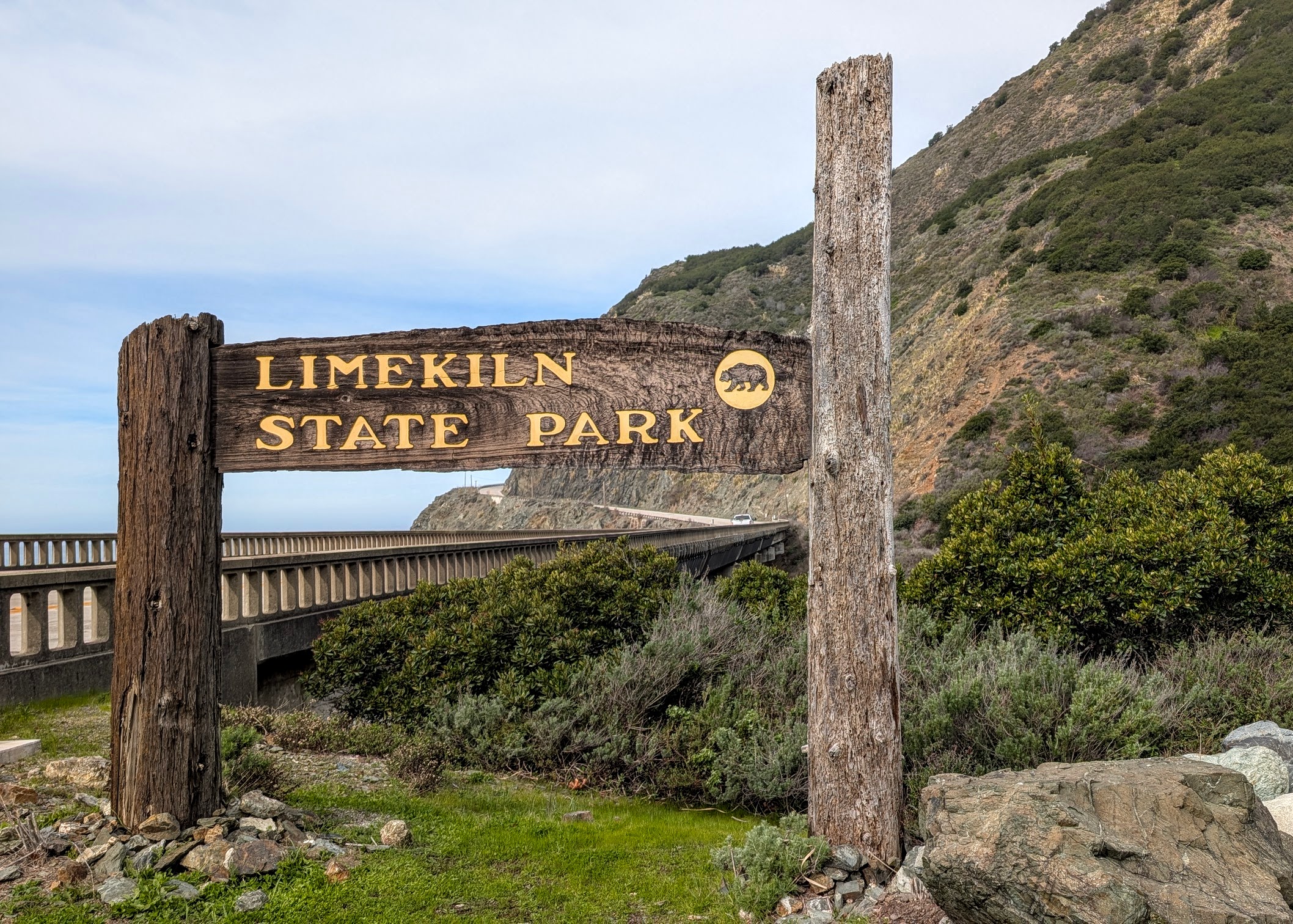
The entrance to the park is South from the Hermitage and right after this bridge. The winding but very short road goes down, to the bottom of the gorge.
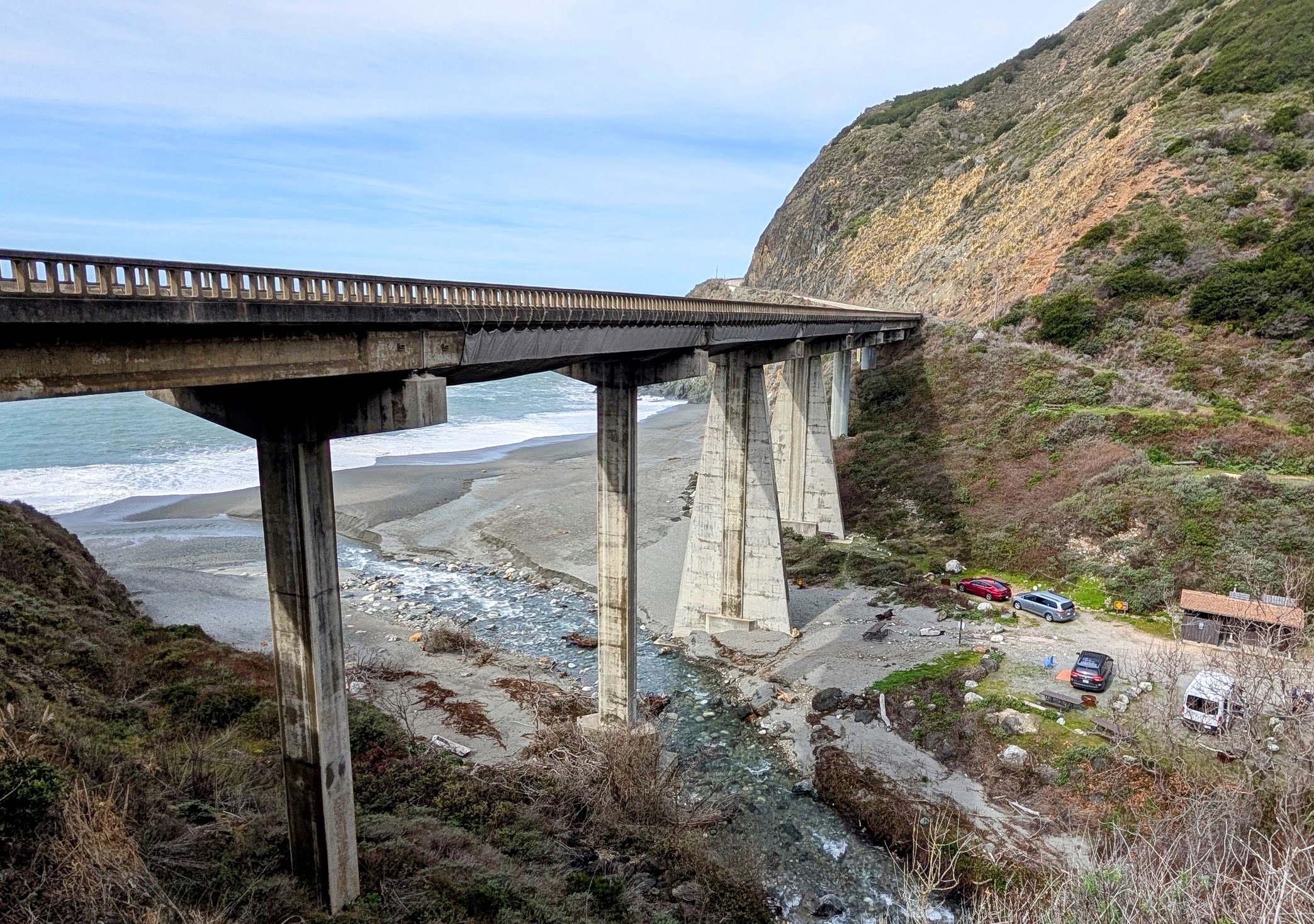
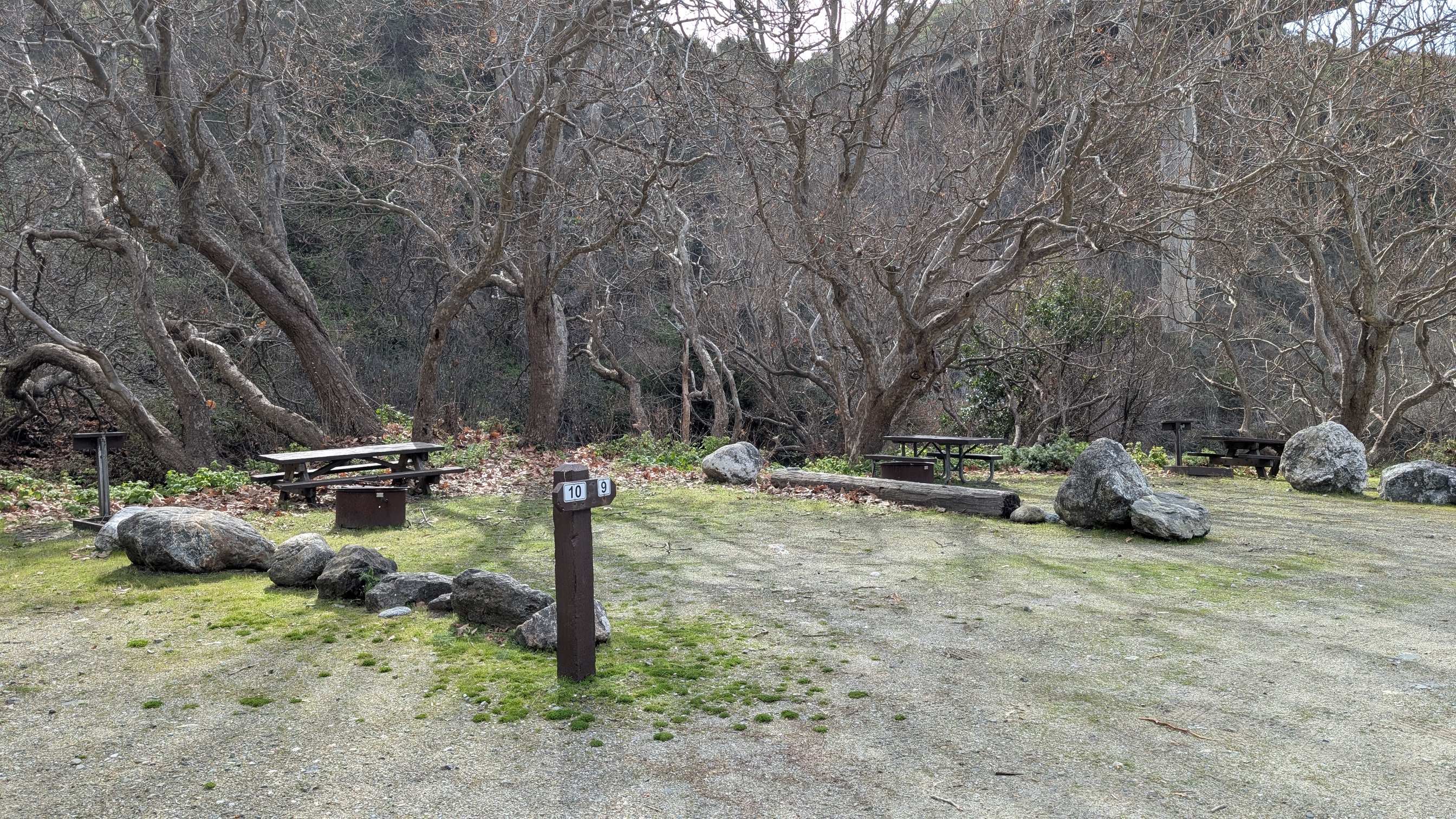
The Limekiln Park also has a campground. On this day it was completely empty, but I made a mental note: it would be nice to return here for couple nights of camping.
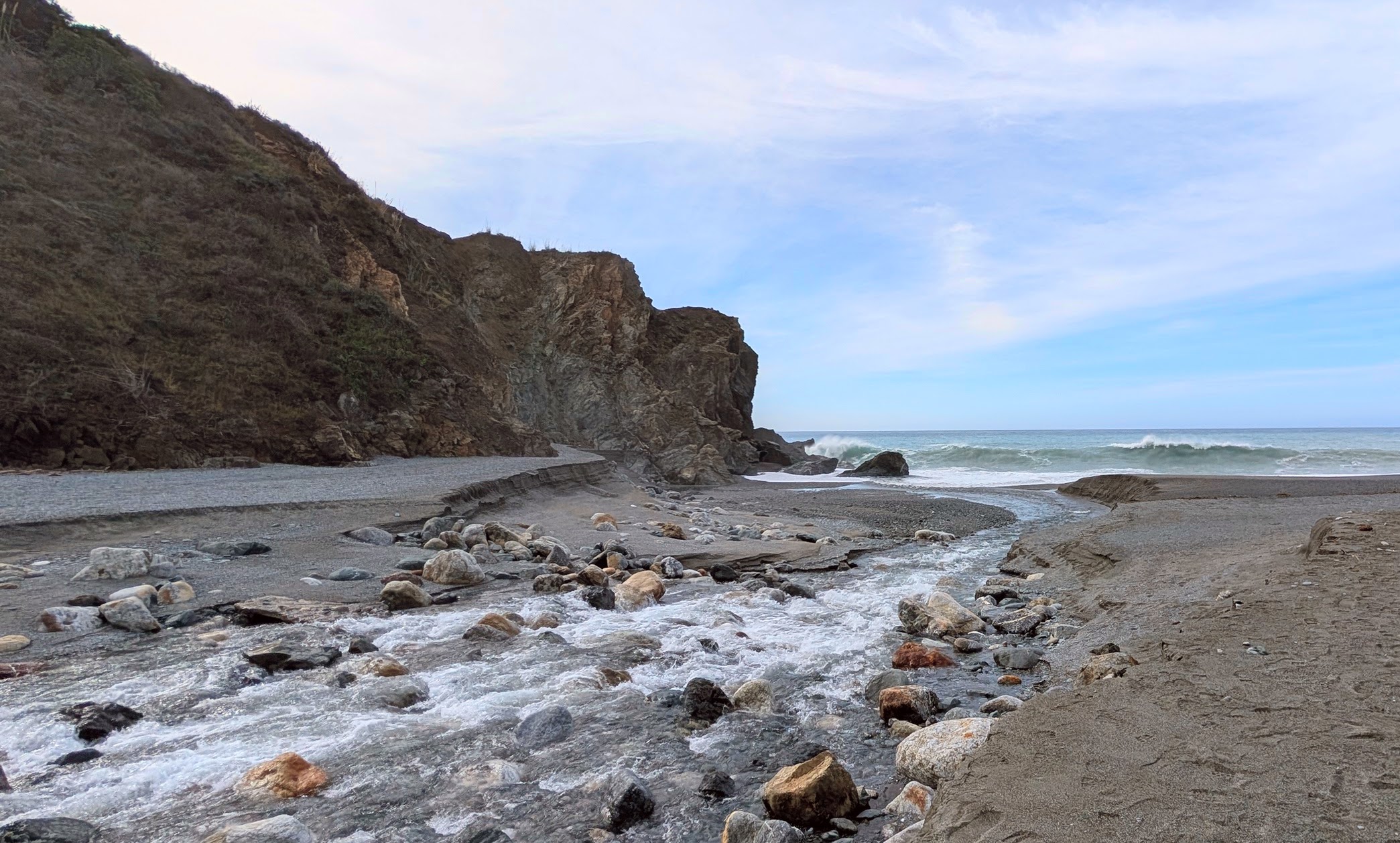
When visiting Limekiln, walk first to the beach along the Hare Creek: it flows straight into the ocean.
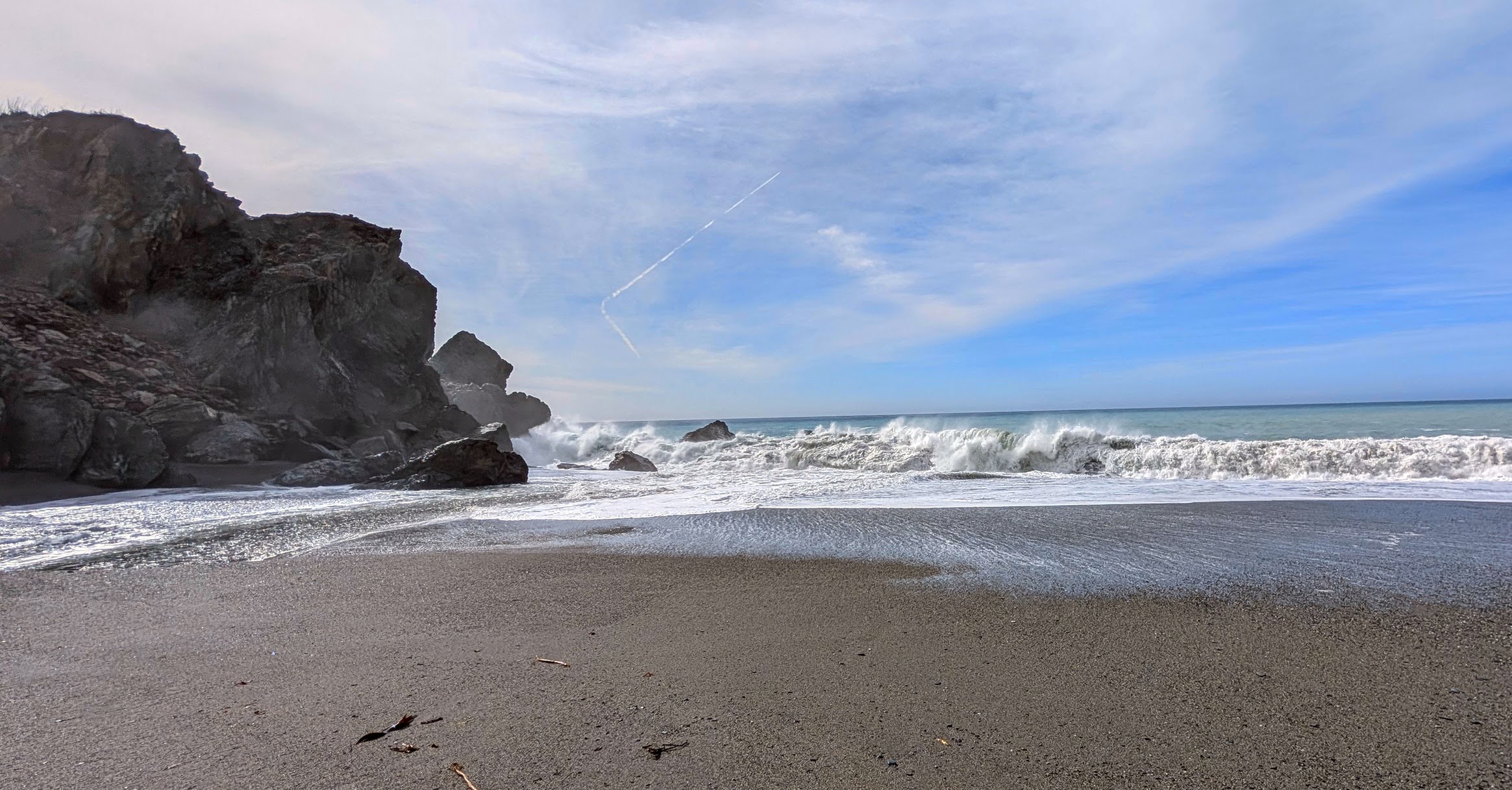
This picture does not convey properly the sound and power of these crushing waves, but – trust me – it was impressive.
After visiting beach, you can turn around and walk inland. Inside the gorge, many hiking trails will take you around and into the groves of majestic Redwoods. Known for their immense size and reddish bark, they are also the tallest trees on Earth. Once they were widely distributed across the globe, but then old-growth Redwood forests have become extremely rare due to changes in climate and (in the past) extensive uncontrolled logging. California’s coast is one of the very few to see and walk in the Redwoods.

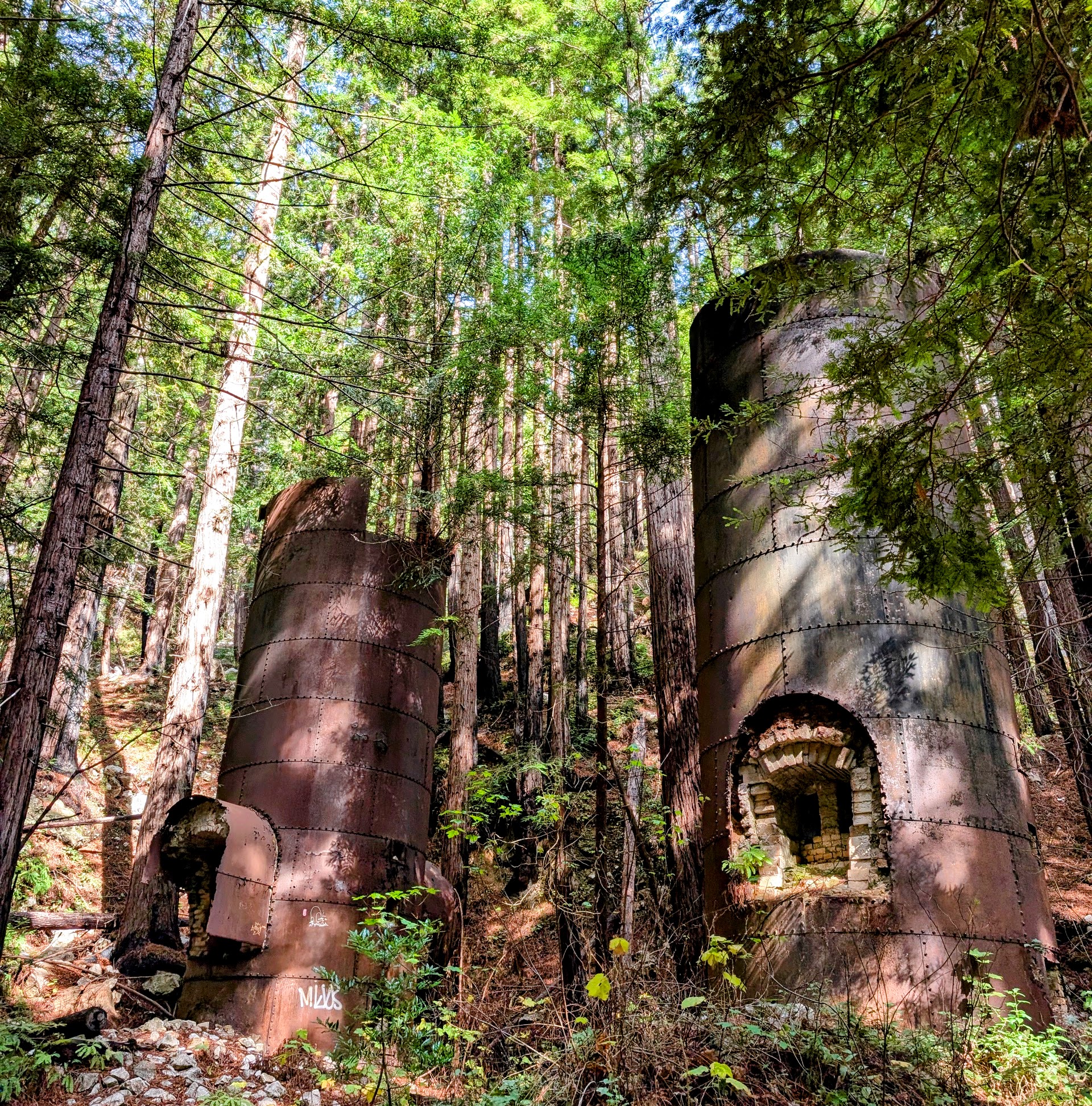
Limekiln State Park is named so, because in the late 1800s the area was used for quarrying limestone. It was then processed in wood-fired kilns into the powdered lime. Added to cement, it was used for construction of many cities and towns in California. The remnants of these kilns are still in the park, and one of the trails will take you there. Regardless of your interest in historic kilns, it is an excellent short (20-25 minutes) hike on a well maintained trail, along the creek and under the canopy of giant Redwoods.

Seeing these kilns was actually quite enjoyable. After being abandoned for more than one hundred years, they blended perfectly with the surrounding nature.
At certain point, the trail to kilns forks in two directions. Returning back, I decided to explore the second trail. There was no sign where it goes, and I simply walked about one mile along gradually ascending path. My curiosity was rewarded, when the trail arrived to the opening with picture-perfect view of the bridge where I parked my car.

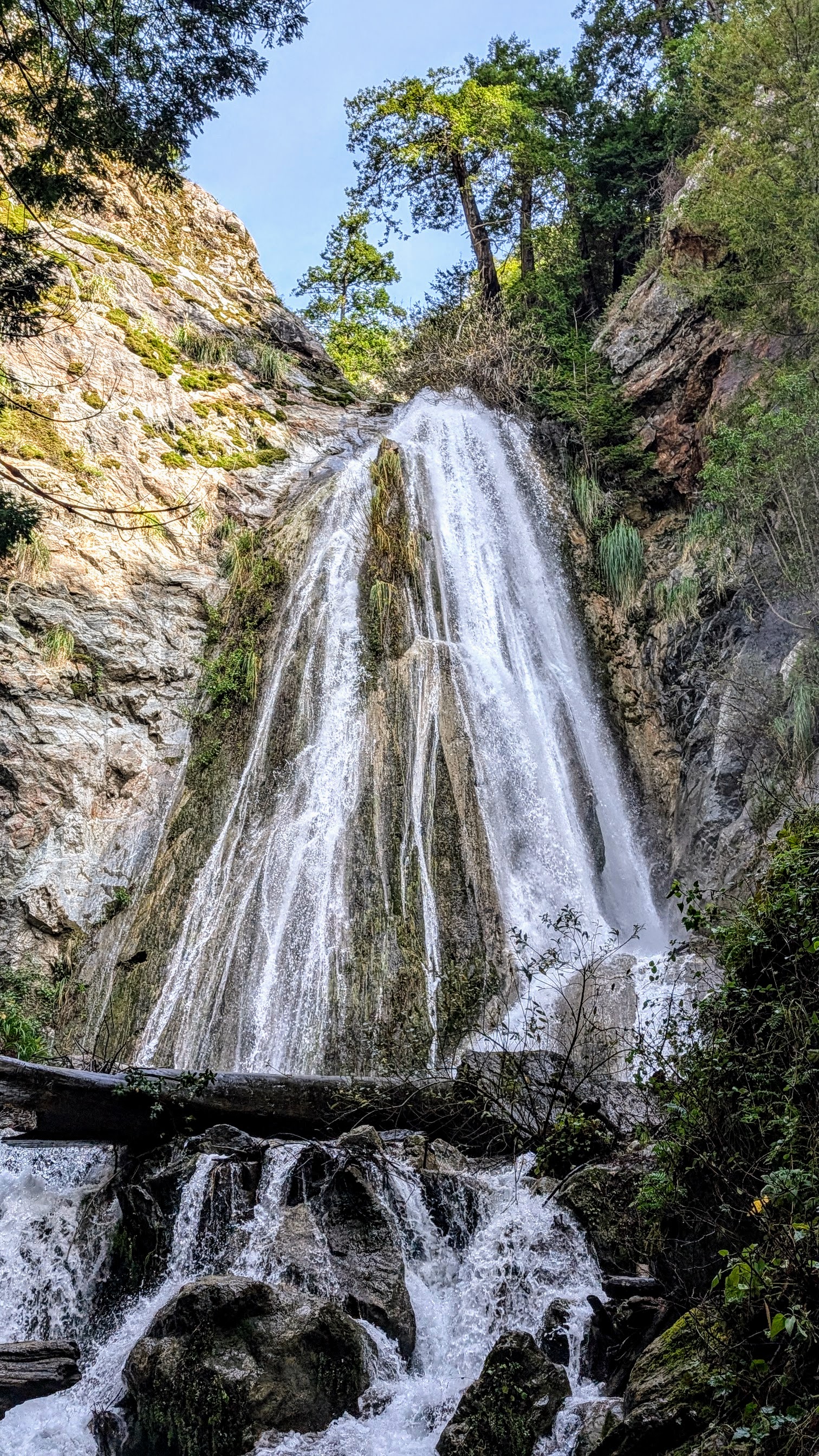
A popular destination in Limekiln Park – especially in winter and spring – are powerful Limekiln Falls. Alas, the trail leading there was closed, and the sign informed that it was destroyed by the landslides and fallen trees.
Nevertheless, I looked at the map: the falls are only quarter of a mile (400 meters) away from the closure. Temptation was great and I decided to try to reach the falls. At the beginning, walking along the creek was easy.
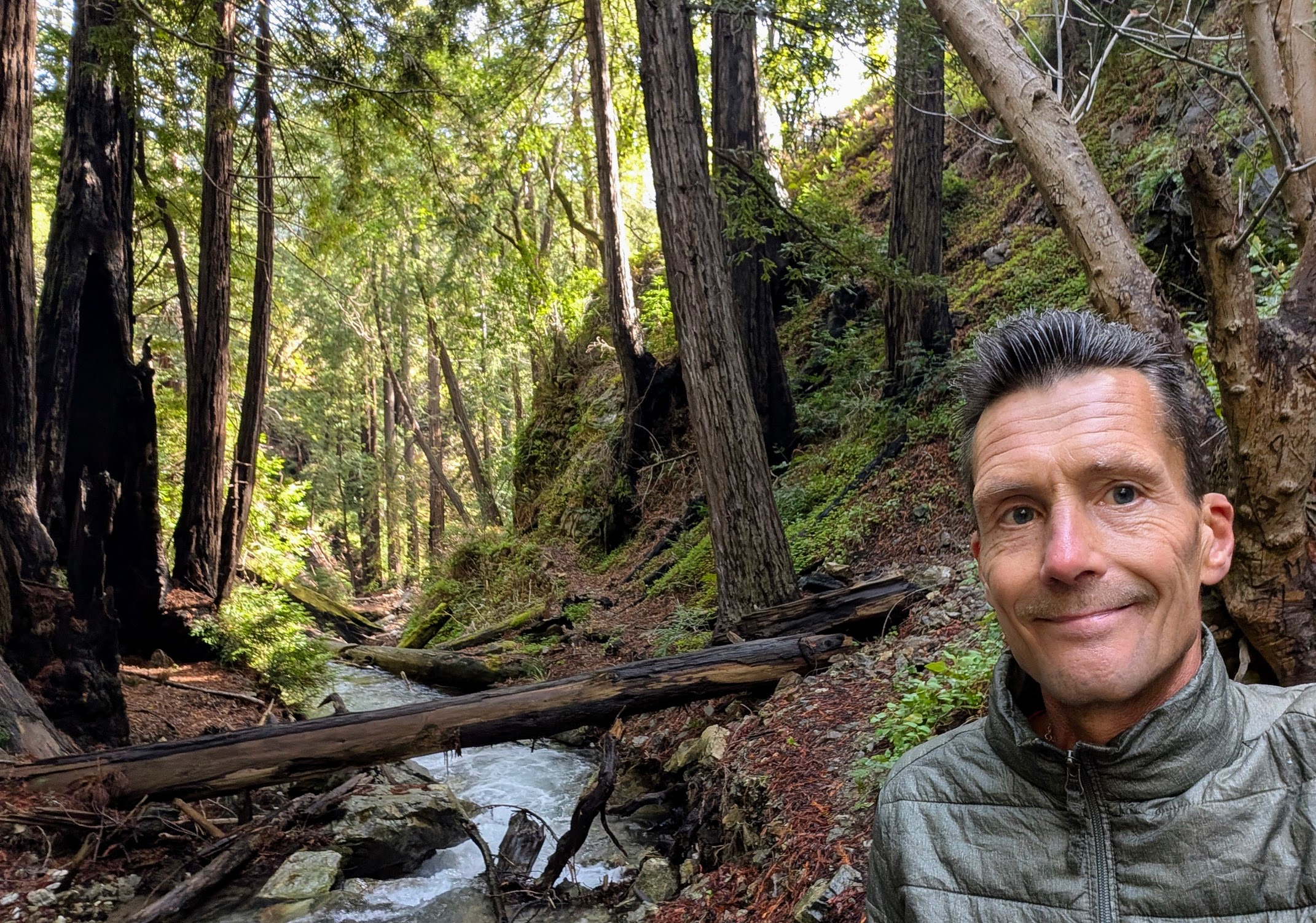
But then the trail disappeared (indeed, it was destroyed), and the rest of the hike could be described as “scrambling and falling.” Besides, I had to jump several times across the creek

Finally, “mission was accomplished:” I reached the falls and did not regret all efforts and challenges. The waterfalls were in their full power and majesty.
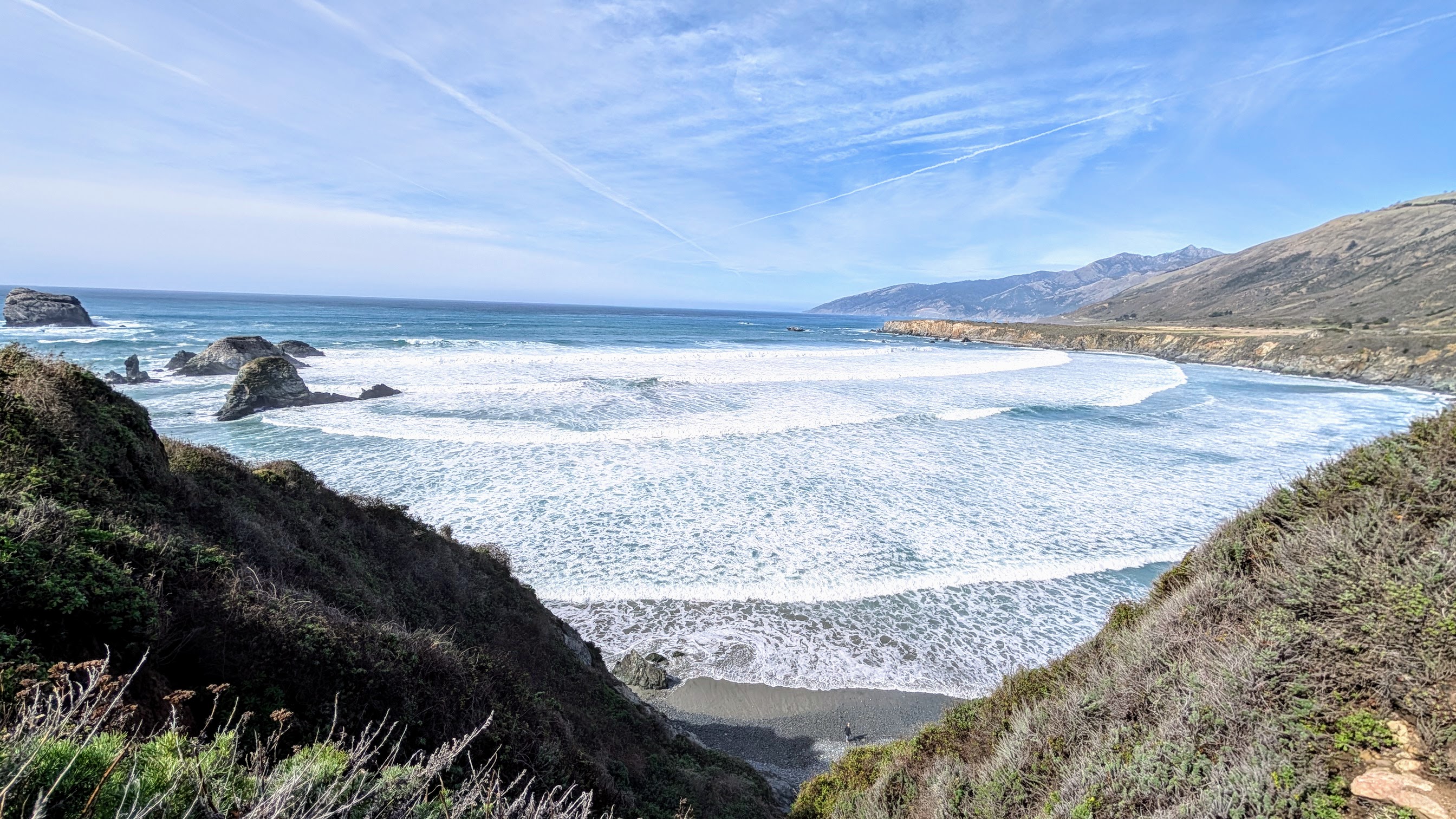
It was early afternoon, when I returned to parking. I drove along Highway 1 further South and in about 6 miles / 10 kilometers arrived to Sand Dollar Beach. If you have time, I definitely recommend to stop there and hike down to the beach.
A few more miles further South, some unusual geological formations sticking out of the ocean came into the view.

The next destination (again, only couple miles further South) was Jade Cove.
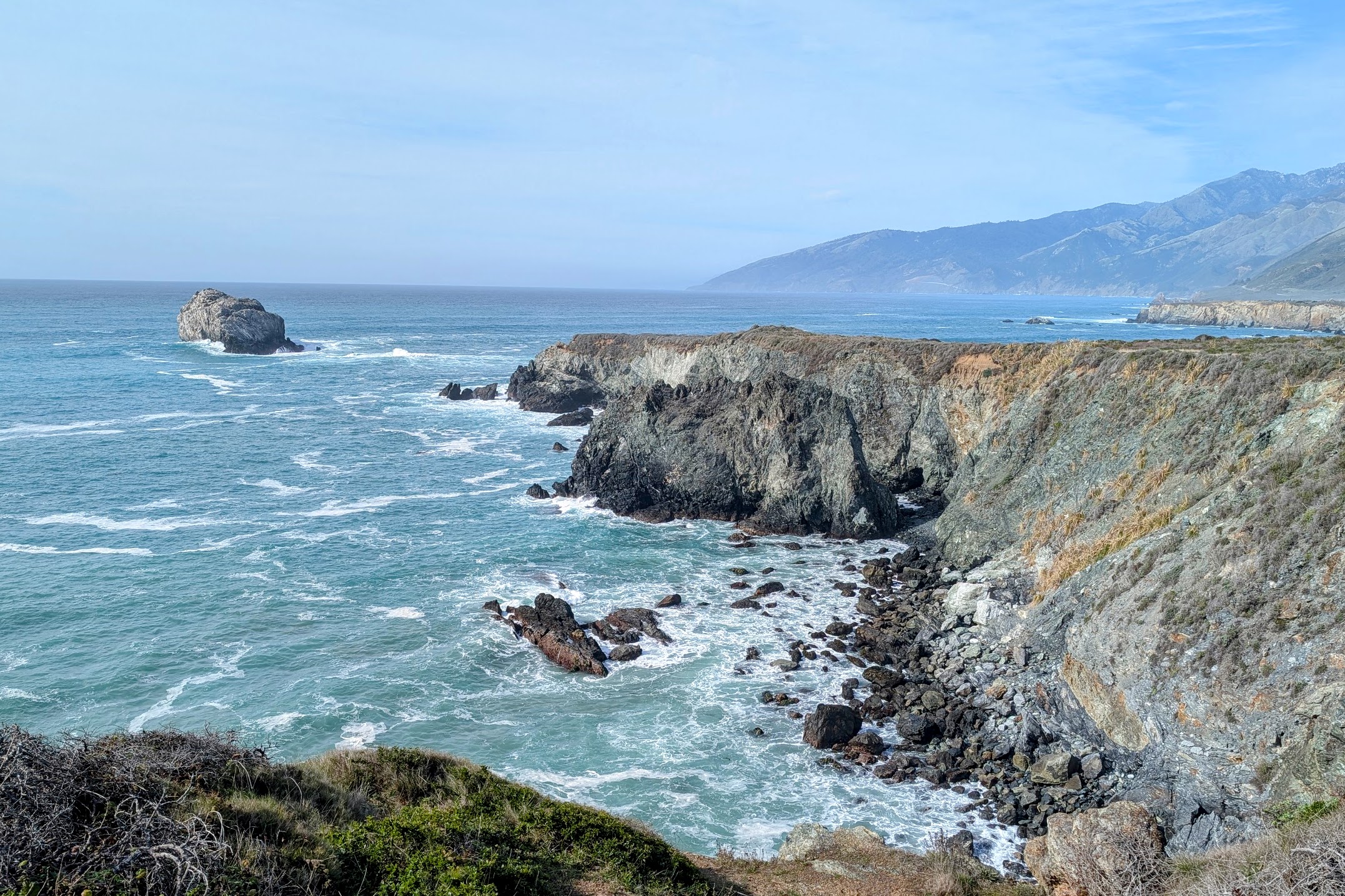
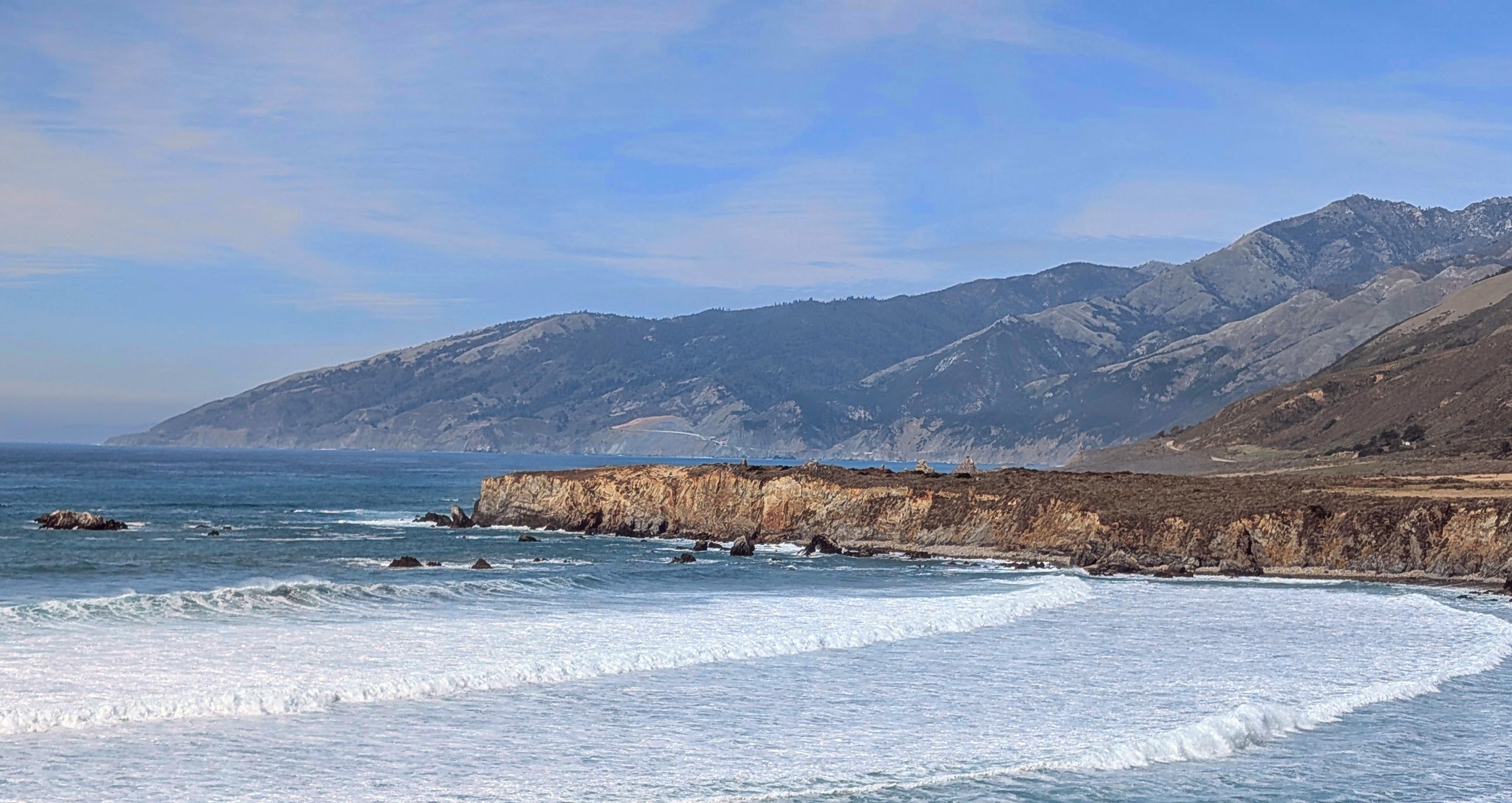
From Jade Cove, I looked back, along the coast and towards the Hermitage, and felt that it was time for return to New Camaldoli.
Next day, after morning service (“Vigils”), we met with Father Ignatius, the Prior of New Camaldoli. A native of United Kingdom and former government official, he first visited Hermitage about 20 years ago and was not particularly impressed with California. Besides, at that time, he thought about joining Jesuit Monastic Order. But then he returned for more extended stays and eventually felt that his spiritual home is here: with Camaldolese order and in the untamed nature of Big Sur.
I was curious about personal stories of other brothers, the members of New Camaldoli community (there are about 15 total). It turned out, they came here from very different “walks of life.” Some were clergy, but others had successful and diverse professional careers: former sociologist, chemist, lawyer, engineer…

I asked about seminars (they call them “preached retreats”) offered by New Camaldoli on various spiritual matters. The next four seminars were focused on ideas of Thomas Merton, perhaps, most celebrated and influential American Catholic monk.
Trappist monk, theologian, mystic, poet, social activist and scholar of comparative religion, Merton (1915-1968) wrote more than 50 books (“The Seven Storey Mountain” being most known). By the end of his life, he also became a keen proponent of interfaith understanding and explored himself various Eastern religions through both study and practice.
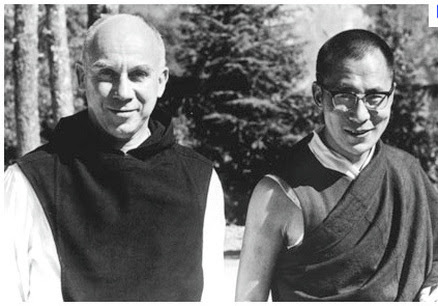
I asked Fr. Ignatius: “Why these seminars? Is there any connection between New Camaldoli and Merton?” Apparently, a good portion of Merton’s book “The Silent Life” was inspired by traditions of Camaldolese monks. Being himself part of Trappist order (meaning an emphasis on communal living), Merton, yet, had a strong desire for a more solitary (“eremitic”) living. In “The Silent Life,” Merton highlights Camaldolese order as a unique example that integrates monks’ communal living and ample time in solitude.
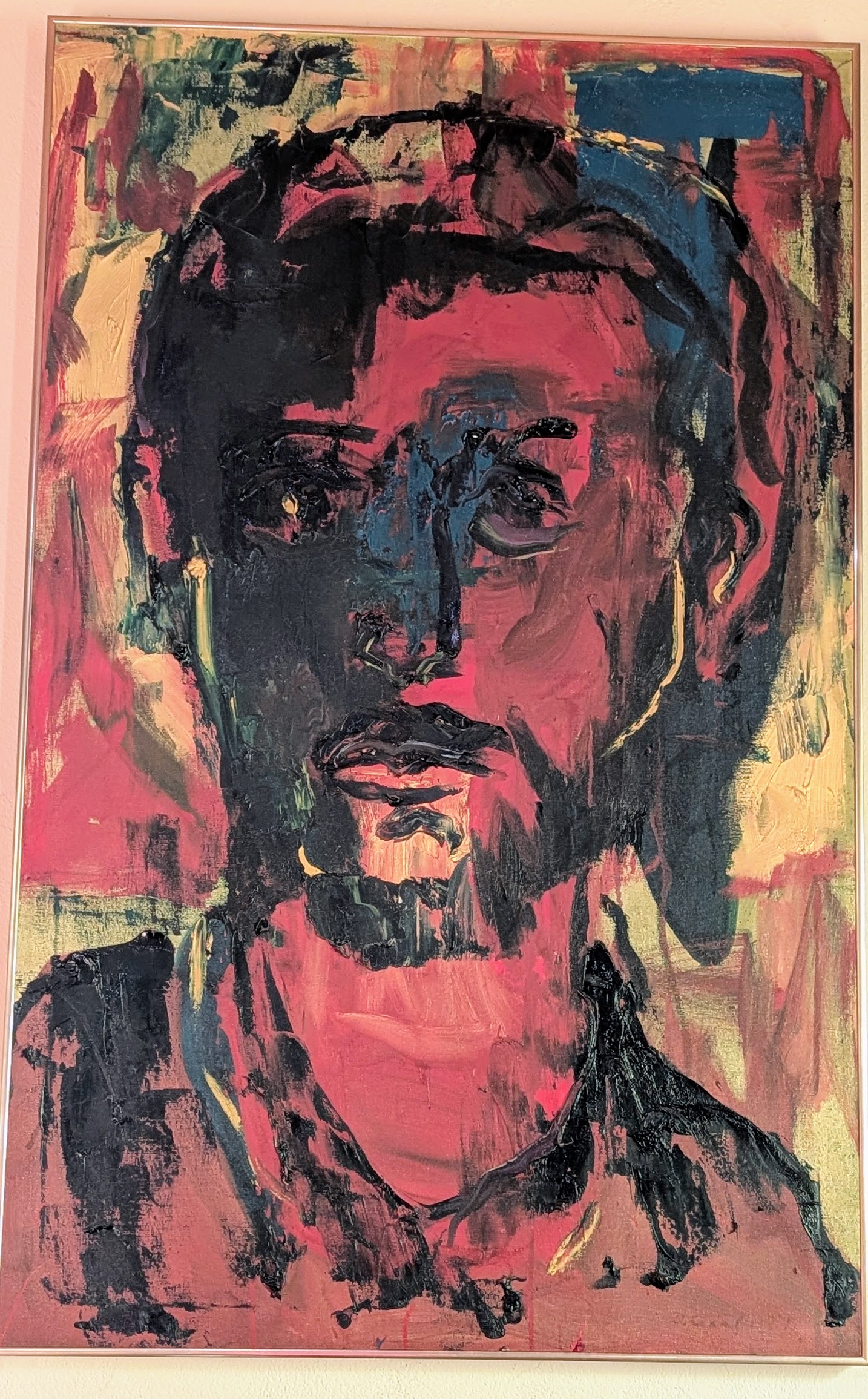
Among other things that we discussed with Fr. Ignatius, one was New Camaldoli’s appreciation for icons (I wrote about this already). On the walls of the room where we met, I noted two other interesting artworks. Fr. Ignatius explained that both Monastery’s icons and these paintings were created by a Camaldolese nun from Transfiguration monastery in Windsor, NY.
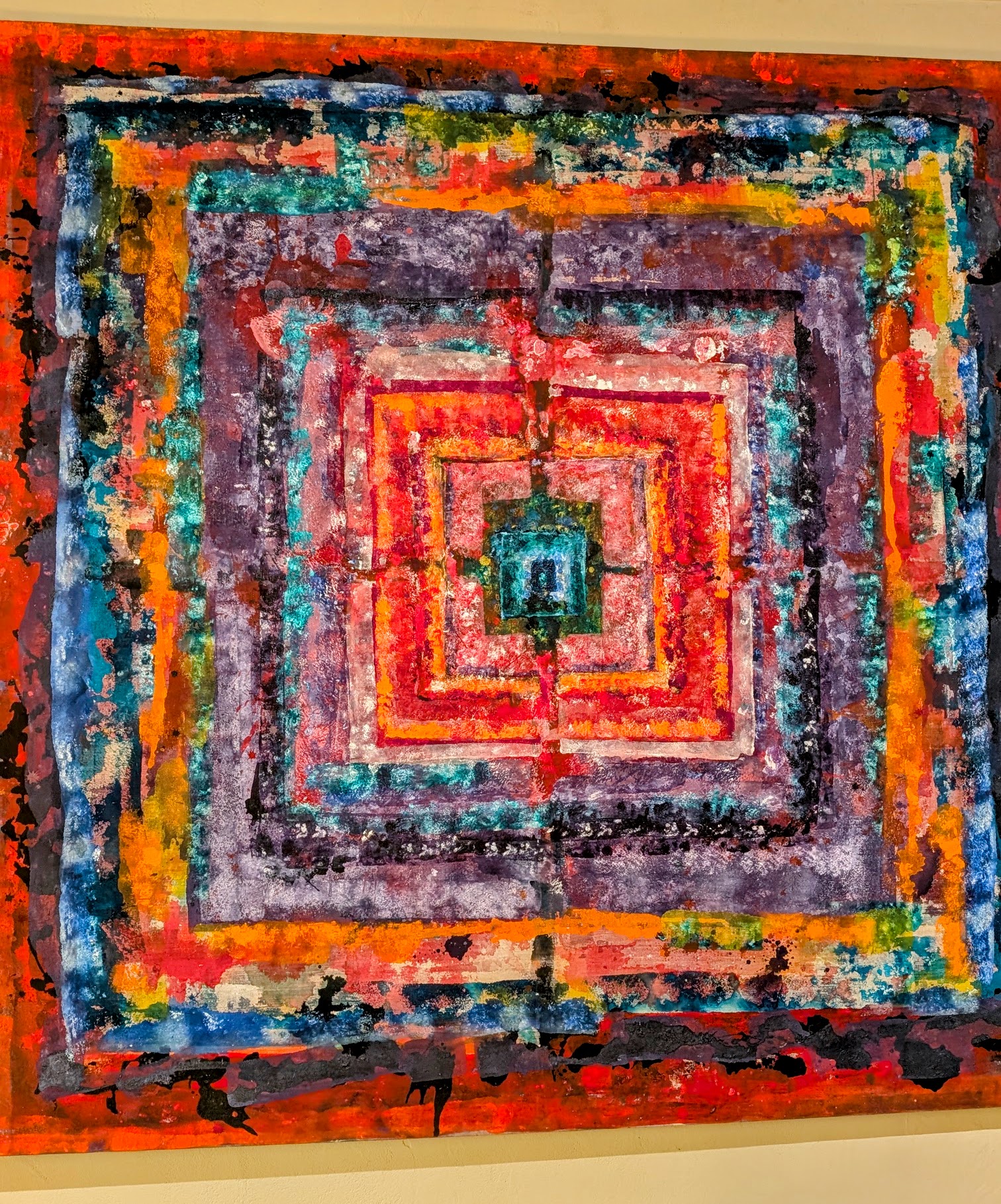
Our conversation was interrupted by the bell: it was time (11.30 am) for the main service, the Mass/Liturgy. Fr. Ignatius stood up and said: “Let’s get together later. I will tell you a few stories about people who visit us.”
This day, not Fr. Ignatius but another monk lead the worship (or, as Catholics say, “presided over Liturgy”). Similarly to Sunday Vespers, the service began from singing psalms from the worship books.
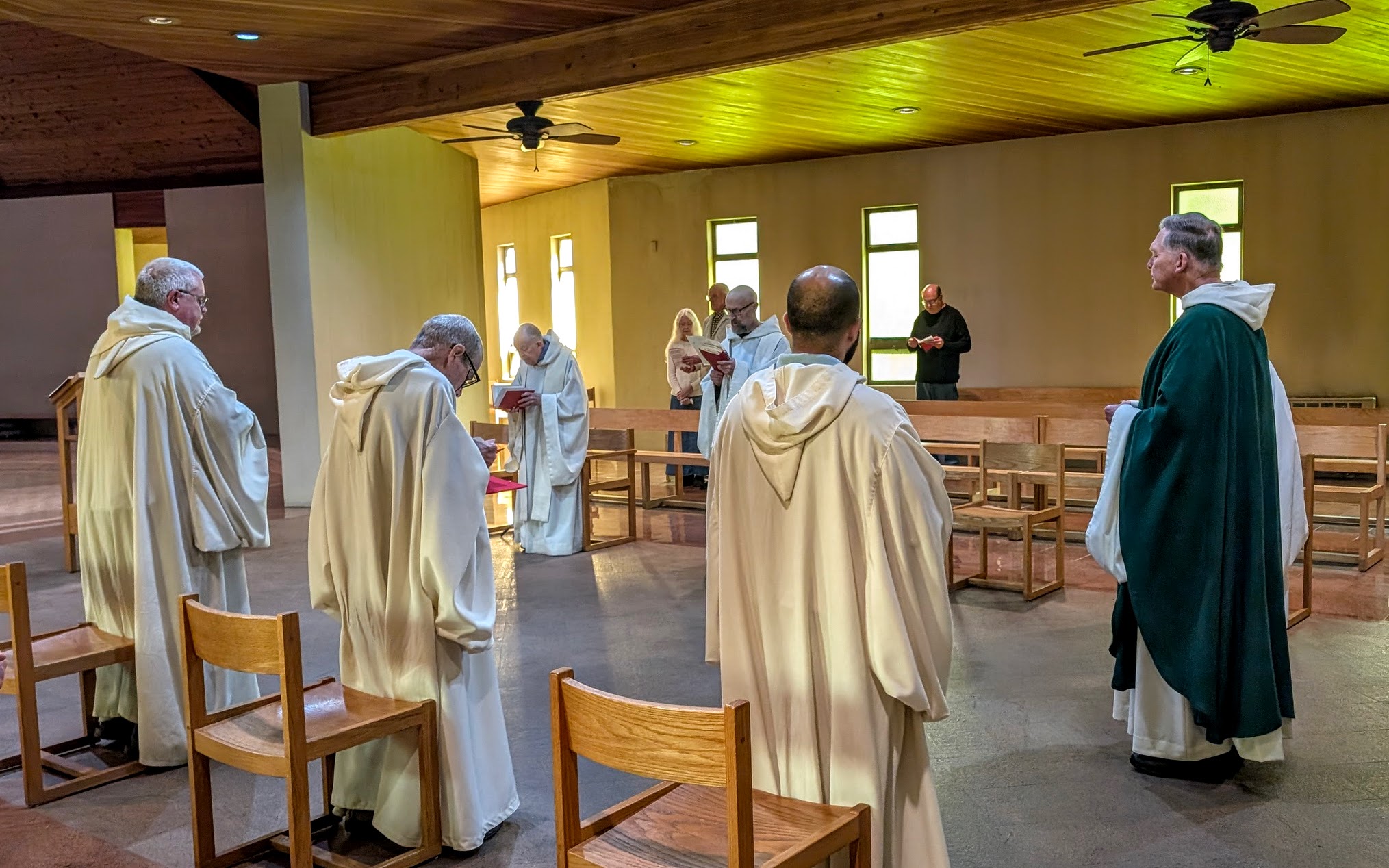
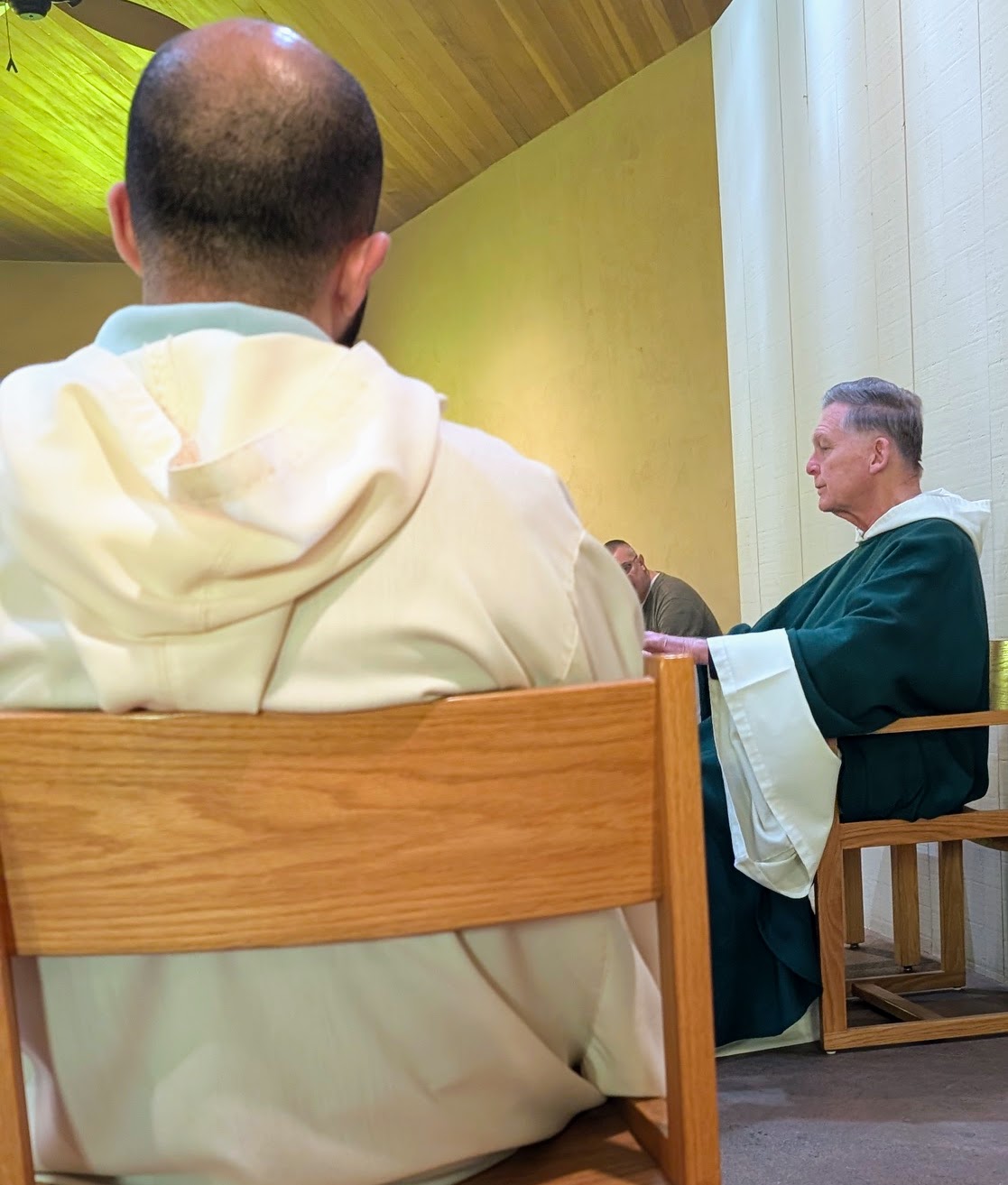
Then, there was some reading from the New Testament.

I was waiting, however, for my favorite part of the service: the sermon. It turned out just great. The subject focused on three related aspects which are inevitably important for all of us: hope, confidence, and self-assurance. The sermon was both thought provoking, leading to more questions and, yet, ultimately promising hope for everyone.
The service ended in the Altar with the “crown” of any Mass:/Liturgy: Holy Communion. Different Christian Churches interpret Holy Communion differently. Some think of it as a memorial of Jesus death and resurrection. Some believe in the real presence of Christ in bread and wine which are given to communicants. Yet, some emphasize that partaking in Holy Communion symbolizes the unity of all believers as one single body of Christ. Regardless, this rite is always solemn and soulful.
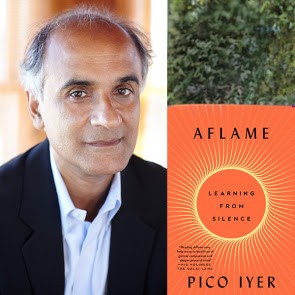
In the evening, we met again with Father Ignatius and sat on the bench in front of the church and with another panoramic view of the ocean. I asked: “Can you describe in just few words the very essence of Camaldolesian beliefs and practices. Without much thinking, Fr. Ignatius said: “Solitude, community and mission.” The first two (“solitude” and “community”) did not surprise after all what I learned about this order. But why and how “mission?”
Fr. Ignatius smiled and explained that for Camaldolese monks does not mean an active religious or social outreach. Rather, it is understood as showing an example of the entire life dedicated to God and also providing space for others to encounter the divine. And this is why welcoming and offering hospitality to those seeking spiritual retreat and respite from everyday life is an essential Camaldolese value.
“Look, we are not trying to change people,” said Father Ignatius. “We simply provide a good setting, where our visitors can take a break, rediscover themselves and, hopefully, find answers on whatever questions they have.” And then he gave me three – very different – examples of people who – for various reasons – have chosen to stay at the Hermitage.
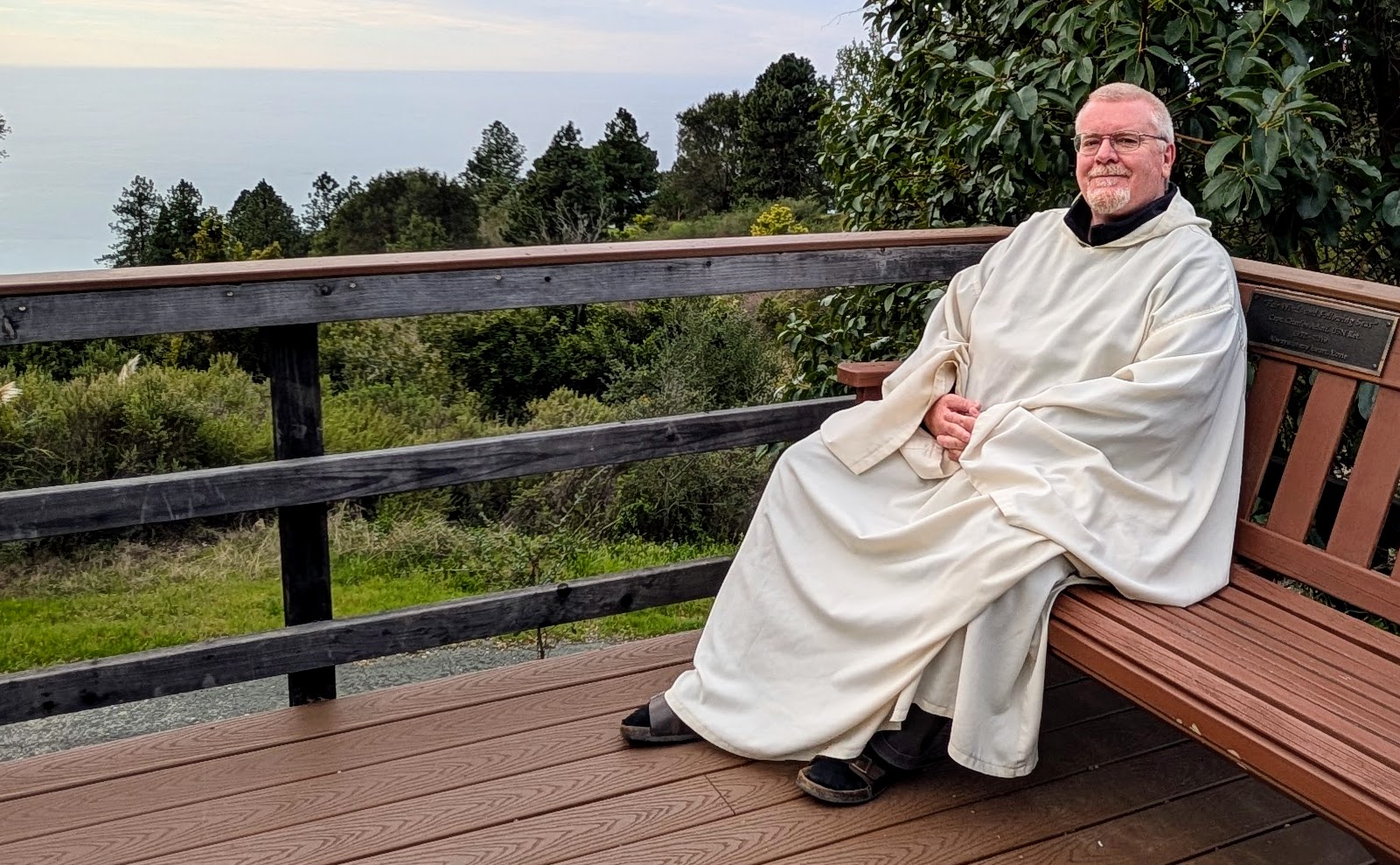
The first was a well known British essayist and travel writer Pico Iyer. For the past 30 years, he comes regularly to New Camaldoli finding here a deep sense of peace in the atmosphere of contemplation. One of his books (“Aflame: Learning From Silence”) shares his reflections on time spent at the Hermitage. And his most bestselling work, “The Art of Stillness: Adventures in Going Nowhere,” was probably also inspired by New Camaldoli.
The second example of a visitor in search for answers to some life questions was an elderly lady who was a staunch atheist. Being in the late stages of her life, he came and stayed one week at the Hermitage with the sole purpose: to double-check whether her atheistic convictions were indeed true. What was her conclusion? No one knows, but this visit was clearly important to her.
The last example was a young Sikh, a successful and very rich entrepreneur from Silicone Valley. His question was: “What should I do with this huge fortune that I amassed?” Father Ignatius was reluctant to offer any specific recommendation. Instead, he simply suggested that the young man could, probably, simply remember what he learned while growing as a Sikh. Namely, that the corner-stone of Sikh’s values is sharing with those less fortunate.
It was getting dark. I thanked Father Ignatius for the time at Hermitage and, especially, our conversations. This evening was the last opportunity to enjoy another sunset over the Pacific, and I walked in already familiar direction, to the “hermitage” house sitting on the slope.
Yet, one more pleasant encounter awaited me on this day. As I navigated the trail, couple of deers walked graciously out of the forest and watched with great curiosity.
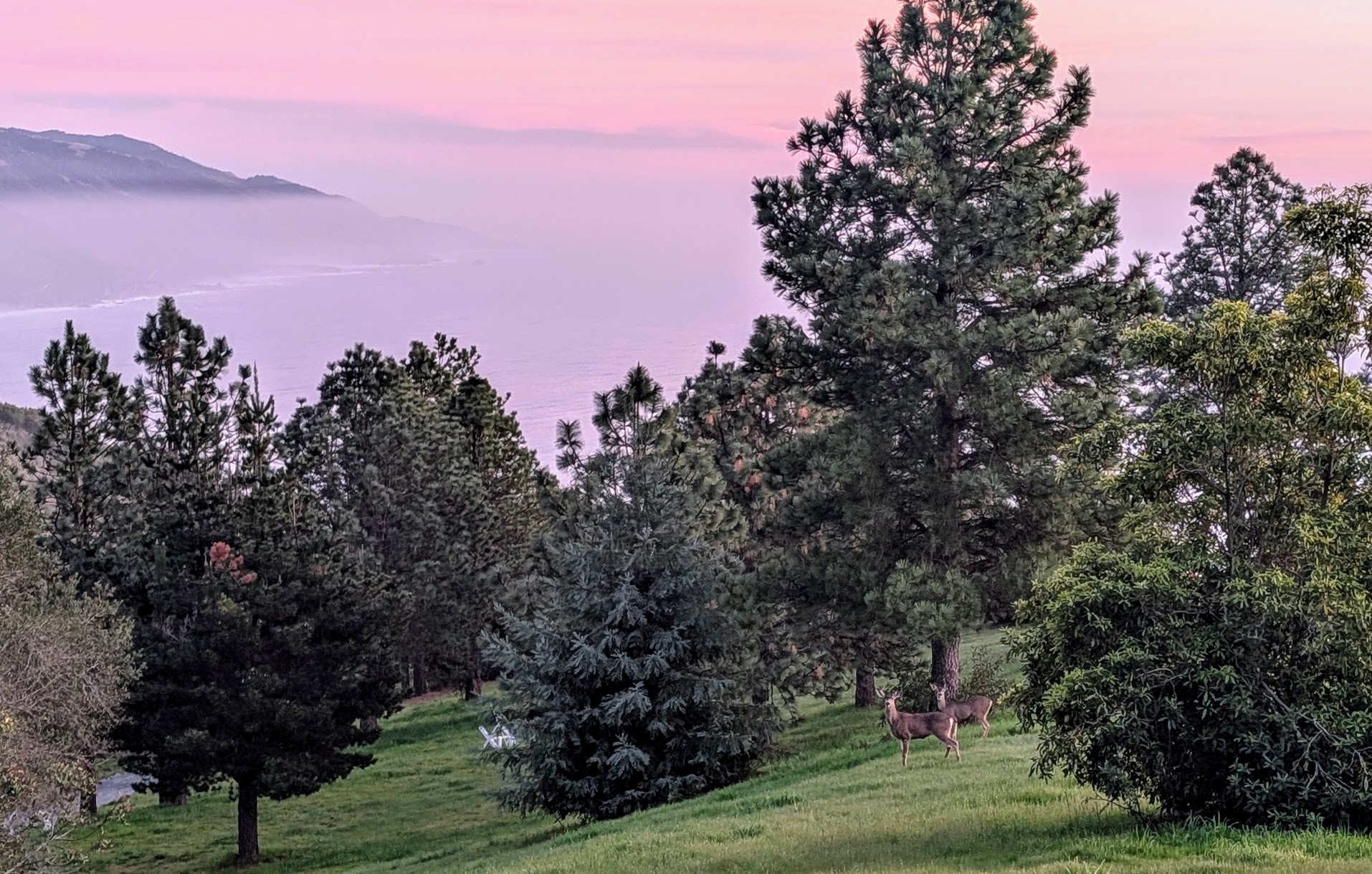
The next morning, I left early and drove along Highway 1 to the South. For about half an hour, not a single car passed by and no other sign of civilization came into the view. I savored these last minutes of solitude and immersion in nature.

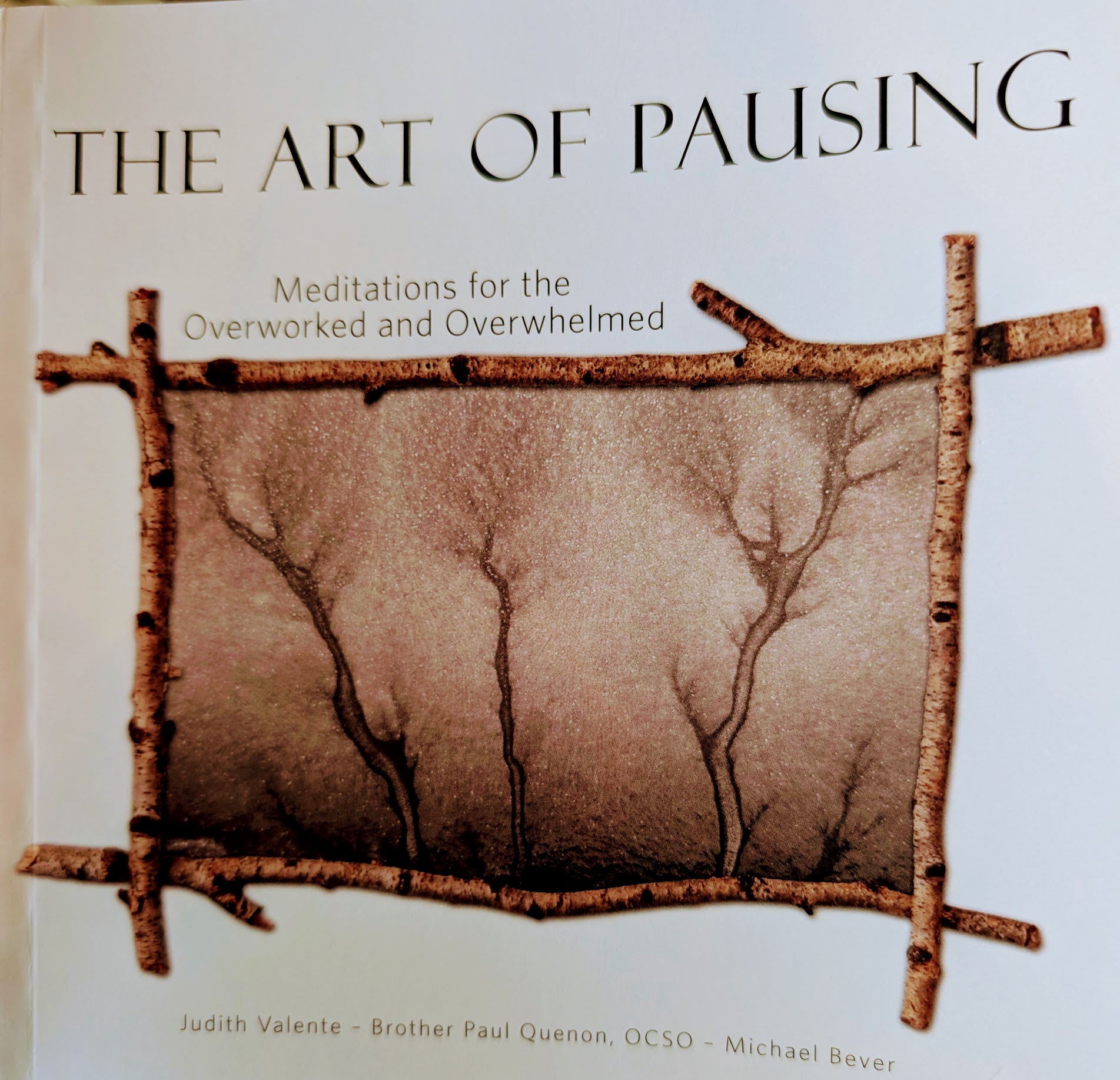
Yet, while returning back into the “normal world,” I had with me something which would always remind about time and experiences at New Camaldoli: the book from the Monastery’s bookstore. Titled “The Art of Pausing,” it offered a collection of very short stories and essays, each describing some situation in which “pausing” and “taking time” were truly rewarding
Life is hard to plan exactly, but one thing I know almost for sure: I will return to New Camaldoli.

 Alexei on the Road
Alexei,
Thank you for sharing your experiences, especially your conversations with Father Ignatius—they were very inspiring. Quite curious about the book The Art of Pausing. Would love to read it.
Sam
LikeLike
Alexei,
Thanks for the wonderful travel report on the New Camaldoli Hermitage and the breathtaking photos.
My wife and I lived in Carmel-by-the-Sea for a few years, and the Big Sur area and the Hermitage are special places for us. One of my life treats was running the Big Sur Marathon that traversed the Pacific Ocean pathways and the Bigsby Bridge. Kerouac is a wonderful read, as you mention, as well as Henry Miller’s Big Sur and the Oranges of Hieronymous Bosch.
If you haven’t been there already, Mepkin Abbey in Moncks Corner outside Charleston, SC is another monastery to visit. The Luce family donated the land, so it is spectacular, and I believe that Trappists from Gethsemani founded it.
Safe travels.
Ron
Ronald A. Wendeln, Ph.D. | Managing Principal Prescience Associates, LLC
Mobile: 216-233-2980 rwendeln@prescienceassoc.com rwendeln@prescienceassoc.com | http://www.prescienceassoc.com/ http://www.prescienceassoc.com
https://www.prescienceassoc.com/wp-content/uploads/2018/03/pa-logo@2x.png
From: Alexei on the Road comment-reply@wordpress.com Sent: Tuesday, March 4, 2025 1:52 PM To: rwendeln@prescienceassoc.com Subject: An Ancient Monastic Community in the Heart of California: New Camaldoli Hermitage in Big Sur
Big Sur is one of California’s most iconic areas. Here, in the rugged and undeveloped section of Central Californian coast, Santa Lucia mountains rise abruptly from the Pacific Ocean. There is only one road to come here and explore: the narrow and windi…
https://alexeiontheroad.com/2025/03/04/an-ancient-monastic-community-in-the-heart-of-california-new-camaldoli-hermitage-in-big-sur/ Read on blog or Reader
https://alexeiontheroad.files.wordpress.com/2019/10/image.jpg?w=256
http://alexeiontheroad.com Alexei on the Road
https://alexeiontheroad.com/2025/03/04/an-ancient-monastic-community-in-the-heart-of-california-new-camaldoli-hermitage-in-big-sur/ Read on blog or Reader
An Ancient Monastic Community in the Heart of California: New Camaldoli Hermitage in Big Sur
https://0.gravatar.com/avatar/fcd094c14d46ecfb993f0cec066ce0f4bcf808b855334a30cdc1c02d86f4f1b3?s=96&d=identicon&r=G
By Alexei Krindatch on March 4, 2025
https://alexeiontheroad.wordpress.com?action=user_content_redirect&uuid=25c34d33747c4df933ea8a27eea9dc268e48fa616aff7180966dbf8a66c19f5f&blog_id=167784456&post_id=7819&user_id=10037138&subs_id=8642996&signature=141f129b726e64e765543f5b01404971&email_name=new-post&user_email=rwendeln@prescienceassoc.com&encoded_url=aHR0cHM6Ly9lbi53aWtpcGVkaWEub3JnL3dpa2kvQmlnX1N1cg=&email_id=f7a36a0813f0381f9e9bb2eaaf2139b5 Big Sur is one of California’s most iconic areas. Here, in the rugged and undeveloped section of Central Californian coast, Santa Lucia mountains rise abruptly from the Pacific Ocean. There is only one road to come here and explore: the narrow and winding https://alexeiontheroad.wordpress.com?action=user_content_redirect&uuid=a076a923881ca5064ad1915ae76d623c2c7606a8f31db653b8c25545023a6ead&blog_id=167784456&post_id=7819&user_id=10037138&subs_id=8642996&signature=d7a0184979b44cf4374deb3dd2fac885&email_name=new-post&user_email=rwendeln@prescienceassoc.com&encoded_url=aHR0cHM6Ly9lbi53aWtpcGVkaWEub3JnL3dpa2kvQ2FsaWZvcm5pYV9TdGF0ZV9Sb3V0ZV8x&email_id=f7a36a0813f0381f9e9bb2eaaf2139b5 Highway 1. It takes visitors into mesmerizing blend of dramatic cliffs, bizarre geological formations, crushing waves, pristine beaches, and ancient Redwood groves.
https://alexeiontheroad.wordpress.com/wp-content/uploads/2025/02/p5070053.jpg?w=640
Big Sur, California
https://alexeiontheroad.wordpress.com/wp-content/uploads/2025/02/dsc01725.jpg?w=640
Julia Pfeiffer Burns State Park, Big Sur
Big Sur’s enduring power of nature attracts not only casual tourists, but also many of those
LikeLike
Dear Alexei,You are an inspirati
LikeLike
Dear Alexei Very nice Br Gregory
LikeLike
Thanks Alexei!!
LikeLike
Dear Alexei,
No one can ever say that your fascinating accounts of your various
travels and explorations fail to provide sufficient enticing photographs
or details! And the general formatting and organization of your
presentations is also quite nice.
Frank
LikeLike