
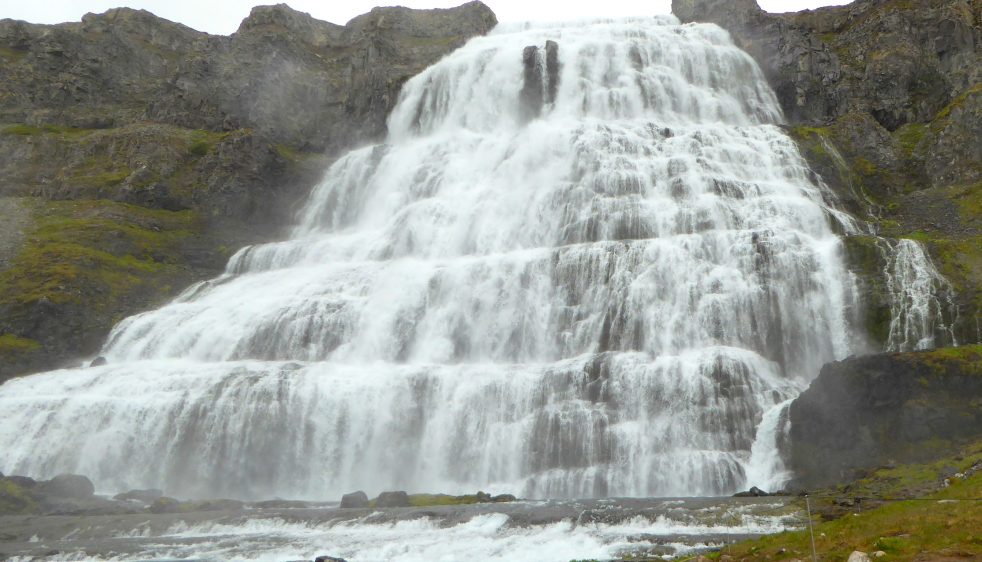

Philippines is the nation of about 7,000 islands, but most tourists flock to just a few destinations: like Boracay, Palawan, Coron, or Bohol. And – luckily for more inquisite travelers – they completely miss Dinagat. Unlike its close neighbor Siargao – the “surfing capital” of the Philippines – Dinagat remains undiscovered, offering an escape into both tranquility and adventure. It is an enchanting place where emerald jungles tumble into turquoise waters and strange rock formations convey untamed and magical beauty.

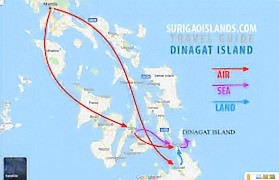
Some people also describe Dinagat as a mysterious place, and there are certain reasons for doing so, but we will talk about this later. For starters: where Dinagat island is and how to get there? Here is the map of the Philippines showing all options of traveling to Dinagat from the country’s main cities: Manila and Cebu. One way or the other, the last “leg” of the journey is a one-hour ferry boat ride from the city of Surigao (it has an airport) to San Jose, the capital of Dinagat.
I landed in Surigao in the late afternoon. The airport is very small, and in about 20 minutes, I got my luggage and was ready to go.

It is only 3 miles / 5 kilometers between the airport and ferry pier, and the best way to go is catching a tricycle – a three-wheel motorbike with a cabin for passengers. Generally, tricycle is most common local transportation option everywhere in the Philippines.

I was on the pier just in time to catch the 4 pm ferry. There is no need to buy tickets in advance: you simply board the boat and then pay to the crew after departure.
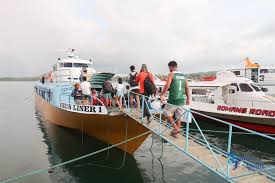
The first insights into realities of life on Dinagat began right away. The passenger sitting next to me was a cop from Surigao city who has been transferred for a few days to Dinagat to help the local police. Nail was an experienced policeman (something like “master sergeant”) who served previously in Manila and other big cities. He told me that whenever he was “on loan” to Dinagat police, it was almost like going on vacation, because the island is very peaceful and crime virtually non-existent. We exchanged our contact information and joked that I will get in touch with him if I will be in any trouble while on the island.

We approached Dinagat island just in time for gorgeous sunset.

I said “Good Bye” to Nail (but we already became friends on Facebook), disembarked and looked for another tricycle to go to “Vines B&B,” a guesthouse which I found on Booking.com

“Vines B&B” is located outside of San Jose, the capital of Dinagat. But the “capital” is very small and it has taken only about 10 minutes by tricycle to get to guesthouse. People there were waiting for me and in no time I was in my room which – quite honestly – felt like a very pleasant surprise. Its design, comfort, amenities were rather “European” than “Filipino” standard.

As I learned later, “Vines B&B” was definitely the best accommodation option on Dinagat. I stepped out into spacious balcony and absorbed great view over the bay.

It was late, I was hungry and decided to walk back in the town: to check out “night life” (just kidding) and find some place to eat. But I never made it there, because in the meantime the main road to San Jose became sort of a night market with many food stalls. I stopped at one of them which was selling a variety of freshly caught fish.
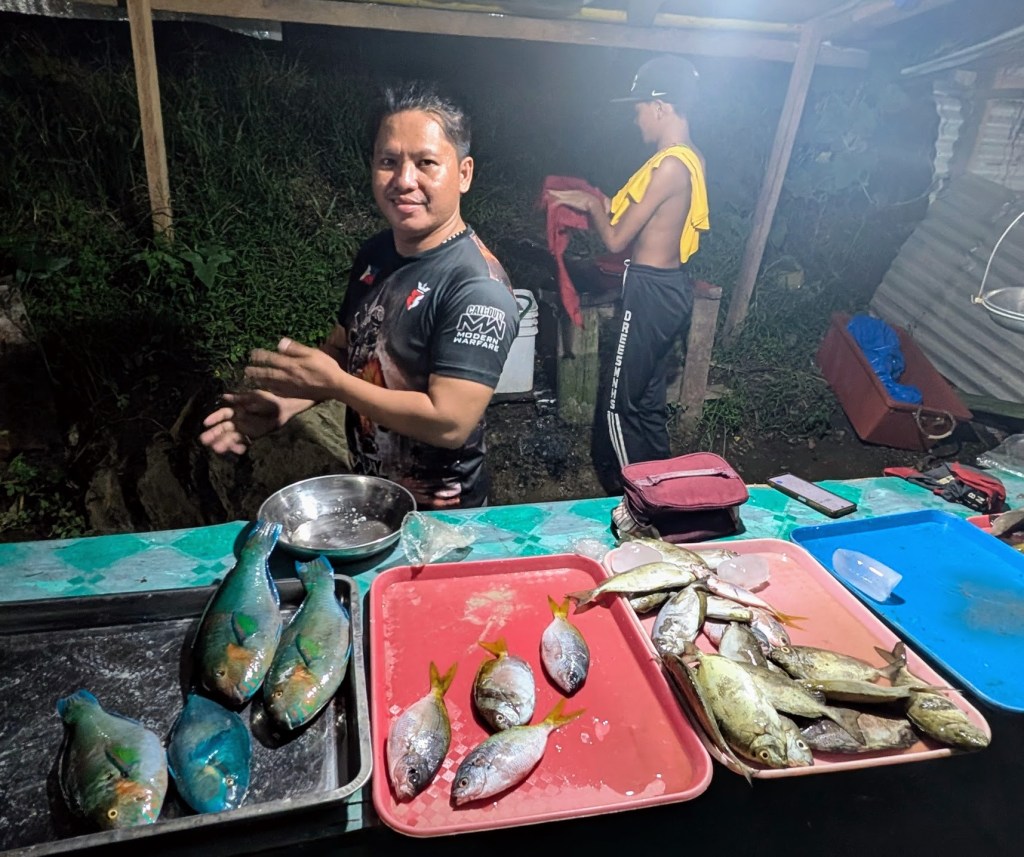
My choice was parrot fish which is prized for its delicate flavor often described as a cross between crab and lobster, with hint of sweetness and flaky texture.

For 50 Filipino pesos (less than 1 USD $), the young fellow operating charcoal barbeque station grilled the fish to perfection.
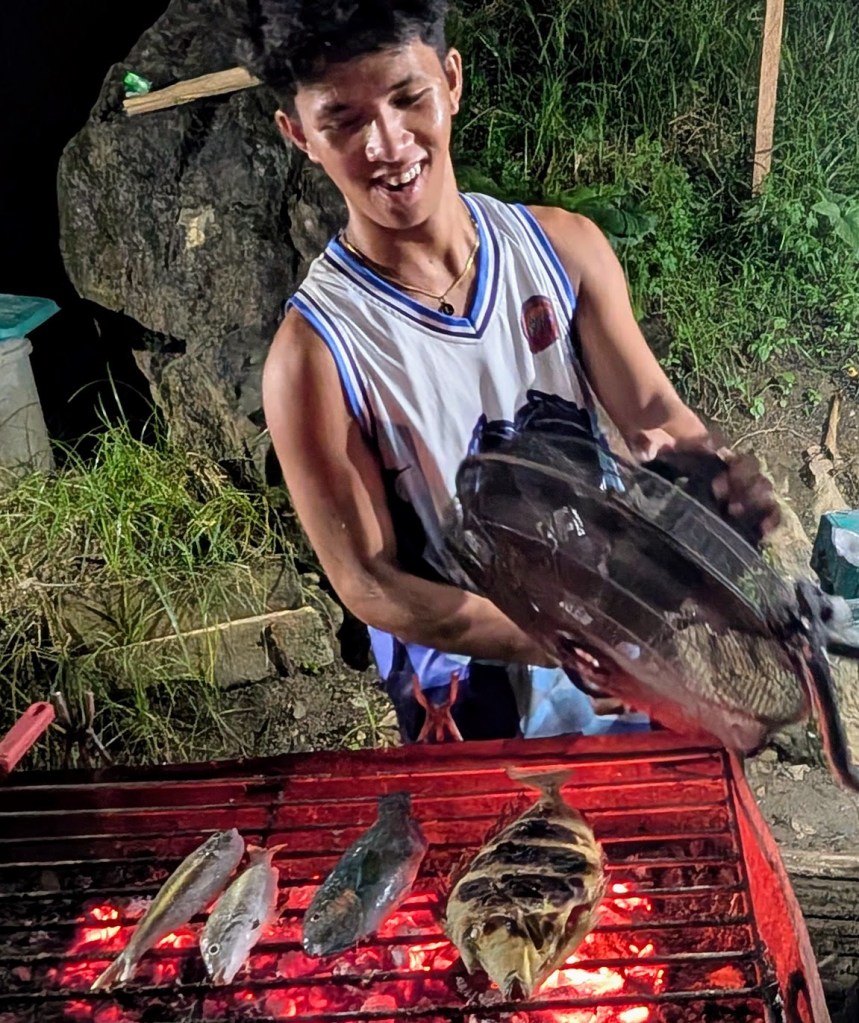
And as everywhere in the Philippines, Dinagat has plethora of bakeshops with great choice of pastries and breads. One was right next to fish stall and I got my supply of freshly baked rolls.

I walked back to “Vines B&B” and enjoyed simple but very tasty supper while sitting on balcony and absorbing starry skies. It was also time to make plans. Indeed, I had only two days on Dinagat and decided to divide them between “land” and “sea.” The next day was designated as a “land adventure.” My hosts at B&B arranged a tricycle with a cheerful English speaking driver named Federick. For 2,000 pesos (less than 40 USD $) he committed an entire day to drive and show me all main attractions around San Jose.
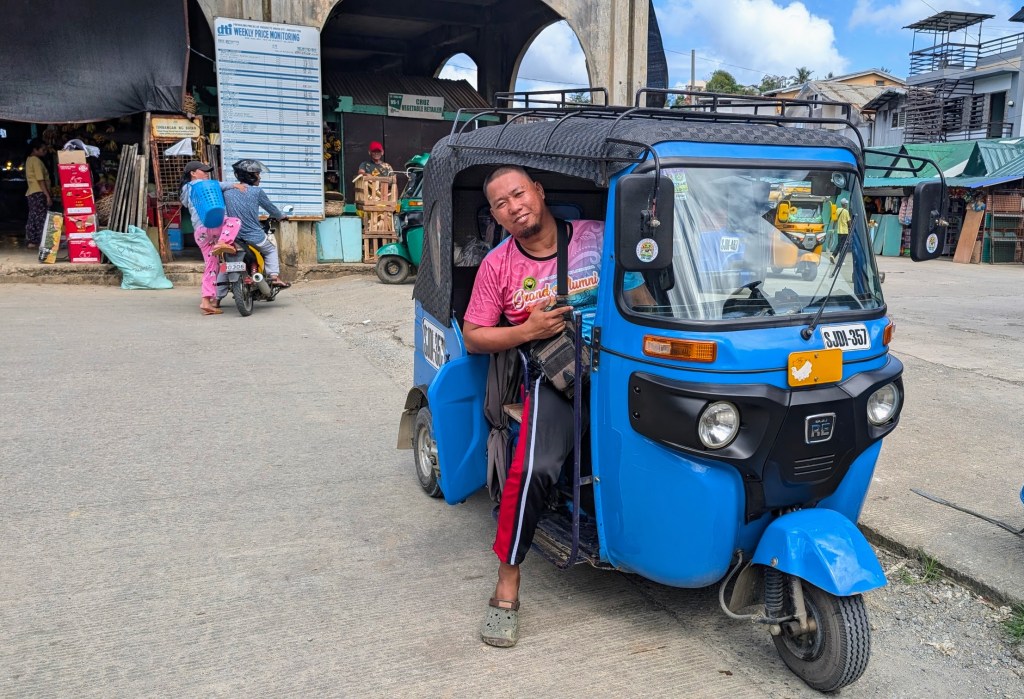
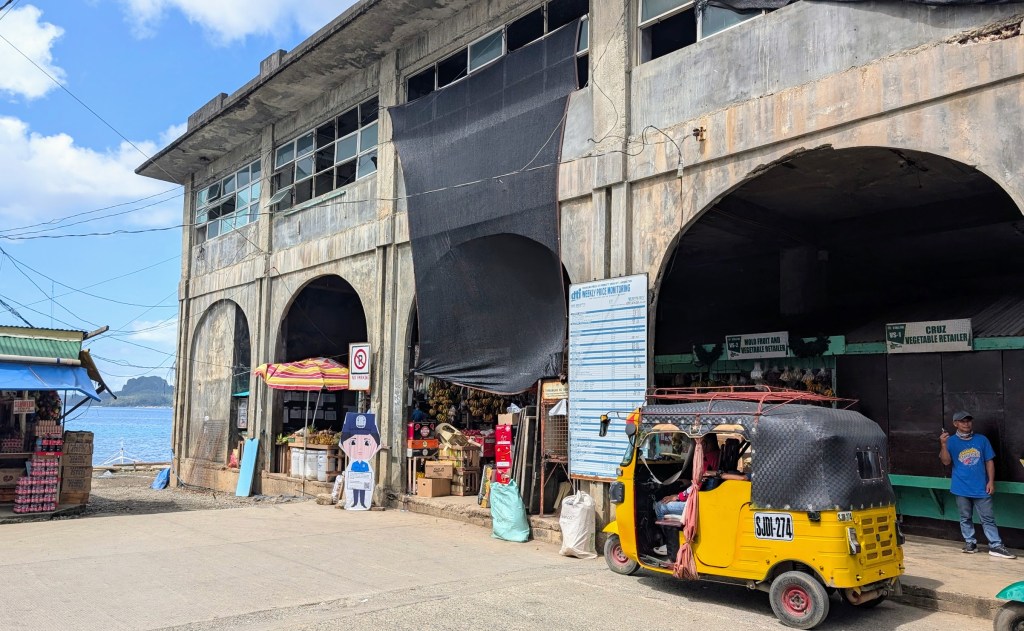
I like to begin discovery of new places from the local markets: these are great venues to watch everyday life and meet the locals. The main market in San Jose was in a covered building and right next to harbor.
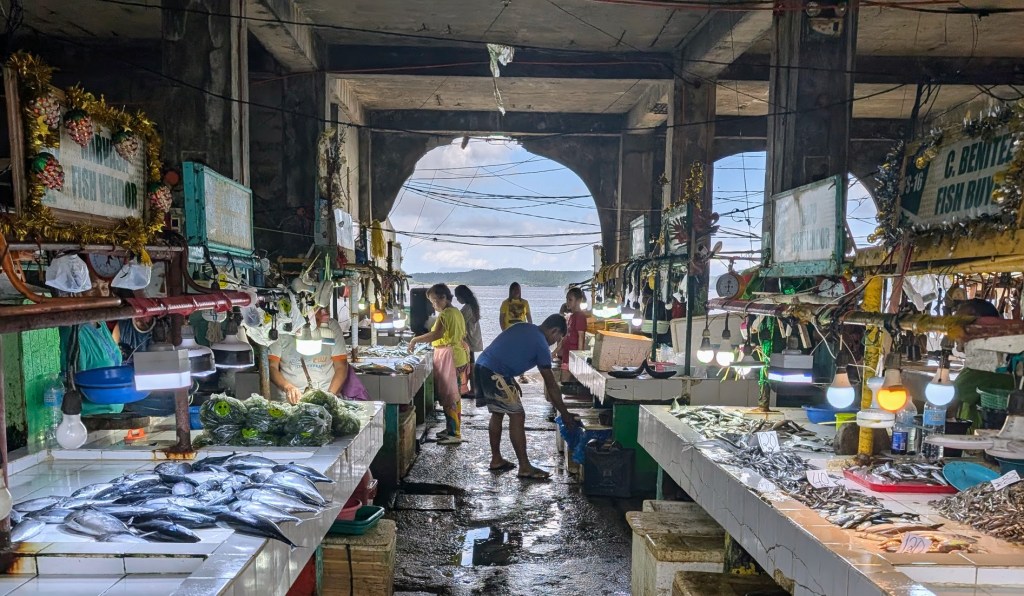
Needless to say that selection of various fishes and seafoods was impressive: in fact, I was even unable to identify most of species which were sold there.
Fruits and vegetables were abundant as well, but mostly brought to Dinagat from other islands.
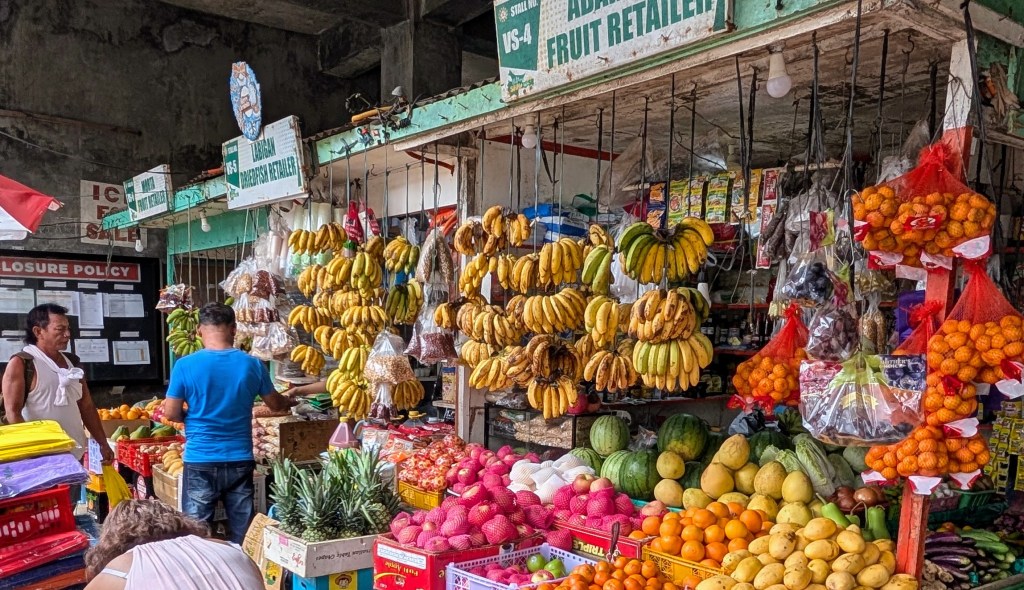
Also, for the tourists, vendors selling rice could be of great interest. Indeed, this main staple of Filipino cuisine has dozens varieties and levels of quality: each kind is used for different purposes and occasions. So, my recommendation is: find the seller who speaks decent English, chat with him and learn all “101” about the usage of rice in the Philippines.

And, of course, the “highlight” of any market in the Philippines are street “cantines” – the small (often mobile) set-ups that offer many choices of affordable and delicious dishes. You can eat right here (they will give you plates and utensils) or take away (typically, food is packed in small plastic bags).

The cantines are ubiquitous part of Filipino culture: you will find them in all parts of the country. There is no menu: you just need to ask what each dish is made of and how it was prepared. Whatever is served today, may or may not be offered tomorrow. And these meals are amazingly cheap. Typically a portion of anything costs anywhere between 25 and 100 pesos (i.e. 0.5 to 2 USD $).
To me, eating at cantines is the best way to sample the whole spectrum of authentic Filipino cuisine.

After market, we draw to the east, climbing up the hill so that I can see the town which was left behind.

The first “wow” moment happened literally five minutes later, when one of the road’s curves offered gorgeous view of San Jose and its surroundings.

Another five minutes, and we arrived to our first destination and undoubtedly the main cultural site on Dinagat. It is commonly known as the “Shrine” or – if you want full official name – “Philippine Benevolent Missionaires Association (PBMA) Founder’s Shrine.” And this was my second “Wow” moment within ten minutes time frame. Clearly, I did not expect to find here such an impressive and sprawling architectural complex surrounded by well-groomed terraced gardens, ponds, and streams.

It is time now to tell the story of a man who in many ways shaped the local community and politics of present days Dinagat: Ruben Edera Ecleo Sr. (1934-1987), a charismatic, yet, controversial person and religious leader. Born on the island, he showed an early interest in spirituality and healing. Soon enough, he developed a strong following due to his perceived mystical qualities – the ability to perform miracles and heal the sick.

In 1965, he established Philippine Benevolent Missionaries Association (PBMA). PBMA grew rapidly, attracting followers all across the Philippines with many of them moving to Dinagat to be close to their leader. A good number of newcomers arrived from the country’s main urban centers: they were well educated people with significant financial means, and they brought “fresh blood” to once godforsaken Dinagat.
The teachings of PBMA could be described as a blend of Christianity and indigenous Filipino traditions with a strong emphasis on three core elements: healing through the faith, community service and missionary outreach.
Yet Ecleo’s leadership was not without controversy, with accusations of cult-like practices and deep intervention in local politics (until his death, he was also a mayor of Dinagat municipality). One way or the other, thanks to Ecleo Sr. and PBMA, Dinagat rose in prominence, and, in 2006, it became a new province of the Philippines (originally, it was part of the province Surigao del Norte). Remarkably, the first (2007-2010) governor of the province was Jade Ecleo, the son of Ruben Ecleo Sr. And then Glenda Ecleo, the widow of PBMA founder, served as the second governor of Dinagat for as long as nine years: 2010-2019.
After Ecleo Sr. death (1987), his followers built a mausoleum and the shrine. Everyone can visit the grounds and walk around, but only members of PBMA are permitted to go inside and venerate the grave. Luckily, the caretaker of the grounds was kind enough to open the window so that I can peek inside.

What can I say? The Shrine is impressive: its appearance is both elaborate and peculiar with architecture which blends modern and traditional folk elements. Further, nestled in the hills, it offers peaceful ambiance and panoramic views.
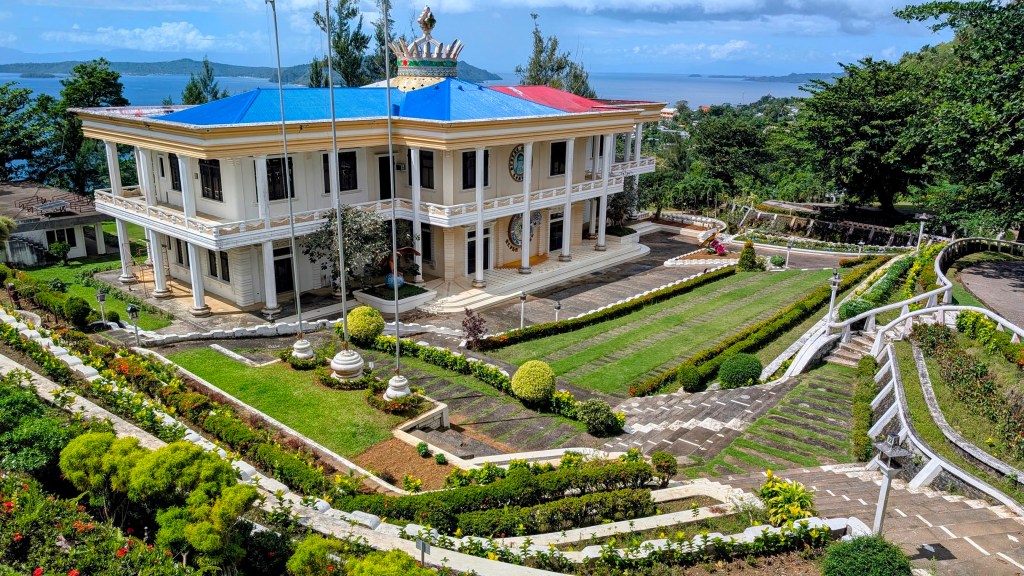
While the Shrine was built to be the place of prayer and reflection, it also attracts local kids who play in the gardens and splash in the ponds.

Further up in the hills I spotted another structure which looked definitely “out of the place” in the cultural context of Dinagat. It reminded a medieval castle. Here is the picture which I took with powerful zoom of my Pixel 9 Pro.

When I asked my driver “What is this thing about?”, he only smiled and drove up the road and to the entrance to castle. The gates were closed and guarded by a security person who said that “no visits are permitted,” but “perhaps it will be possible the next year.” Through the gates I took another picture and returned to tricycle.

Finally, my chauffeur explained that the castle was built by and served as private residence of Glenda Ecleo, former governor of Dinagat and the widow of Ruben Ecleo Sr. Mrs. Ecleo passed away in August 2024 and I was on Dinagat in December of the same year. Hence, at that point, the future of the castle and its “openness” to visitors remained uncertain.
Well, our “architectural” adventures were not completed yet, and we drove to the provincial capitol and office of governor. It was built in 2023 being designed as a replica of the Japanese WWII warship “Yamashiro.” It was sank by American fleet during the Battle of Siargao straight in October 1944. The new “Yamashiro” capitol has been constructed in order to replace the original building which was destroyed by the devastating typhoon Odette (December 2021). And the interesting part of the story is that it was Japan who provided massive financial assistance to Dinagat for recovery and new construction projects.
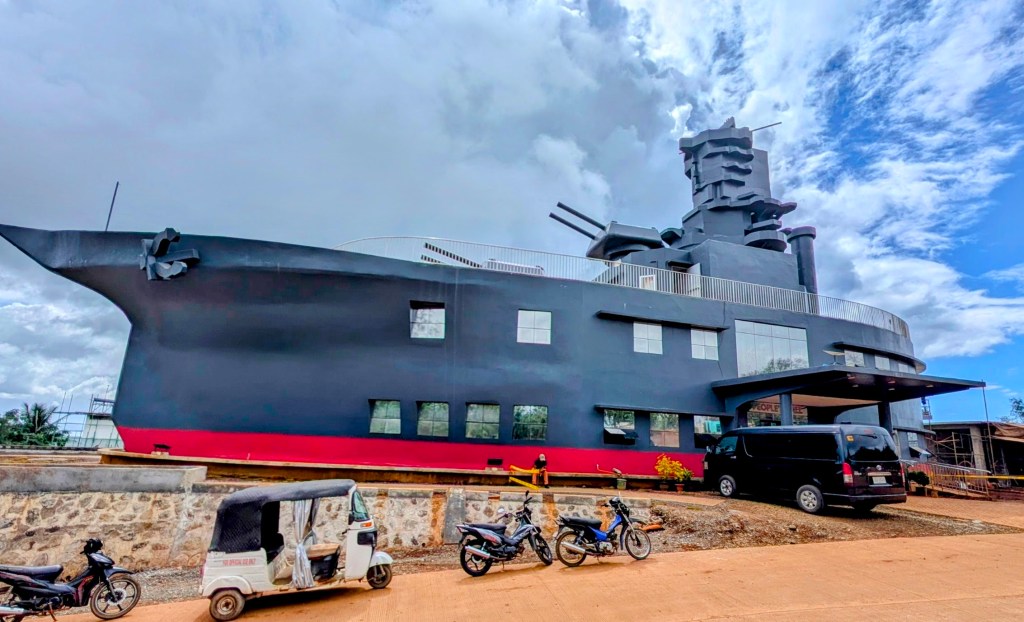
It was an early afternoon and both I and my driver were hungry. Luckily, very close to the Capitol there was a nicely looking roadside cafe which offered a good view from its open terrace. We decided to give it a try.

The food was good, and I also liked a welcoming Christian message: displayed on the wall (see the picture). Being a scholar of religion, I thought: “This is right way of doing religious outreach and mission work.”

After lunch, our last destination for the day was Tagbirayan beach. It is on the Eastern side of the island and it takes about 40 minutes to get there. As it turned out, Tagbirayan was a perfect choice to spend lazy afternoon. The beach had comfortable huts with picnic tables.

The palm trees provided enough shade.
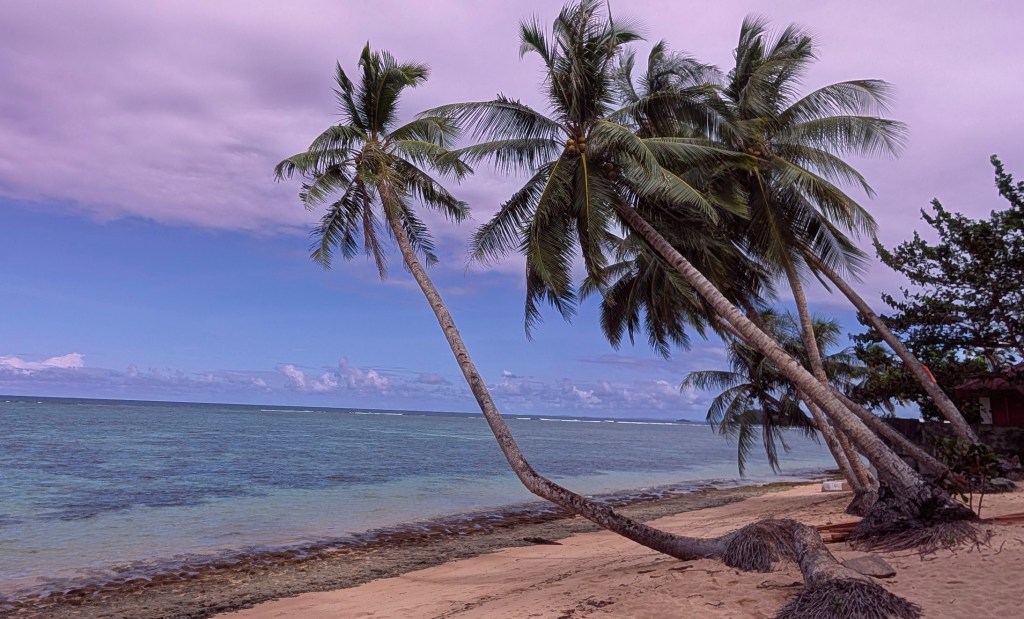
The water was crystal clear and very warm (I would say 28 C / 82 F).

I took a long swim, returned to the beach, stretched on the sand, and felt asleep. The first thing I saw after waking up was this natural palm canopy.

After return to “Vines B&B,” my first intention was to repeat last night’s dinner experience: go to night market and get some food there. However, a better option awaited just across the road from the guesthouse. It was the restaurant called “Kamanting Grill” which is owned and run by the daughter of the “Vines B&B” owners. Plenty of local people were dining there when I walked in: always a good sign!
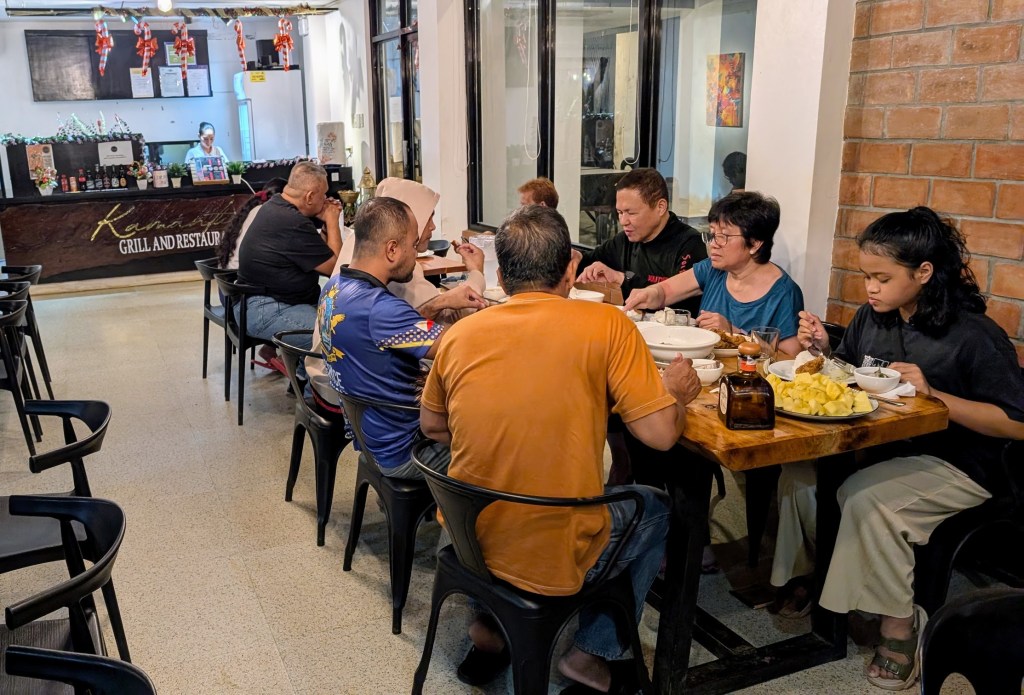
I do not eat meat, but vegetarian and seafood part of menu looked interesting and the prices were very reasonable.
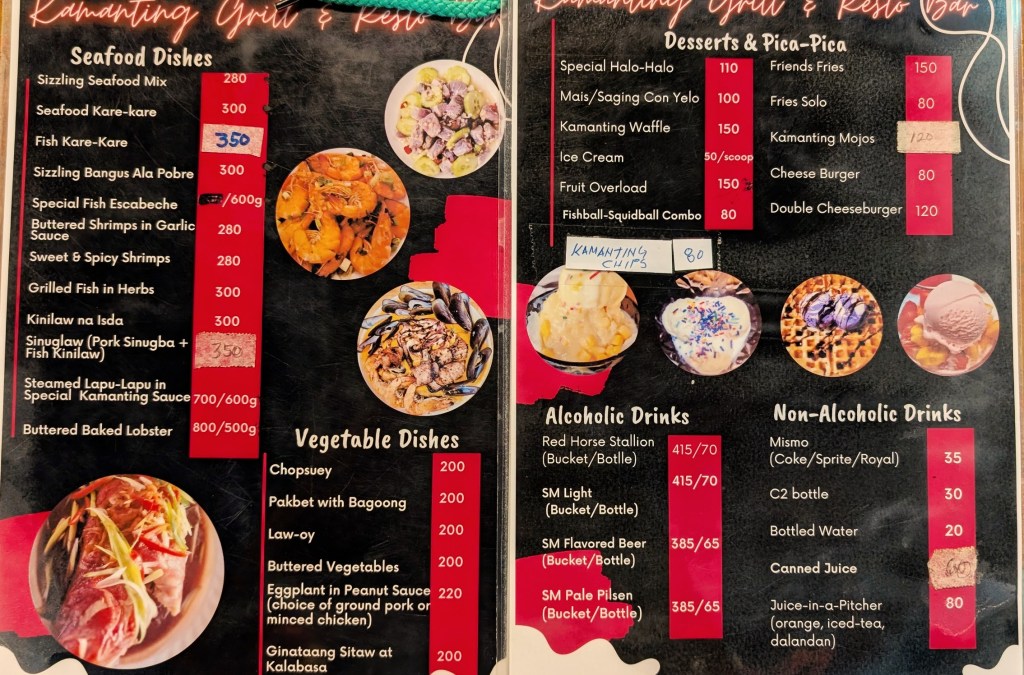
My choices were sizzling mixture of seafoods and law-oy, a vegetable soup made of greens, squash and string beans. The blend of mussels, shrimps, and squids was served on the hot skillet being indeed truly “sizzling.” The law-oy was warm, comforting and very flavorful. All in all, it was a great combination.

After dinner, I returned to guesthouse and almost instantly fell asleep. By the way, there is no “night life” on Dinagat, but I had absolutely no regrets about it, because the next day will begin early – the day of “sea adventures.”
Take a look at the island’s map below. As you can see, San Jose (where I stayed) is sort of in the lower left corner. The geography and geology of the island are such that many attractions are much easier to access by boat rather than by land roads.
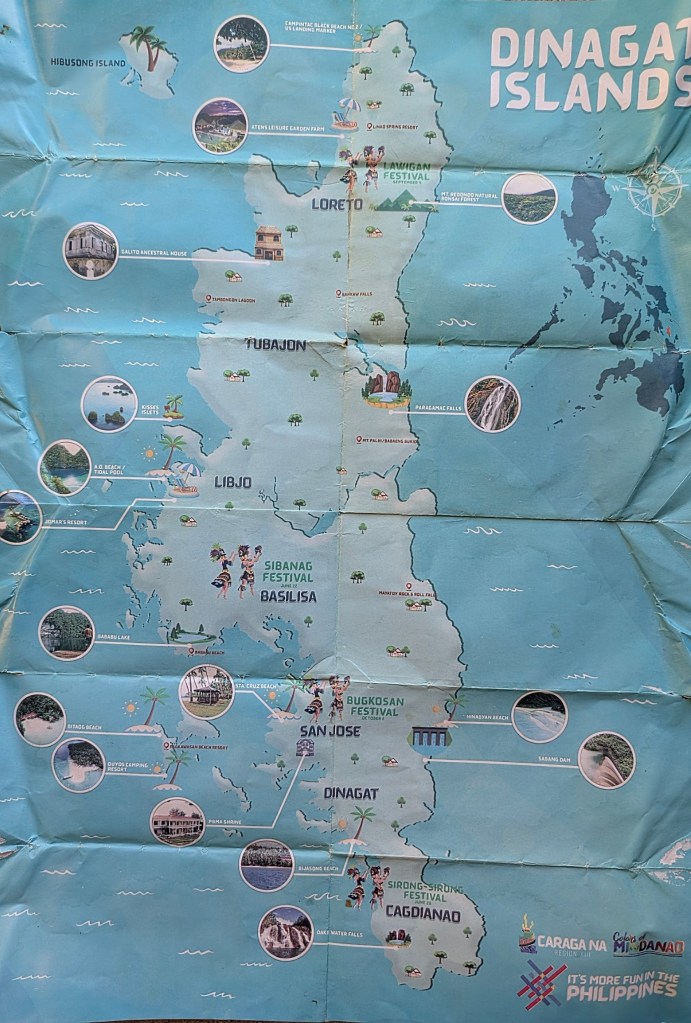
On the islands like Coron or Palawan, you will find a lot of tour agencies offering day-long boat trips commonly known as “islands hoping.” But Dinagat is different: tourist industry is still in “infancy” here and there are just a handful tour guides who are properly licensed to take visitors to the sea.. As a result, you have two options. One is to be a “joiner:” that is, to join a group of other tourists who hired the boat and planned the trip. The second is to hire the entire boat and plan the tour as you please. Clearly, the second option is much more expensive considering all costs: guide, crew, fuel, etc. But…I had only one day and wanted to make as much possible out of it: so, the second option was my choice.
My hosts at Vines B&B recommended a guide named Alon. In Tagalog, this means “Wave” which was very appropriate for his job. We negotiated price and destinations and settled on 5,000 pesos (about 90 USD) for the day-long journey: not a bad deal actually. And because Vines B&B has its own pier, the boat would pick me up and drop off right at the doorstep.
Early in the morning, I was sitting on the balcony, sipping strong coffee, looking at the pier and expecting Alon and boat to arrive.


Remarkably, Alon and his crew showed up perfectly on time (not always the case in the Philippines) and we took off. Our first destination was “Miracle Pool and Cave:” about one hour sailing up north and along west coast of Dinagat. Honestly, even this first hour of being simply “en-route” was already worth the money I paid. We passed several fishing villages.

Then the boat moved closer to the shore line and we glided smoothly right next to impressive cliffs and rocks.

Then the boat reached an area which looked like an archipelago of small islets, and we navigated through the narrow straights separating these specks of land. Remarkably, some of them appeared to be inhabited: at least, I saw several houses there.
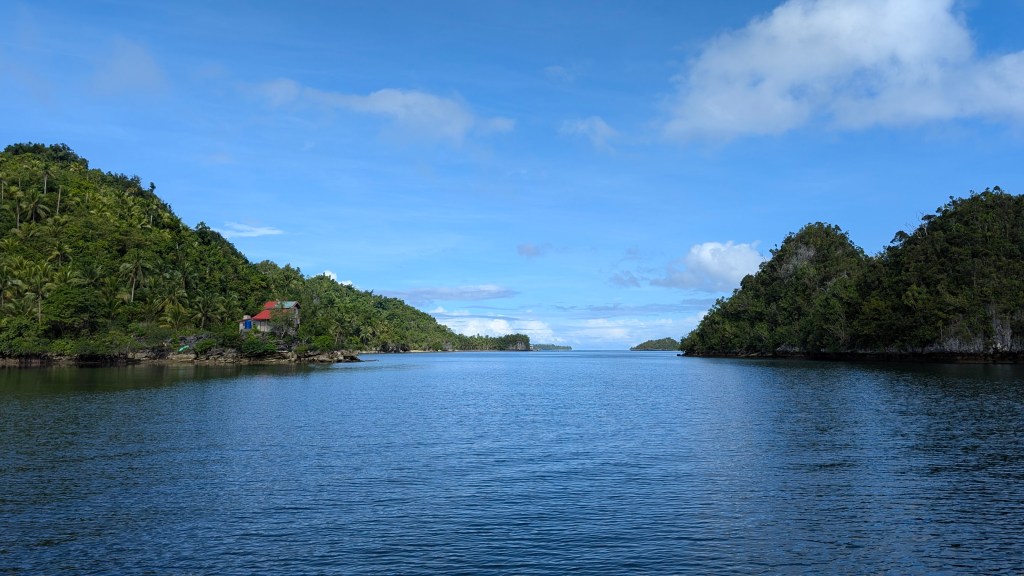
And then we were surrounded by rather strange mushroom-like rock formations.
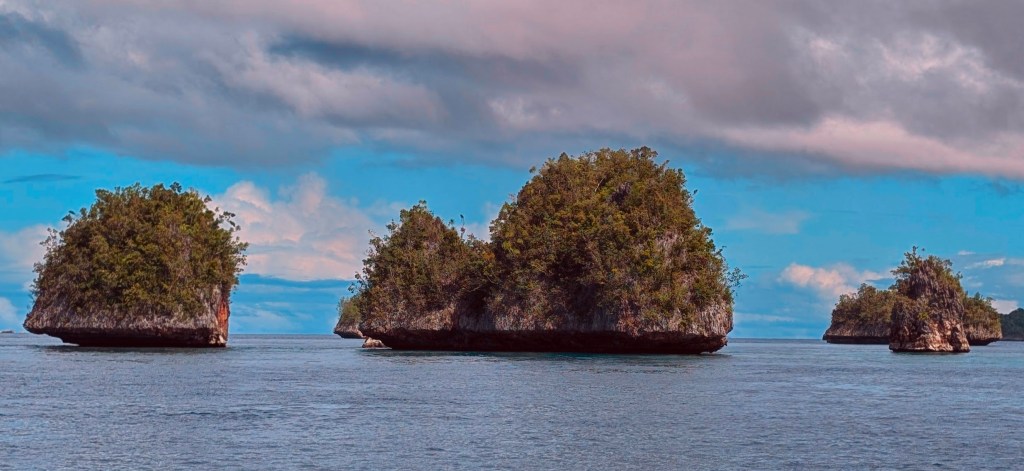

Finally we arrived to a small lagoon, where the Miracle Cave and Pool were. The entrance into cave was like a large crack in the rock.

Frankly, I was somewhat sceptic about this place (in the past, I visited many impressive caves), but it turned out to be more interesting than expected. Inside, dim electric lightning created an atmosphere as if one was stepping into a fairy tale. A narrow corridor framed by bizarre stalactites and stalagmites led into a deep blue hall with a pool. This enchanting ambiance was, of course, created by clever lighting, but it was impressive anyway.


The water was cool, but not cold. I jumped into pool and spent a few minutes just floating on the back and gazing at the vaults of the cave high above me. It was almost like a meditation.

My guide and crew members waited patiently outside the cave: having the entire boat for myself was definitely a great advantage! But when I finally walked out, they promised that our next stop will be no less impressive than the Miracle Cave. We were heading to Secret Lagoon. Clearly, the Secret Lagoon is not a “Secret,” but one of the major tourist attractions on Dinagat. On this day, however, we were lucky and – similarly to Miracle Cave – had entire place for ourselves. The water was incredibly warm, calm and transparent and I went for another long swim.

Right next to Secret Lagoon, there is a great observation point. Well marked path will take you to the top of the hill in less than 10 minutes.
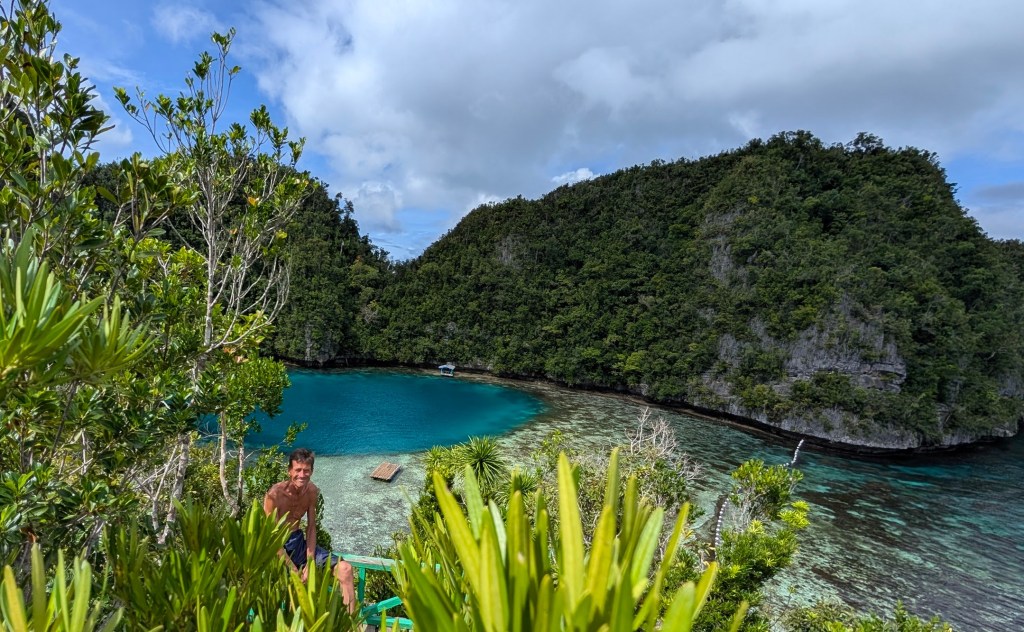
From observation deck, a “million dollar view” opens up with turquoise lagoon on one side and bizarre rock formation rising out of the ocean on the other.

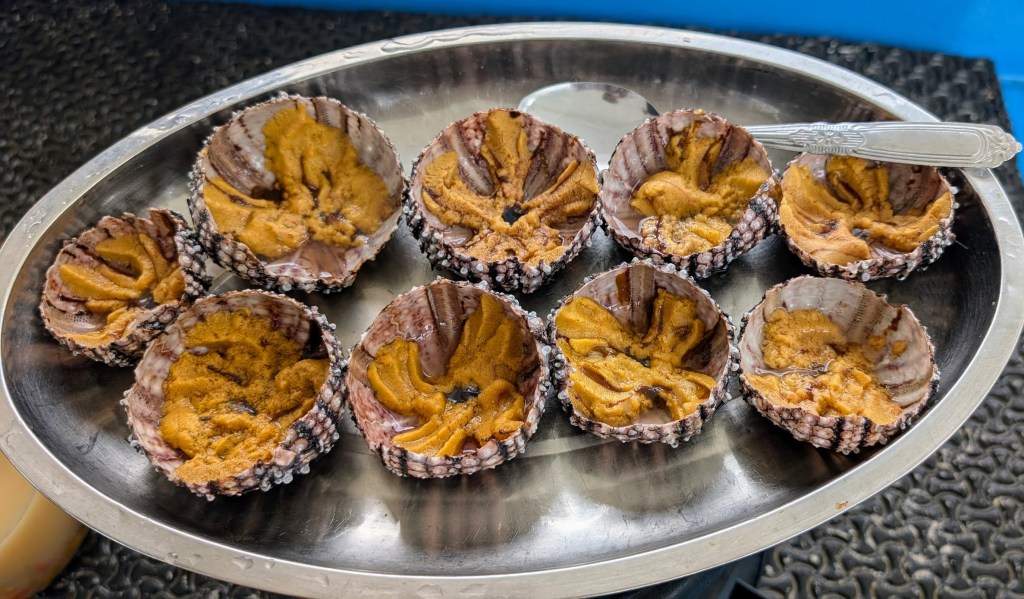
While I was doing all “tourists things,” the boat crew didn’t waste any time: they went diving in the search for sea urchins. Also known in Japanese cuisine and restaurants as “uni,” this prickly creature is considered a delicacy in many parts of the world. With flavor often described as creamy, buttery, and subtly sweet, uni has a melt-in-your-mouth custard-like texture. It is eaten raw (think of sushi or sashimi) and it is quite expensive. This day, the luck was clearly on our side. When I returned to the boat, my guide, Alon, proudly presented a plate full of freshly caught sea urchins.

We decided to have our luxurious uni lunch at the next destination: the Sanders beach. I have chosen Sanders beach as a place to spend afternoon and go for another swim simply by looking at pictures on Google maps. As we were nearing the shore I felt that this was a right choice: the water looked perfect for snorkeling.

And the powdery white sand invited to relax and enjoy some time of simply “doing nothing.”
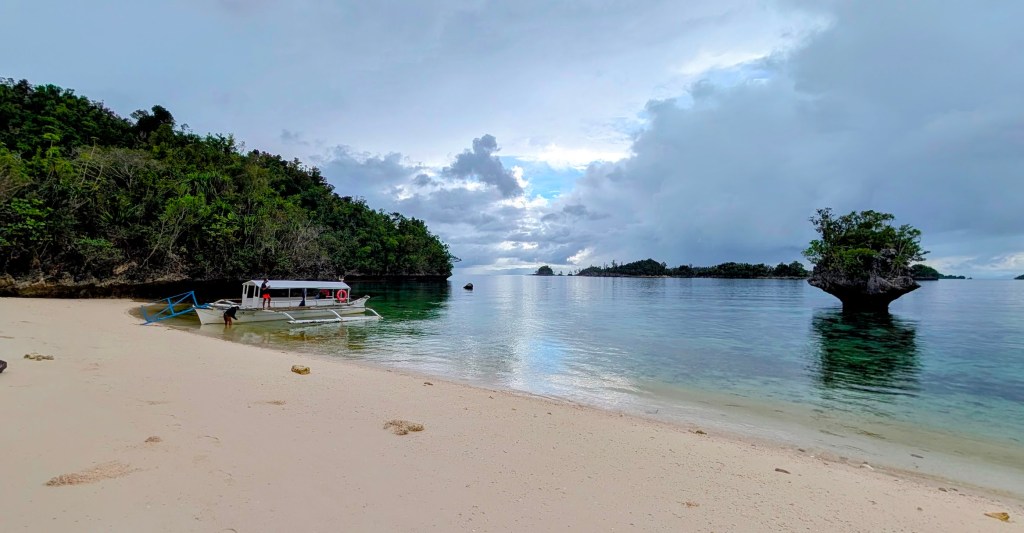
Unfortunately, a few minutes later, the rain began (frequent weather changes are typical here in December). The good news was that our boat had a solid tent, and we enjoyed our lunch of fresh uni while waiting for rain to cease.
Then the rain stopped, but the skies remained grey and the clouds completely hid the sun. Strangely, this unwelcoming weather change only enhanced the magical beauty of Sanders beach.

We still had plenty of time until the dusk and decided to also visit lake Bababu. This lake is located inland, and in order to get there from the beach one needs to hike about 40 minutes over the ridge which separates it from the shore. The unique thing about Bababu is that the it is actually connected to the ocean through a natural underwater cave. As a result it has a layer of fresh water atop saltwater. Experienced cave divers come here from all over the world in order to swim through the 650 meters / 2,133 feet long channel cut by nature in the limestone.
When we disembarked at the beach at the lake’s trailhead, the rain began again. Honestly, the hike was not fun: the trail was steep and very slippery. But when we finally climbed over the ridge and descended to the lake, the skies cleared as if giving us a break for some rest and a swim. My tour guide warned to not approach the left side of the lake where the entrance into underground cave was. Apparently, the current may suck you into the cave. I obeyed and swam across the lake at its right side: the water felt very fresh and warm.

Many locals say that the lake’s water has healing power. This belief was promoted by Ruben Ecleo Sr., the charismatic founder of PBMA. As a result, Bababu is not only a popular tourist site, but also a pilgrimage destination for those struggling with different illnesses.
The return hike to the shore was easier and then we needed only about 20 minutes by boat to get home. As we approached San Jose, a very bright rainbow emerged as if welcoming us back from the trip.

It was a great day of “sea adventures” and I was immensely grateful to Alon, my tour guide, and his two cheerful crew members, Mark and Andy.

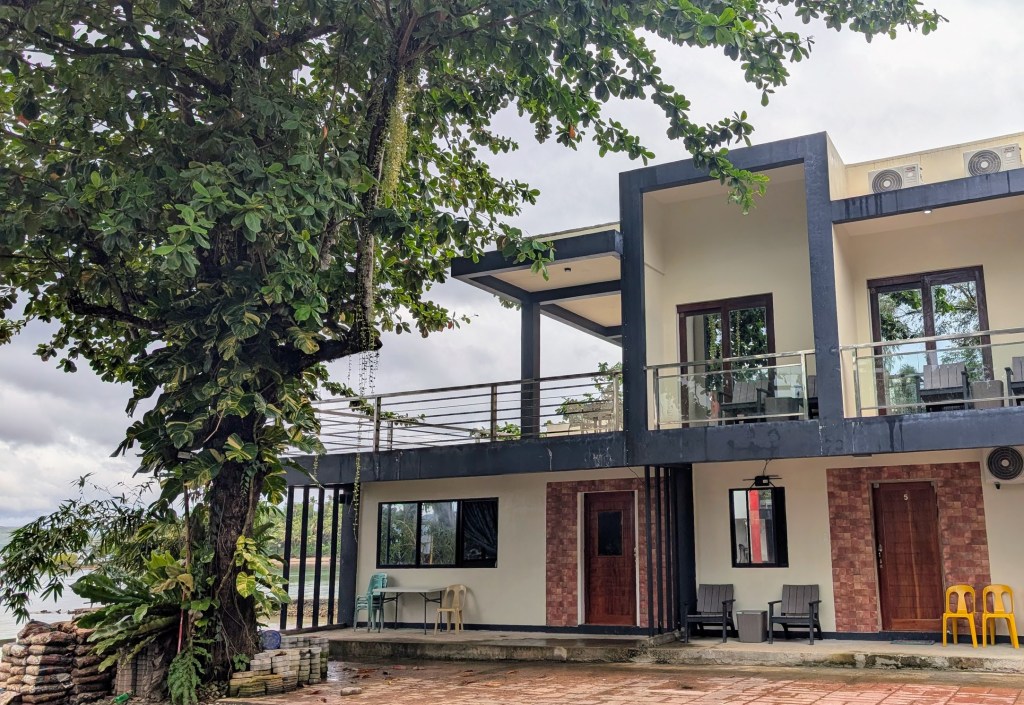
We approached Vines B&B right before sunset so that I was able to make a good picture of my “home away from home.”

After full day of hiking and swimming I was VERY hungry. Quick shower, and I was sitting again at Kamanting Grill and contemplating various options from the menu. The choices for the hearty meal were: tuna steak grilled in herbs and pumpkin soup with tuna as well. The experience was “five stars” and as good as the night before.


The next morning I was going back to Surigao city and then to Camotes island (another “hidden gem” of the Philippines). But before leaving, I wanted to see and thank again my hosts, the owners of “Vines B&B”, Nenette and Vic Sanchez. I wrote already that it was a great place to stay: very comfortable, in good location and offering sprawling view of the sea. The interesting fact is also that Vic designed himself the guesthouse and did so in a very modern style. And “modern” means not only by appearance. When devasting typhoon Odette (December 2021) wiped most buildings on Dinagat, “Vines B&B” withstand the disaster and was used by relieve and rescue teams as a place to stay.
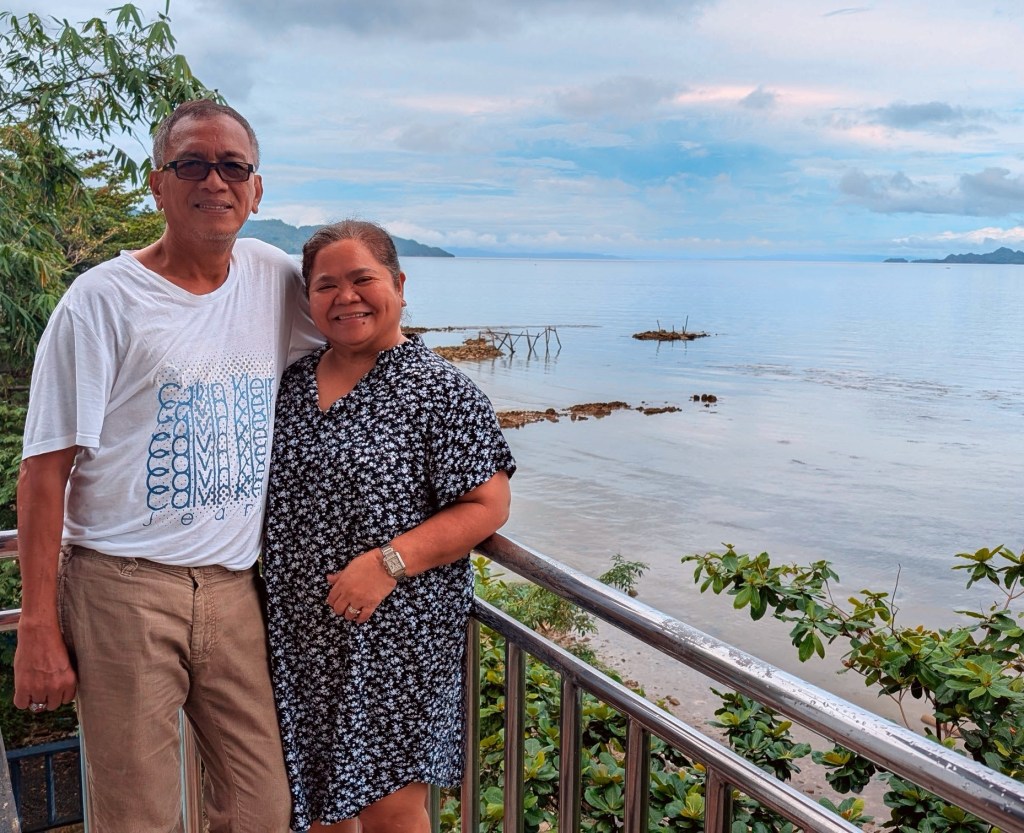
Vic and Nenette were waiting on a balcony of their private house (B&B has two buildings). After only two days at Vines B&B – but with many conversations about Dinagat, its culture, and people – I felt already like staying with friends or even a family. Indeed, Vic and his wife made everything they could to make my two days on the island as interesting and meaningful as possible. If you decide to explore Dinagat, Vines B&B is a good place to be. You can find them on Booking.com or get in touch via Whatsap: +63-915-211-7217.
The day of my return to Surigao was Saturday and the ferry boat was full of young people who were going to a “big city” to have some fun. Well, with population of about 180,000, Surigao could be hardly qualified as a big city. But then much fewer people live in the entire Dinagat province (130,000), and my fellow passengers were happy to escape for weekend into a place which offers all amenities of urban life: shopping malls, coffee shops, discos, etc.

Yet, looking at their smiling faces, I realized that I saw the same smiles and felt the same cheerful atmosphere during entire time on Dinagat. William Saroyan, a celebrated Armenian-American novelist, wrote “The greatest happiness you can have is knowing that you do not necessarily require happiness.” Perhaps, this is exactly how inhabitants of Dinagat live: being simply happy with their island and community. Am I ready to move to live on Dinagat? Probably, “no.” But I definitely will be back to see more of the island (I explored just a fraction of it) and to make more local friends.

 Alexei on the Road
Hey ! Great blog ! I named Sanders beach on google maps myself after my surname and visited in May 2023! Glad to see someone else had visited, this blog was a great read and happy to see you had a lovely time in Dinagat!
LikeLike
Lieber Alexei,
vielen Dank für Deinen interessanten Reisebericht. Da bekommt man Lust
dorthin zu fahren.
Die “Deutsche Post” heißt ja jetzt DHL und es gibt sie auch in USA. Dein
Foto von dem gelben Dreirad hat mich an die Lastenräder der Post
erinnert. Es gibt viele Varianten davon.
Dieses Foto ist aus Miami.
Was sagst Du zum Feuer in Los Angeles?
Wir hatten ja hier vor vier Jahren eine sehr große Überschwemmung. Die
war in einem Tal über 40 Kilometern über Länge. Über 100 Menschen sind
ertrunken.
Viele Leute sind dort hin gefahren und zu helfen und viele Unternehmen
haben Baumaterial gespendet und in großen Zelten gelagert und an
Menschen, die ihr Haus wieder aufbauen mussten, verteilt. Natürlich
wurde auch Geld gespendet. Aber dass da so viel Baumaterial gespendet
wurde, hat mich sehr erstaunt. Man konnte vieles auf Facebook verfolgen
und das war sehr ergreifend.
Menschen haben Zeltdörfer für die Helfer gebaut. Bus-Shuttle-Verkehr
wurde eingerichtet, um die Helfer zum Einsatz zu fahren.
Man konnte da sehr gut sehen, wie sich Menschen selbst organisieren können.
Liebe Grüße
Ulrike
Entlaster: Die vier Cargobikes sollen jeweils einen Lieferwagen ersetzen
und starten von städtischen Parkflächen aus. | Foto: Rytle/DHL
LikeLike
Such a cheerful, vivid travel article to read on an icy East-Coast US day! Sounds like a superb place. Thank you, Alexei.
LikeLike
Such a cheerful, vivid travel article to read on an icy East-Coast US day! Sounds like a superb place. Thank you.
LikeLike
Hi Alexei,
was für tolle Eindrücke, Fotos und Geschichten. Hat mich sehr gefreutâ¦
GruÃ
Monika
LikeLike
Wh
LikeLike
Wow, what a wonderful adventure! Great descriptions!
LikeLike
Alexei, this is marvelous. Thank you for your travelogues.
LikeLike