
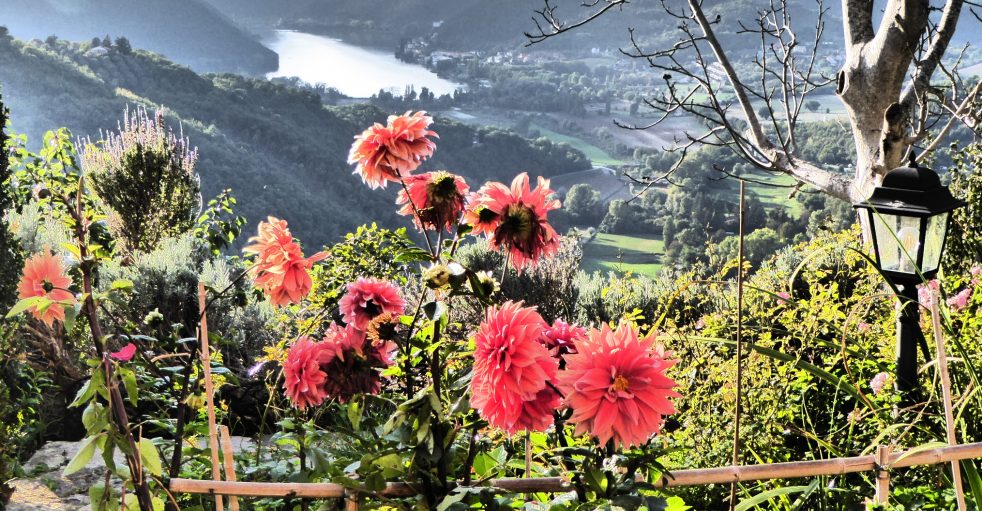

For full disclosure: I am an unconditional lover of both cheese and flowers. When I learned that Spain has a national cheese competition in Trujillo, and a patio contest in Cordoba – held literally back-to-back in May – the decision was made instantly: let’s go!
Below is the table of contents – the list of all I encountered on this journey. Pick and choose whatever appeals to you.
- Trujillo: the Heart of Extremadura.
- Once a Year: It Is All About Cheese
- Much More Than a “Cheese:” the Enduring Charm of Trujillo
- Cordoba: Things to Know Before You Go
- A Blooming Symphony: Cordoba Patio Festival
- More Than Patios: My Cordoba Checklist
Trujillo: the Heart of Extremadura.
Spain’s biggest cheese contest is hosted by the town of Trujillo which is part of Extremadura region. It is often referred to as the cradle of Spain and its culture – the unfiltered historical and cultural core of the country.

Located in the central-western part of the Iberian Peninsula and bordered by Portugal, Extremadura is comprised of scarcely populated desolate mountains and vast plains. This seclusion has preserved a “raw” version of Spain – something that feels foundational.

If you want to experience the quintessential authentic Extremadura, look beyond major cities like Merida or Badajoz. Instead, seek out the smaller towns. Many are perfectly preserved, retaining their medieval character while remaining completely overlooked by tourists.
Trujillo fits perfectly into this category – a genuine expression of what the life in Extremadura is. Here is an interactive Google map which helps to locate Trujillo.
If you are traveling internationally and landing in either Barcelona or Madrid, the best way to reach Trujillo is via a two-legged journey. The first is a high-speed train ride to Caceres – a journey of about 7.5 hours from Barcelona and 3.5 hours from Madrid with tickets priced at around US$130 (Barcelona) and US$40 (Madrid). Then, from Caceres, take a local bus to Trujillo.
And here is a tip. Spain has several rail companies running high speed trains. Instead of searching their individual websites, look for tickets on Trainline which has data for all of them.

One more suggestion. Designated as a UNESCO World Heritage Site, Caceres is considered one of the best-preserved medieval and Renaissance cities in the world. Naturally, it attracts tons of tourists, but if you don’t mind throngs of visitors, Caceres is definitely worth spending a day or two.

My train arrived in Caceres around 5 pm, and I had only a few hours to soak up this city before heading to Trujillo the next morning. I headed to the city’s gorgeous Plaza Mayor (Main Square) and walked around.


Predictably, Plaza Mayor had plenty of cafes and restaurants, but the evening was so calm and balmy that I opted for an impromptu picnic. A tiny bakery at the corner of the Square offered an incredible selection of mouth-watering “rosendo” – a local version of pizza.

I picked up a rosendo “Rulo de Cabra y Cebolla Caramelizada” (rosendo with fresh goat cheese and caramelized onions), sat on the steps of some monument, and savored every bite while observing the night slowly enveloping the city.

Next morning, I took a bus to Trujillo. It is only a 40-minute trip and with many daily departures there is no need for advance reservation.
From the bus station, I walked to my guesthouse, Hostal El Paso. Given its location right in the middle of Old Town, the price of US$122 for four nights in a private room with bathroom felt like a pretty good deal, especially given this particular window of time – the famous Trujillo cheese festival.

My room was on the second floor with the tiny balcony offering a view of the local street life. I instantly felt properly settled in this town for the next few days.

As it turned out, the guesthouse also doubled as a small restaurant which was open for lunch only. Fast forward, over the next three days, I saw many local families coming here to delight in a long meal with three generations sitting at the table.
Look at this menu (sorry, Spanish only!): it will give you a good idea about what locals like to eat and how much they are willing to pay.

Speaking of traditional Extremadura dishes, you should definitely try Migas Extremeñas. Originally developed by shepherds moving their flocks long-distance and across the harsh terrains, this dish was a practical way to transform rock-hard old bread into a hearty meal.
To make Migas Extremenas, the stale bread is moistened, crumbled, and fried in a pan until golden and crispy. Because Extremadura has a deeply rooted tradition of pork production, the local chorizo (sausage) and pancetta (pork belly) are fried first so their rendered fats coat and flavor the breadcrumbs as they cook. Finally, generous amounts of whole garlic cloves and Pimentón de la Vera (Extremadura’s smoked paprika) are added.
Trust me: properly prepared Migas Extremenas can be as delightful as many much more expensive dishes found on the menus.

When I checked into the guesthouse, I had a chance to talk with Francisco, the owner of El Paso. Our “chat” was conducted exclusively via Google Translate—since my Spanish and his English were equally non-existent—yet we managed to have a surprisingly engaging conversation.
Not surprisingly, three days later, by the time I left Trujillo, our morning “news exchange” became a firmly established tradition.

It was around 10 am, when I left guesthouse and went to see Trujillo before the cheese festival’s opening in the afternoon. After a couple minutes of walking down the street, I stumbled upon some cafe and realized that I was fairly hungry. I went inside and ordered coffee and a big piece of “tarta de queso con frutas rojas,” a local version of cheesecake generously covered with fresh fruits – another local must try specialty.

Sitting at the corner table and digging into the succulent cake, I observed the local social scenery with many patrons mingling around. One thing attracted my attention.
It appeared that by far the most popular food item in this bar were giant (plate-size) sandwiches made of thick slices of the toasted bread, rubbed with raw garlic, drizzled with olive oil, smeared with freshly grated tomato pulp, and finally topped with a pile of thinly sliced “jamon iberico” – the Spanish traditional air-dried and aged ham.
I learned later that for many Spaniards “la tostada de jamon iberico” – the name of these sandwiches – is a favorite choice as breakfast or mid-morning snack.

The “magic” of the Tostada de Jamon Iberico lies in its precise assembly. The trick is to quickly carve slices of ham directly from the pig’s leg and lay them over piping hot bread. The heat instantly warms the ham and melts the fat, which then seamlessly blends into the crushed tomatoes and olive oil.
The man working on Tostadas in this local bar definitely knew what he was doing.

The first brisk walk through Trujillo surprised me: I definitely underestimated how well-kept, and elegant this town is.

Granted, I knew about Trujillo’s glorious distant past as a home for several famous Spanish world-explorers. Back in the 15th and 16th centuries, Extremadura was an impoverished region, which drove many ambitious men to seek their fortunes across the Atlantic, in the newly discovered South America.
Trujillo was the birthplace of Francisco Pizarro (1478-1541) who conquered the Inca Empire, and of Francisco de Orellana (1511-1542), the first European to navigate the entire length of the Amazon River. The immense wealth accumulated by these men transformed their hometown, funding the construction of the opulent palaces and churches.

I have visited many places where a glorious history is barely recognizable in a less-than-appealing present, but Trujillo was different.

At 2 pm, the chiming of the church bells signaled the opening for cheese festival. At that time I was in the upper part of the town. Looking down, I instantly spotted the main square, Plaza Mayor, where dozens of cheese vendors had set up their stalls and the first stream of visitors began to arrive.
It was time to go there and indulge in Spain’s most celebrated “quesos.”

Once a Year: It Is All About Cheese
Once a year, Trujillo is conquered by an immense wave of visitors. About 100,000 cheese lovers flock to the town of 8,500 residents to partake in Feria Nacional del Queso – Trujillo National Cheese Festival.

The festival unfolds over extended weekend (Thursday – Sunday) in late April or early May. For visitors – like me – it is a fun event with the possibility to sample about 500 cheeses presented by 80 queserías (dairies) from all over Spain. For the cheese makers, however, it is a cutthroat competition, because the cheeses are also judged by culinary experts and food critics. A first-place ribbon can completely alter the fate of a small dairy.
One way or the other, for four days the Plaza Mayor (Main Square) is transformed into a massive culinary village. Beyond countless cheeses, the patrons indulge in local wines, jamon iberico, and other food specialties.

Here is a piece of historic curiosity related to Plaza Mayor. Right in the middle, the massive equestrian statue of Trujillo’s native son, the conquistador Francisco Pizarro, looks down haughtily on the bustle of the festival.
A popular legend claims that the American sculptor, Charles Rumsey, originally designed the sculpture to represent another Spanish warrior Hernán Cortés as a gift to Mexico. Mexico, however, firmly rejected a monument honoring their conqueror. The story goes that the statue was then rebranded as Pizarro and sent to Trujillo.

It was the right decision on my part to come to the festival at the very beginning, on Thursday afternoon. It is the lightest day in terms of attendance and the most comfortable time to move around, chat with cheese vendors, and relish the sampling without waiting in lines and navigating the throngs of people.

The process of cheese tasting is simple. You buy the strips of six tasting tickets (5 Euro / US$6) from designated booths set up around the Plaza. Then, the tickets can be exchanged for cheese samples or small portions of other foods.
If you find a cheese you really love, you can purchase full wheel or a wedge directly from the stall using cash or a credit card.


Many vendors put their cheeses on slices of bread so that the samples looked like mini-sandwiches

But I personally preferred a “pure version” – simply a small wedge of a cheese without bread.

Here is a tip on how you can transform a random cheese nibbling into a lasting gourmet feast. I brought with me a small plate, cherry tomatoes, cucumbers, and crunchy whole rye crackers.
Using a strip of six tickets, I would assemble a tasting set accompanied by veggies and crackers, then find some quiet spot and indulge “con mucho gusto” (with great enjoyment) in my mini-picnic. Then the procedure would be repeated. You got the idea.

Besides cheese, many stalls also offered “tarta de queso” which I mentioned previously. While it literally translates into “cheesecake”/”cheese tart,” the term actually refers to a somewhat different dessert.
Unlike a dense American cheesecake, the Spanish tarta de queso is much fluffier, crustless and baked at a blistering heat. The high heat (400°F / 200°C) cooks the outside quickly creating a firm “crust” while leaving the center soft and custardy. Simultaneously, the top caramelizes becoming dark and slightly bitter – a perfect balance for the rich sweetness of the inside.

After 7 pm, the cheese stalls began to close. The first day of cheese extravaganza was nearly over, but not quite yet. A small orchestra marched across the square signaling “happy opening of 2026 Trujillo cheese festival!”

The next day, Friday, the number of visitors increased considerably.

By late afternoon, as weekenders from other cities arrived, the Plaza Mayor was full to capacity.

Some people “retired” to the sides of the square and set up their own folding tables and chairs.

Essentially, by that time cheese festival evolved into a huge open-air party.

The mood was good: everyone was cheering and celebrating, but after couple of hours I got tired of the crowds. For me, the festival was over, but there was one more task to accomplish: to find and buy the most perfect “Torta de Casar” – the local star of the cheeses.
Torta del Casar is a raw sheep milk cheese coagulated with wild thistle rennet rather than animal rennet. This results in a rich, pungent flavor and a nearly liquid interior. The cheese is eaten by slicing off the top rind and dipping rustic bread into the gooey center. When paired with a few drops of local honey, Torta del Casar melts in the mouth, occupying all senses with captivating aroma, taste, and texture.

I took the last strip of six tasting tickets and went to various stalls with award-winning Torta del Casar. My absolute favorite was the cheese made by Finca Buena Vista, a small family-run dairy from the town of Ribera del Fresno, about 90 miles / 140 km away from Trujillo.
I bought three vacuum-packed wheels of their cheese, and this was the end of my 2026 Trujillo cheese festival.

While I was done with the festival, one more full day of uncovering Trujillo awaited. And if you think that this town is only “all about cheese,” you are completely wrong. Read the next chapter.
Much More Than a “Cheese:” the Enduring Charm of Trujillo
The next day, I woke up early. The first destination required some hiking, and I wanted to use the coolness of the morning hours. I was going to see a fascinating historic site with roots going back to Copper and Bronze Ages (3000 BCE – 1000 BCE).
Located about 5 kilometers / 3 miles south of Trujillo, the Resbaladera de los Arcabuces is a “pena sacra” – a sacred rock – which sits amidst a boulder-strewn nearly otherworldly landscape near the Magasca River. It is definitely not a popular tourist destination, but here is Google map in case you decide to visit.
The first part of the hike is nothing special as it goes along the auto route N-5. But then the trail forks to the right and winds through the hills and pastures of the area known as the finca de Los Arcabuces.
I was there in early May, when the wild flowers were in their very prime time which made the hike a delight on its own.

After about one hour, I reached my destination. Now is the perfect time to explain what this place is actually about.
Long before written history, this peña resbaladeras (sliding rock) was the site of ancient fertility rituals. It was believed that the stone possessed a “numen” – a spiritual force or deity. Women seeking to conceive would slide down the smooth surface to physically connect with the earth’s power and ask for children.
Right next to the slide, there is also a small rock shelter decorated with “cazoletas” (carved cupules), testifying to how long this spot has been inhabited and revered.

Over millennia, generations of sliding bodies have physically worn down the hard granite and created clearly visible polished “channel” about 30 centimeters / 1 foot wide.

These fertility rituals continued well into the Middle Ages, but in the early 1500s, Franciscan monks built the monastery, Convento de los Frailes del Capucho, right next to the rock. This was not a coincidence but a standard practice to create Christian sites directly adjacent to ancient pagan landmarks. The idea was to physically appropriate the sacred landscape and discourage the old rites.
Alas, despite the convent, the sliding tradition survived. Further, since then, the monastery has largely been reclaimed by nature and reduced to a thick stone wall built from the local granite. Here is what the monastery’s remains look like today.

I climbed to the top of the sacred rock and sat there for nearly an hour. Somehow, the idea of “playful sliding” was not appealing: it just did not feel right.
Instead I absorbed the rugged scenery and pondered the juxtaposition of prehistoric sacred stones sitting beside the crumbling walls of an austere Catholic convent with the entire place being claimed now by some local farm. Looking at dozens of cows grazing around nonchalantly, at this particular spot, I was essentially visually witnessing the layered history of Extremadura.

Back in Trujillo, I was torn apart between two choices. On the one hand, the town has interesting museums (including home of Francisco Pizzaro), galleries and gorgeously decorated churches (Santa Maria Mayor, San Martin de Tours) representing the Romanesque, Gothic and Renaissance epochs.

On the other hand, this sunny and warm spring day was simply too perfect to waste it inside the buildings. So, I opted for two more small “expeditions.” The first idea was to hike around the periphery of the town or, at least, a part of it.
Trujillo sits on the top of massive granite outcropping, and I figured that the town’s skyline from the surrounding plains is impressive. As a general destination, I chose the ruins of 16th-century Convento de la Magdalena (Monastery of St. Magdalena) which is located in the lower fields, just outside the medieval, walled town.

The starting point of the hike inside Trujillo, the remains of another monastery, San Francisco el Real de la Coria, was easy to find.

But then, the planned route turned out to be more challenging than expected. Many walking trails indicated on Google maps were non-existent, and more than once I literally scrambled through the bushes without any sense of direction I was moving in.
Along my arduous journey, however, I made an interesting discovery. The local residents appropriated small parcels of land under the town’s walls and converted them into mini-farms.

Long story short, but I finally figured my way to Convento de la Magdalena, and – upon arrival – all struggles were fully compensated by this view of Trujillo’s skyline.

From Convento de la Magdalena, I walked about 2.5 kilometers / 1.5 miles along the northern edges of Trujillo.
The path continued along a low (about 1 meter / 3 feet) stone wall – perhaps, the remains of some divides among former land parcels. Many scarlet wild flowers created a stark contrast with the massive grey stones.

Eventually, I came to an intersection with the road winding uphill and back to the town. I decided to return to Trujillo, because one more must see attraction awaited me – Castillo de Trujillo, the sprawling and perfectly preserved medieval fortress perched at the very top of the town.
Castillo was built in 9-12th centuries over ancient Roman foundations and by the Moors of the Caliphate of Córdoba. To explain, “Moors” were Muslims originating in North Africa and Middle East who invaded and conquered Spain starting in 711 AD. The territory they controlled on Iberian peninsula was known as Al-Andalus. The Caliphate of Córdoba (929–1031 AD) was an Islamic state representing the absolute zenith of Muslim power and culture in Spain.

By the way, because of its unspoiled medieval aesthetic, Castillo de Trujillo was used as a filming location for Casterly Rock in season 7 of Game of Thrones, and also in House of the Dragon.
Inside the fortress, you will find many historic artefacts, explanatory notes and couple of museums. To be honest, though, I did not pay attention to any of those. Instead, I simply walked along the top of the massive walls (there is a designated path) circumnavigating the entire Castillo and delighting in the 360-degree panorama of Trujillo and surrounding plains.


After Castillo, I returned to the guesthouse, talked with Francisco and thanked him for making me feel at home in this provincial Spanish town.
The next day, I had an early start for a trip to Cordoba – once the capital of the powerful Islamic state. Yet, I did not go to bed until very late waiting until all restaurants were closed and tourists would settle for the night in their accommodations.
Then I walked to brightly lit and now completely deserted Plaza Mayor.

After three days of festive crowds consuming entirely the square, I was finally able to experience the Plaza Mayor as it was meant to be: noble, calm, and graceful. Good night, Trujillo, and thanks for welcoming me.
Cordoba: Things to Know Before You Go
After completion of Trujillo’s “cheese expedition,” the next destination was Cordoba. While Trujillo belongs to Extremadura, Cordoba proudly represents Andalusia—a culturally and geographically distinct region in the southernmost part of Spain.

Besides year-round abundant sunshine, Andalusia is best defined by three quintessential traits. The first is a profound Moorish legacy, stemming from an 800-year period (711–1492 AD) when much of present-day Spain was ruled by Muslims from North Africa and the Middle East. The very “heart” of this medieval Islamic civilization can be found in Andalusia.
The best visual expression of this heritage is the so-called Mudéjar and Moorish architecture (Google it!), with Alhambra Palace in Granada being one of the most famous examples.

Second, facing both Atlantic and Mediterranean, Andalusia can definitely claim having “the maritime soul.” Yet, the coastal flavor and way of living stand in stark contrast to Andalusian sun-drenched rugged inland landscapes.
Finally, for Spaniards, Andalusia is defined first and foremost by its expressive culture and identity. The fast-beating heart of this part of Spain reveals itself in everything: bright traditional dress, flavorful highly-aromatic cuisine, and, of course, fiery flamenco music and dance.
Back to my trip, Cordoba is located in the south-central section of Andalusia, at the foot of the Sierra Morena mountains and along the banks of the Guadalquivir River.
The best way to travel to Cordoba from other main cities is by taking one of Spain’s excellent fast trains. I wrote about them HERE. Alternatively and especially if you travel from rural areas or small towns, Spain also has a dense network of intercity buses. For this option, check out Omio website.
I arrived to Cordoba by train and took a surprisingly inexpensive taxi (Cordoba does not have Uber or other ride-sharing services) to my guesthouse, Hostal Alcazar. Searching on Booking.com for accommodations, I reserved Alcazar on a whim based primarily on its prime location (right in the heart of Old city) and a very affordable price (150 Euro / US$ 170 for three nights).
By the way, Cordoba’s historic center is highly compact. All major points of interest are accessible within 20-30 minutes walk.

When I walked into reception area, I instantly felt that Alcazar will be more than just a “place to stay.” The entrance area was impressively spacious with high ceilings and walls decorated with all kinds of historic memorabilia.

One corner was dedicated to collection of family pictures. It appeared that this house was in possession of many generations of the same family.

A gentleman with thick gray hairs showed up and greeted me with a warm smile in Spanish. My attempts to use Google translate were dismissed: instead he called his son who in turn welcomed me and did all translation work.
I learned that the guesthouse belonged to elderly couple, Fernando and Luisa, who continued to live here with their sons, and the sons’ families. It was indeed a real multigenerational family home which was shared with many visitors – just like me.
Fast forward, after three nights at Alcazar, I feel nearly incorporated to this family. Big thanks goes to Fernando and Luisa for their genuine warmth and many tips on discovering Cordoba.

Now is time to answer the question: “Why did I actually come to Cordoba?” To begin with, Córdoba was the center of Al-Andalus – the Muslim ruled territory in medieval Spain which I mentioned earlier. As such, it became the city where Moorish (Islamic), Jewish, and Christian societies and cultures deeply converged over centuries.
Here is an interesting video exploring all historical intricacies and controversies related to Cordoba and Al Andalus.
In early May, however, there is one very special reason to come to Cordoba. This is time for the “Fiesta de los Patios” (Festival of the Courtyards) – the two-week event which transforms the city into a mesmerizing celebration of flowers.
A Blooming Symphony: Cordoba Patio Festival
The culture of elaborated patios – private inner courtyards – is one of the cornerstones of Andalusia’s architecture.

How did this patio heritage emerge? It started during the period of Al-Andalus (8th–15th centuries) when Islamic culture dominated southern Spain. Coming from North Africa and the Middle East, Moorish architects brought with them the traditions of desert oases and transformed utilitarian courtyards into earthly paradises.
To combat Mediterranean heat, they incorporated small fountains and pools, planted fragrant citrus trees, and used decorative tiles with “cooling” colors.

While patios can be found everywhere in Andalusia, Córdoba’s courtyards have achieved a real international fame due to a combination of particular social history and a century of fierce civic competition.
In the 19th – early 20th centuries, there was a massive migration of rural workers to the city. To accommodate them, large, abandoned aristocratic mansions were converted into “casas de vecinos” – tenement houses – where multiple families lived together, all sharing a central courtyard.
Functioning as common areas, patios incorporated eventually joint kitchens, laundries and became real social hubs.

In fact, some of them even added small chapels for private worship services.

Essentially, Cordoba’s patios evolved into communal living rooms, and to make these shared spaces appealing, residents hung on the walls pots of geraniums, carnations, and jasmines.
At some point, they also began an informal competition to see who could grow the most striking plants.

In 1921, the patio-festival was properly established, when the city launched the “Courtyards, Balconies and Window Displays Competition,” and Cordobans started the tradition of simultaneously opening their flower-filled courtyards to the general public.
In 1933, the festival began offering cash prizes to the most beautiful courtyards and introduced formal rules of competition. This move transformed a private, casual habit into a matter of intense neighborhood pride and rivalry. Today, Fiesta de los Patios (Patio Festival) takes place every May, drawing to Cordoba visitors from all over the world.

Through the century of competition, a particular “Córdoba patio style” emerged. Essentially, it boils down to three elements. The first is a “vertical garden” with dozens – sometimes hundreds – pots (traditionally blue) hung high up on the whitewashed walls.

The second element is a rich mix of flowers which bloom specifically in early May: geraniums, carnations, jasmines, and bougainvillea.

The third distinctive element of Cordoba’s patios are ornamental pebbled floors which look like mosaics made of bicolored – black and white – river stones.
While visually stunning, the “chino cordobes” (name of these floors) are also designed to combat the scorching summers of southern Spain. Here is how it works. The pebbles are set into a bed of sand or earth – not the rigid concrete. When the patios are watered, the porous sand absorbs liquid instantly. Later, this trapped water evaporates slowly and acts as a natural air conditioner, releasing coolness into the courtyard.


If you come for patio festival, here are a few things to know before you go. First the festival is a two-week long event. So, you have flexibility in choosing your time, but try to avoid weekends, when it can get truly crowded.
Second, the patios are NOT open 24/7: they are part of private residences with the owners needing their quiet time. Typically, visitors are welcome from 11 am to 2 pm in the morning, and then from 6 pm to 10 pm in the evening.
Last, and most importantly. The patios participating in the competition are scattered over the city. When I came in 2026, there were 53 of them divided in five geographic areas. Here is a map to give you an idea.

The thing is that majority of visitors tend to go to just one area around San Basilio street (see the blue route in the lower left corner of the map). While it is a historic heart of Cordoba, this also means that these patios are often completely full and you may need to wait in line for a long time before entering them.
However, the patios in other parts of the city are as picturesque as the ones around San Basilio. Instead of waiting in lines, take a stroll and check out “crowd-free” courtyards outside of the historic center.

Did I visit all the 53 competing patios? I did not, but half of them for sure. Here are a few personal favorites, but, clearly it is all a matter of taste.
Some patios looked more like part of palaces rather than private courtyards. They literally dazzled me with their scale, opulence, and the finesse of all details. Here is one at San Basilio 44.

And here is another one in this “palatial” category at Agustin Moreno 43.

With all admiration of these “patios of grandeur,” I felt, however, that they were lacking what is fundamental for the origins of Cordoba’s courtyards – the idea to be the heart of a small local community.
This is why I was very pleased finding something entirely different at Calle Marroquies 6 which – as it turned out – is considered one of the most historically significant courtyards. Rather than being a typical enclosed single patio, it is more like a walled gardened mini-neighborhood uniting more than 10 homes.

Another feature of this patio were its unassuming flower pots. Many other patios in Córdoba use bright blue pots, but the residents here left their terracotta vessels intentionally unpainted so the focus remains entirely on the vibrant colors of the plants.

The communal kitchen at this neighborhood-style patio also looked like a real working space which is used for daily cooking – not just exhibition purposes.

The most delightful thing, though, was that the residents at Calle Marroquies 6 stepped out of their homes to meet with and talk to the visitors. All in all, this place felt like a truly living space, and I liked this a lot.

The festival is not a single competition, but a contest in four categories: Old Architecture (most traditional patios built up to 1960s), Modern Architecture (newly built patios), Patios Singulares (patios belonging to various associations/organizations rather than private residents), and Convent Patios (patios within the convents and other religious institutions).
Look at this picture. This is a many-times winner in the category of Old Architecture – the patio at Calle Tinto 9 which dates back to the 1680s. Passed down through generations of the same family, this courtyard is famous for its intense “blue character:” indigo-blue flower pots, matching balconies, blue wood trim canopy, and a bright blue bench.

And here is an award-winning patio in the category of Patios Singulares. This arched courtyard is part of Colegio de Nuestra Senora de la Piedad. Founded in 16th century, Colegio was originally a school and home for orphaned girls.
Today, it continues to function as a private Catholic school with school’s buildings arranged around open courtyard. I lingered here for awhile and thought that it is literally a “cool” place to study.

After visiting 20+ patios, had I found my very favorite? This is a challenging question. They were all impressive, but in different ways. However, if hard-pressed on this question, I would say that my personal choice was the patio at San Basilio 40.

This courtyard was manicured and abundant with flowers, but it did not feel overwhelming in either size or opulence. Instead, it was a place where one is instantly relaxed and naturally tempted to take a long break. And this is exactly what I did: sat in the corner and stayed.

In a few minutes, a young lady showed up, the owner of the patio. Meritxell (her name) told me that this place is known as “Casa de la Costurera” (House of the Seamstress) and that it is a classic “antigua casa de vecinos” – a neighborhood house, where seven families once lived together.
She proudly showed me the original communal kitchen, the “cuarto de aguas” (water room) used by the families, and the highlight of the courtyard, the 800-year-old Arab well.

The greatest surprise though came at the end of our conversation. La Casa de la Costurera offers the rare opportunity to stay overnight and live inside a 16th-century patio. If you decide to do so, look for and make reservation at Booking.com
While my main goal in Cordoba was “chasing patios and flowers,” I also had plenty of time to discover a few other things. In the next chapter, I will give you a few ideas on how to fill your time in La Ciudad de las Tres Culturas – the City of the Three Cultures – as Cordoba is referred to by its proud residents.

More Than Patios: My Cordoba Checklist
Look at the above title: it clearly says “MY” checklist. That is, Cordoba offers tons of things to see and experience: you can easily spend here couple of weeks doing each day something entirely new.
I am definitely not going to write here a guidebook, but will simply tell what I liked the most about Cordoba besides walking its gracious patios.

Speaking of “walking,” it inevitably makes you hungry. Let’s talk first about food. Cordoba has a claim for several local specialties with my favorites being “Berenjenas con Miel” and “Salmorejo cordobés.”
The first translates to “fried eggplant with honey,” but traditional recipes use instead “miel de caña,” which is dark cane molasses. The eggplant is sliced into strips – fairly similar to French fries. To ensure they don’t absorb too much oil and lose their natural bitterness, the strips are soaked in salted water or milk, lightly dredged in flour, and flash-fried in olive oil.

I ate this dish in two different locations, and was presented with two distinct versions. In one place (picture above), berenjenas were thicker and juicier inside. In the second version (picture below), the strips were very thin and super-crunchy.
One way or the other, the main appeal of the dish was the contrast between the hot, salty crunch of the fried eggplant and the bittersweet richness of the molasses drizzled over the top just before serving.

As to “salmorejo,” it is a rich, chilled tomato soup – a perfect cooling yet energy-dense fuel for wandering through the streets of Cordoba. Salmorejo is often confused with gazpacho, but it is much thicker and creamier, being made with just five ingredients: ripe tomatoes, stale bread with thick crust, high-quality Andalusian olive oil, raw garlic, and salt.
Everything is blended until smooth and then chilled. Before serving, a bowl is finished with diced hard-boiled egg and shaved Ibérico ham

And here is an interesting historic fact. The origins of this dish actually predates the 16th century arrival of the tomato in Europe. Salmorejo’s predecessor was “mazamorra” — a similarly cold, thick soup made of pounded blanched almonds, stale bread, garlic, olive oil, water, and vinegar.
Córdoba takes salmorejo so seriously that there is even a small street called “Salmorejo Alley” (Calleja del Salmorejo), where the official recipe from the University of Córdoba is etched into the wall.

Where to eat in Cordoba? The city has zillion of cafes and restaurants, but for me, most memorable were two places. One was called “Taberna el 6 Puerta Nueva” – an unpretentious, and highly authentic neighborhood eatery off the heavily tourist historic center.

It has an interesting story. Originally, in 1870, six silversmiths decided to open six different taverns, naming them all “El 6” yet eventually “uniting forces.” You can eat either inside or at outside tables, and find on the menu some of the most traditional Andalusian dishes: bacalao a la plancha (grilled cod served over toast), slow-cooked rabo de toro (oxtail), callos (tripe), and, of course, salmorejo and berenjenas con miel de cana.
Besides food, you will get here plenty of local patrons, friendly service, and excellent value for money.

The second memorable experience was at Bodega Campos. Unlike Taberna el 6, it is a fine dining establishment. The main draw of this place is its ambiance. Being continuously open since 1908, it feels like a living piece of local restaurant history: dimmed lights coming from bronze chandeliers, old paintings and posters on walls, solid crystal glasses, massive wood furniture – you got the picture.


Originally established as a cellar for aging wines, Bodega Campos evolved into an impressive complex of Andalusian architecture and design. Below the dining hall, in the original cellar with hundreds of casks, you can arrange for a guided tour and wine-tasting. One of the rooms – perhaps, my favorite – is restored as an old kitchen with original utensils and dishes.

And in case you are craving more patios, Bodega Campos has five own interior courtyards, with stone fountains, climbing vines, and all the expected trimmings.

Back from food to culture. If you have time for only one sight in Cordoba, the choice is obvious: it is the Mosque-Cathedral of Cordoba, a place designated as a UNESCO World Heritage site.
How can a single building be both a mosque and a Christian cathedral? Built in 785 AD as a massive mosque, it served this purpose when the Iberian Peninsula was under the Islamic power of Al-Andalus, and during the era when Cordoba was the flourishing capital of the Caliphate. I wrote about these epoch HERE. But then, in 1236, the Christian forces recaptured the city and converted the building into a Catholic cathedral.

What you see today is a fascinating architectural blend that has evolved through centuries of changing Islamic and Christian influences. Here is a tip for visiting this place.
Most tourists come during the day, buy tickets, and go on organized or self-guided tours. However, between 8.30 and 9.30 in the morning, the Cathedral is open for individuals (not groups) free of charge. This is also time when it is much less congested with other visitors.
The first thing you will see upon entering is a forest of columns – to be precise 856 of them. Made from “recycled” Roman and Visigothic marble, granite, and jasper, they support the rising vaults.

After admiring columns, take a closer look at another iconic feature of Mosque-Cathedral: its elaborate red-and-white striped horseshoe arches are a vivid testament to Islamic heritage.

Walking around slowly, you will discover quite a few other interesting elements. On the picture below, the center and top are occupied by the intricate vaulting and a sculptural relief of Christian religious figures made after the Reconquista (the recapturing of Cordoba by Christians).
But then, this composition is “inserted” into and rests upon the older red-and-white arches of the original mosque.

Believe it or not but some visitors miss entirely another main sight inside the Mosque-Cathedral. I am talking about “mihrab,” the spiritual crown jewel of the original mosque. In Islam, mihrab is the prayer niche that indicates the direction of prayer, and in most mosques it points south-east: from Spain toward Mecca.
In Cordoba, gold-adorned mihrab faces south, in direction of the Great Mosque of Damascus, honoring the homeland from which the rulers of Umayyad dynasty came to Cordoba.
And even this most sacred Muslim object blends with Christian elements. Looking at the horseshoe arch above mihrab, you will see gold and glass mosaics. These were actually a gift from the Christian Byzantine Emperor in Constantinople.

Most vivid example of how the Catholic Cathedral was embedded right into the Islamic religious site is Capilla Mayor – the Cathedral’s nave and altar. After building was converted into a church, in the 16th century, King Charles V decided to literally tear out the center of the “forest of columns” and to insert this towering structure right in the middle of it.

After exploring Mosque-Cathedral inside, do not leave yet. You also absolutely must visit the observation deck at the Cathedral’s bell tower.

Similarly to the main building, the present late 16th-century Christian bell tower was built around and encases completely the 10th-century Islamic minaret.
As you climb 191 steps to 45 meters / 150 feet high observation deck, you will see the interior skeleton of the tower – the remains of the original 10th-century minaret.

The bell tower of the Mosque-Cathedral is the tallest building in the entire Cordoba, and the view from its deck is truly commanding.

The observation deck is the only place to take in the entire Mosque-Cathedral and to fully comprehend its grandeur and scale.

Circling the full perimeter of the deck you will also see all of Cordoba.

To add fun to your visit, look at the below picture. From bell tower, you can also peek into private lives of some Cordobans who built small gardens and terraces on the roofs of their homes.

Besides the Mosque-Cathedral, what are other things to explore in Cordoba? First, simply relax and take in the city slowly: you won’t be able to cover everything anyway. For the Instagram-perfect picture of “I in Cordoba” go to Calleja de las Flores – Alley of the Flowers – in the historic Jewish Quarter.
Similarly to many places in Cordoba, it is decorated with blue flower pots and brightly red geraniums. However, the main reason to be here are not flowers, but a particular view. To take your award winning shot, go to the small square at the dead-end of the street. Then turn back to face the way you came from: the narrow alleyway and its floral walls will create a perfect frame for the soaring bell tower of the Mosque-Cathedral.

Since you are already in Jewish Quarter, go to see the city’s narrowest street – Calle Pedro Jiménez. Known more often as Calleja del Pañuelo (Handkerchief Alley), at its tightest point, this passageway is roughly 50 centimeters / 1.5 feet wide. The legend is that it earned its nickname because the width is the exact length of a traditional handkerchief stretched from wall to wall.
Calleja del Panuelo dead-ends in a tiny cul-de-sac. Paved with river stones and decorated with fountain and orange trees, this secluded spot also has a claim of being the smallest public square in the world.

I mentioned couple times “Jewish Quarter.” Here is some historical context. Under Islamic rule during the Caliphate of Córdoba, Jews thrived alongside Muslims but lived in their own neighborhood – Juderia de Cordoba. When Christian troops recaptured Córdoba in 1236, the Muslim population largely left Cordoba.
The Jewish community initially remained and retained their district. In 1391, however, the wave of violent pogroms forced Jews to either convert to Christianity or flee. The Jewish Quarter was repopulated by Christians, and on its place the new San Bartolomé district emerged.

There is one place in the city where Cordoba’s three cultures – Christian, Islamic, Jewish – literally overlap. This is 14th-century San Bartolome Catholic chapel which sits in the heart of former Jewish quarter and is designed in a fine “Mudejar” style.
The word “mudejar” comes from Arabic term meaning “he who was allowed to remain.” It was used for Muslims who stayed after arrival of Christians and were permitted to retain their religion and customs. In essence, Mudejar art is a hybrid combining Muslim decorative elements with other styles of that time. Here is a great YouTube video explaining origins and intricacies of Mudejar style.
The San Bartolome chapel is tucked away from the heavy tourist traffic, because it is inside the complex of Cordoba university. The chances are great, during your visit, you will have this splendid place for yourself only.
Before going inside, look at gorgeous exterior: rustic but elegant sandstone masonry, arch-like portico, and the columns with Islamic-style ornaments.

The interior is no less elaborate. Beneath Gothic ribbed vaults, the walls are covered with eclectic ornamentation: geometric figures blend with plant motifs, and Arabic inscriptions.

Overall, Cordoba is full of exquisite religious – mostly Christian – architecture. Even if you are not a fan of this kind of things, I still recommend to check out two places. One is San Pablo Church (Iglesia San Pablo).
San Pablo was commissioned by King Ferdinand III who conquered Cordoba in 1236 and ended the 500 year-long Muslim rule in the city. The church sits on millennia-thick layers of history: it was built over an Islamic Almohad palace, which in turn sat on an ancient Roman Circus.

Later, in the 18th century, to separate San Pablo from the streets, the Baroque entrance gates were added with Solomonic columns that twist upward like corkscrews,.

.Inside you will find the famous 1627 sculpture of Nuestra Señora de las Angustias – Our Lady of Sorrows. The sculpture is a centerpiece of Easter processions when it is carried through Córdoba.

The second medieval church to visit is San Lorenzo Martyr. Similarly to San Pablo, it was also built over two previous sacred structures: the Islamic mosque of al-Mugira and an ancient Visigothic church.
Instead of destroying the mosque’s minaret, the local architect Hernán Ruiz converted it into the church’s Renaissance-style bell tower. The other reminder of San Lorenzo’s Islamic roots is a massive Mudejar rose window above 16th century portico.

Inside San Lorenzo, the main treasure are rare and perfectly preserved 14th-century paintings and frescoes depicting the life of Jesus.


I was lucky to come to San Lorenzo when worship service was in progress. I sat on the back, listened to choral singing and reflected on many centuries, events and people witnessed by this place.

Enough about churches. Here are a few other places in Cordoba which I liked a lot. In the late afternoon, go for a cup of coffee or a glass of wine to Plaza de las Tendilas. It is a grand square framed by elegant architecture dating to 1920s and lined with shade trees and cafes.
Plaza Tendilas is like a natural bridge between the truly ancient historic center and Cordoba’s more modern areas. Since it is a popular gathering spot for both locals and tourists, this is also a great place for people watching.

While sipping coffee or wine, you may suddenly hear the tunes of Flamenco music. The recorded guitar chords played by Cordoban guitarist Juanito Serrano are coming from the “flamenco clock” that chimes the hours with small concerts instead of ringing traditional bells.
When taking pictures of historic facades surrounding Plaza Tendilas, don’t miss its very highlight – the La Unión y el Fénix building, topped with a dramatic statue of a figure riding an eagle.

As the day cools (Cordoba might be very hot!) and winds down, go for a leisurely stroll along two streets: Calle San Pablo and Calle Alfonso XII. Both are very atmospheric and will take you back in times right away.
At the same time, both are located out of the most dense pockets of visitors making them good destinations to absorb the local scenery and reflect on all that you experienced through the day.


By the time of sunset come to the ancient Roman Bridge. Puente Romano de Cordoba was built in the 1st century BC during the Roman Empire. Spanning the Guadalquivir river, it was a crucial link along the road, which connected Rome to Cádiz.
Before walking the bridge, take a look from embankment at 16 massive stone arches which support the 810 feet / 250 meters long and 30 feet / 9 meters wide structure.

Walking the bridge from historic center towards the southern end, in the middle of it, you will see the statue of San Rafael, the patron saint of Córdoba. The shrine was added in the 17th century as a symbol of protection for travelers and pilgrims crossing the river.

On the other (left) bank of the river, you can take a rest at 13th-century Calahorra Tower (Torre de la Calahorra). They were built as the fortified gate protecting Cordoba from the south, because at that time Roman Bridge was the only one crossing the river and leading into the city.

At exactly the sunset moment, walk the bridge slowly back to the city center. From here, you will get one of the Cordoba’s most atmospheric panoramic views. And this was exactly what I did to conclude my time in Cordoba.

Thinking back on the past week, I realized that “cheese” and “flowers” were only a small portion of what I had seen, experienced, and learned. Instead, I felt initiated into the culture, history, and the lives of the people I encountered in both Trujillo and Cordoba.
Both destinations offered many insights into the essence of Extremadura and Andalusia, while also inviting me to return and uncover the rest. It is an invitation that I will definitely accept.

